

“As I sat there, my heart overflowed with joy at the sight of the bright circle…for I know not where to look for so much character, culture, and so much love of truth and beauty, in any other circle of women and girls” – unidentified woman from Margaret Fuller’s “Conversations” (1)
In the early 19th century, the five women of Fuller’s book — Margaret Fuller, Elizabeth Palmer Peabody, Mary Moody Emerson, Sophia Peabody Hawthorne, and Lydia Jackson Emerson — built many of the foundations of both American feminism and the philosophical movement known as transcendentalism, among many other American “firsts.” Yet, they are almost unknown to most people today.
Tag: Mary Moody Emerson
Unsung Heroines: Mary Moody Emerson, Foremother of Transcendentalism by Carolyn Lee Boyd
Transcendentalism is a philosophical, literary, and spiritual movement begun in 19th century America whose founders centered being guided by your own inner voice, the immanence of divinity in all beings, the sacredness of nature, and the importance of social reform, among other aspects. Its influence is still felt today in the environmental movement, civil rights, literature, spirituality celebrating nature, and more. Ralph Waldo Emerson, Henry David Thoreau, Margaret Fuller and others are often considered to be its originators, but before them all was Mary Moody Emerson.
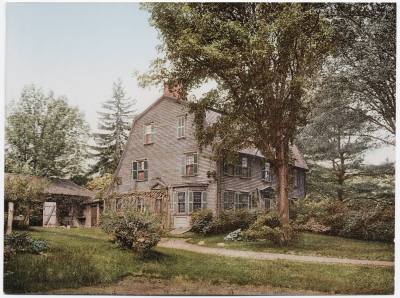
Mary Moody Emerson was born in 1774 in Concord, Massachusetts into a family of ministers and philosophers, including her nephew, Ralph Waldo Emerson. Her literary legacy includes a few published pieces, but is primarily the mountain of letters and journals which she called her “Almanacks.” She circulated these among friends and family, including many transcendentalists, especially Ralph Waldo Emerson. They featured many revolutionary ideas that made their way into his books and lectures, in particular, especially foreshadowing his book Nature, which launched transcendentalism. She also held influential conversations with Henry David Thoreau as he was writing Walden and with many other prominent thinkers over decades. Ralph Waldo Emerson praised her “Genius always new, subtle, frolicsome, musical, unpredictable” (Cole, 262). Almost entirely self-educated through books given or lent by family, friends, and local libraries, her sagacity was the well-spring of a movement that has been instrumental in making her world and ours.
Continue reading “Unsung Heroines: Mary Moody Emerson, Foremother of Transcendentalism by Carolyn Lee Boyd” Feminism and Religion