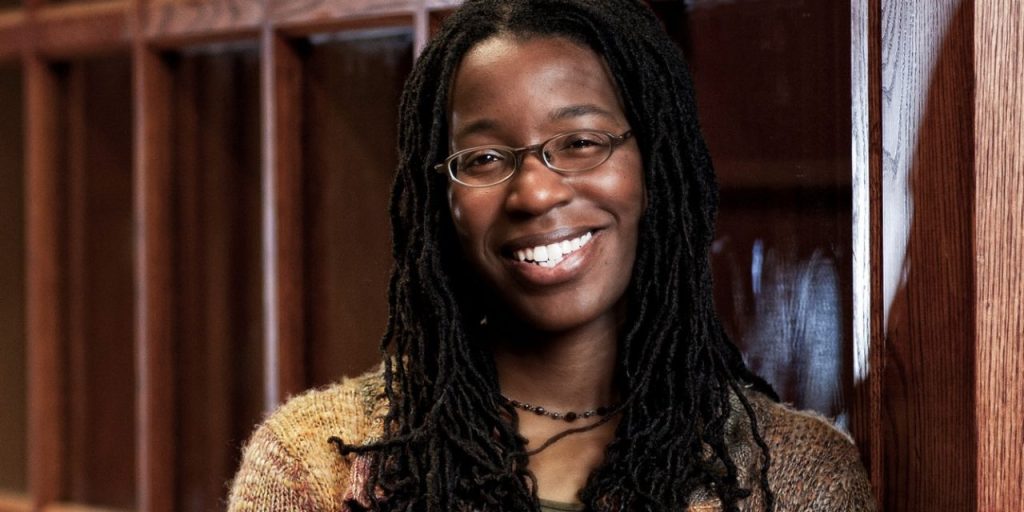
Mabel McKay (1907-1993): “Dreamer” and Master Basket Weaver of the Northern California Pomo Indians, part 2 by Theresa Dintino

part 1 was posted yesterday

The last sucking doctor of the Pomo

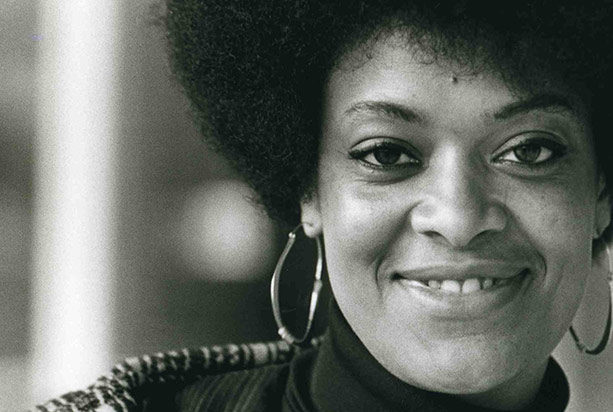
Mabel healed people with songs that spirit sang through her. Eventually, she was taught to suck. Into a sucking basket she had woven, she spat out what she had sucked out of her client. People came from all over for her healing and she traveled far to heal others. She needed singers and translators to help her when she worked. Many people came to witness.

When Mabel was raised, traditional healing was beginning to go out of fashion and even be suspect. But Mabel’s work was widely sought after by the local indigenous population from all the various tribes who worked on the farms and lived on the reservations in the area of Northern California.

Sarris describes her extracting a salamander-like creature from a woman’s eye, gallons and gallons of water from a man’s chest and an evil spirit from another.

Continue reading “Mabel McKay (1907-1993): “Dreamer” and Master Basket Weaver of the Northern California Pomo Indians, part 2 by Theresa Dintino”
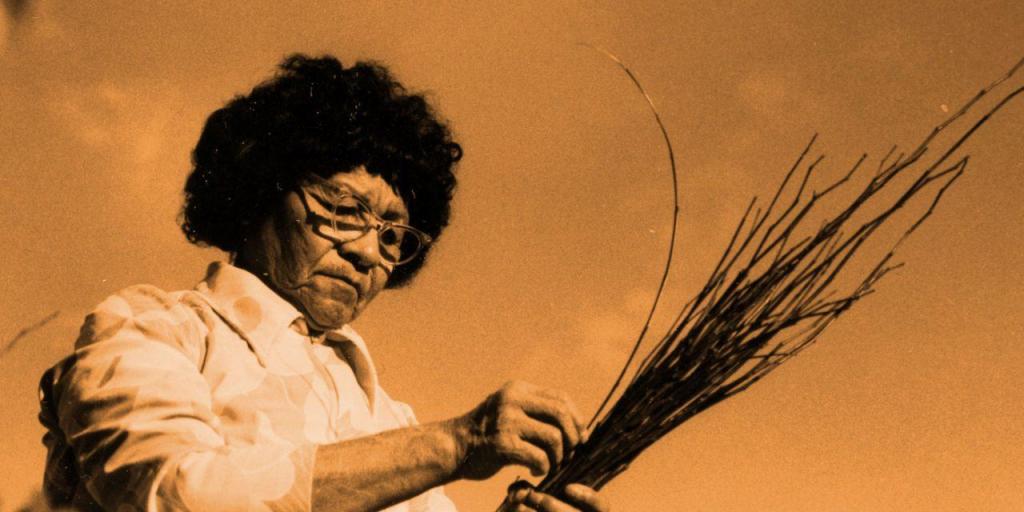
Mabel McKay (1907-1993): “Dreamer” and Master Basket Weaver of the Northern California Pomo Indians, part 1 by Theresa Dintino

Moderator’s Note: This piece is in co-operation with The Nasty Women Writers Project, a site dedicated to highlighting and amplifying the voices and visions of powerful women. The site was founded by sisters Theresa and Maria Dintino. To quote Theresa, “by doing this work we are expanding our own writer’s web for nourishment and support.” This was originally posted on their site on July 23rd, 2024. You can see more of their posts here. 

It’s hard to know what might have happened to Mabel McKay if her grandmother Sarah had not made it a point to care for and protect her. Sarah recognized her as a Dreamer, one who is owned by spirit.

Mabel’s great-grandfather, Sarah’s father, had been a medicine man descended from those before him. Sarah’s brother, Richard, had started the Dream religion “after the white people had taken everything but their souls to Dream”(Sarris 8). Sarah recognized the signs in her granddaughter but worried there was no one left to teach her.

One of the signs Mabel was a Dreamer is how she talked in her sleep at night as a girl, out loud speaking her Dreams. Spirit talked to her in her waking hours as well. She was a strange child and there was a lot of worry around her.

Continue reading “Mabel McKay (1907-1993): “Dreamer” and Master Basket Weaver of the Northern California Pomo Indians, part 1 by Theresa Dintino”

Toni Cade Bambara: How to Care for Oneself While Healing The All (American Woman Writer 1939-1995), part 2 by Theresa Dintino

Part 1 was posted yesterday

The mud mothers, ancestors, began to make themselves visible to her when she was a girl, in the movie theater, on one of the walls in a cave like indentation, “with enormous teeth painting themselves with long hair brushes, painting pictures on the walls of the cave”( SE 254), at church, and in her attic. “In the attic they came in the mirror once. Ten or more women with mud hair, storing yams in gourds and pebbles in cracked calabash. And tucking babies in hairy hides. They came like a Polaroid. Stepping out of the mouth of the cave, they tried to climb out of the speckled glass, talk to her, tell her what must be done all over again, all over again, all over again. But she hung an old velvet drape over the mirror and smothered them. They were not going to run her off her own place, Not the attic “(SE 255). In church and at the theater she avoided looking at them.

For Velma and for Bambara, it is the spiritual roots of her ancestors and ancestry from Africa that come calling, the mud mothers. In Velma’s town there are mentors and guides and Aunties and godmothers, all levels of support and care available in claiming her gifts that Velma has left behind, rejected. Yet, when the book ends she will return to this, she has agreed to take up the mantle in order to be well.

For African Americans in particular, Bambara believes reconnecting with the ancestors—the ancestors that their ancestors were taken from— is part of the healing wanting to happen. That this was left out of the civil rights movement. That honoring ancestors is part of this lineage and that the ancestors are there and waiting. That slavery often disrupted this connection but it is there, the ancestors are there, for the reconnection if one is willing.

Continue reading “Toni Cade Bambara: How to Care for Oneself While Healing The All (American Woman Writer 1939-1995), part 2 by Theresa Dintino”

Toni Cade Bambara: How to Care for Oneself While Healing The All (American Woman Writer 1939-1995), part 1 by Theresa Dintino

Moderator’s Note: This piece is in co-operation with The Nasty Women Writers Project, a site dedicated to highlighting and amplifying the voices and visions of powerful women. The site was founded by sisters Theresa and Maria Dintino. To quote Theresa, “by doing this work we are expanding our own writer’s web for nourishment and support.” This was originally posted on their site on August 11th, 2020. You can see more of their posts here. 

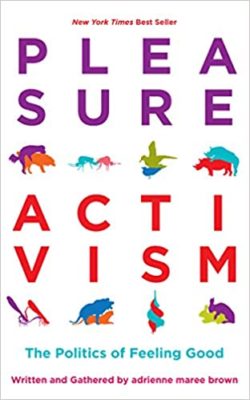
While reading adrienne maree brown’s Pleasure Activism for #NastyWomenWriters, I was stopped in my tracks by the praise coming forward in that book for black feminist, writer, activist, film maker and mentor Toni Cade Bambara (1939-1995).

brown writes:

“Toni Cade Bambara, author of The Salt Eaters, the one to tell us writing was a tool for the revolution, that our task was to make revolution irresistible. Bambara is a main stream in the lineage of pleasure activism, not just because of what she put on the page and into words, but also because of the ways she wove community, the way she supported other writers and organizers, the way she engaged in healing work” (45).

In the chapter “The Sweetness of Salt,” author and activist Alexis Pauline Gumbs, archivist and scholar of Bambara’s work, writes about five women who have been instrumental in her life and work: “scholar Farah Jasmine Griffin, filmmaker and activist Aishah Shahidah Simmons, artist and abolitionist Kai Lumumba Barrow, healer and organizer Cara Page, and editor and intellectual activist Cheryll Y. Greene”(46), who were all personally influenced, mentored, “sistered” and “mothered” by Bambara. It was these women’s recounting of their experiences with Bambara that caused me to go find her for myself.

Continue reading “Toni Cade Bambara: How to Care for Oneself While Healing The All (American Woman Writer 1939-1995), part 1 by Theresa Dintino”

Heather Pringle: Celebrating Viking Women— Warriors, Weavers and Wise Women, part 2 by Theresa Dintino

part 1 was posted yesterday

Women weavers who made the Viking world possible

Viking Women were also farmers, running their own farms, merchants running their own businesses, and voyagers upon the seas, locating and settling new territories in Iceland, Greenland and even Vinland in Canada.

The chapter on the Viking weavers is truly astounding. Pringle details the importance of and vast amount of weaving the Viking women produced to support the excursions of the ships and to dress their husbands and sons — maybe wives and daughters—safely for battle.

“In 2016, archaeologist Morten Ravn, a curator at the Viking Ship Museum in Denmark, published an estimate of the total time required to construct two medium-size Viking ships, from keel to sail. Ravn based this estimate on projects documented by the museum staff. His calculations showed that spinning and weaving enough cloth for just one sail accounted for as much as 36.9 percent of the total number of hours logged by builders of an average-size Viking ship. This meant that just over a third of all the work that went into constructing such a ship was performed by women. And if the crew carried enough spare cloth to mend the sail—a practice recommended by one Old Norse text, King’s Mirror—that statistic climbed to 53 percent, more than half of all the necessary work.

But the women weren’t done there, they also produced a wealth of other high-quality gear for the raiders themselves, from heavy seafaring blankets to water-resistant clothing. And last but certainly not least, research now suggests that they made a surprisingly effective form of body armor”(NW 114).

Continue reading “Heather Pringle: Celebrating Viking Women— Warriors, Weavers and Wise Women, part 2 by Theresa Dintino”

Heather Pringle: Celebrating Viking Women— Warriors, Weavers and Wise Women, part 1 by Theresa Dintino

Moderator’s Note: This piece is in co-operation with The Nasty Women Writers Project, a site dedicated to highlighting and amplifying the voices and visions of powerful women. The site was founded by sisters Theresa and Maria Dintino. To quote Theresa, “by doing this work we are expanding our own writer’s web for nourishment and support.” This was originally posted on their site on April 22th, 2025. You can see more of their posts here. 

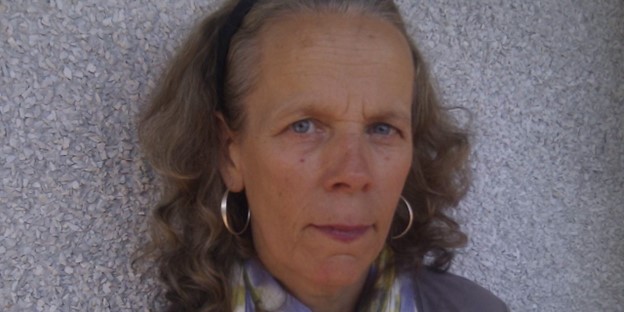
Most people have heard of the Vikings, the seafaring warriors of Northern Europe. Their  travels to Iceland, Greenland and the American continent long before most believed contact was accomplished proved their prowess in navigation and traveling the turbulent waters of the north. Others are familiar with Norse Mythology: the flying Valkyries, god Odin and goddess Freya. But little has been known of the lives of ordinary or extraordinary Viking women until recently.

In The Northwomen: Untold Stories From the Other Half of the Viking World, Heather Pringle does an incredible job of gathering and telling the stories of these erased, ignored and unacknowledged women.

Continue reading “Heather Pringle: Celebrating Viking Women— Warriors, Weavers and Wise Women, part 1 by Theresa Dintino”

We Will Be Jaguars: A Memoir of My People by Nemonte Nenquimo, part 2 by Theresa Dintino

Part 1 was posted yesterday.

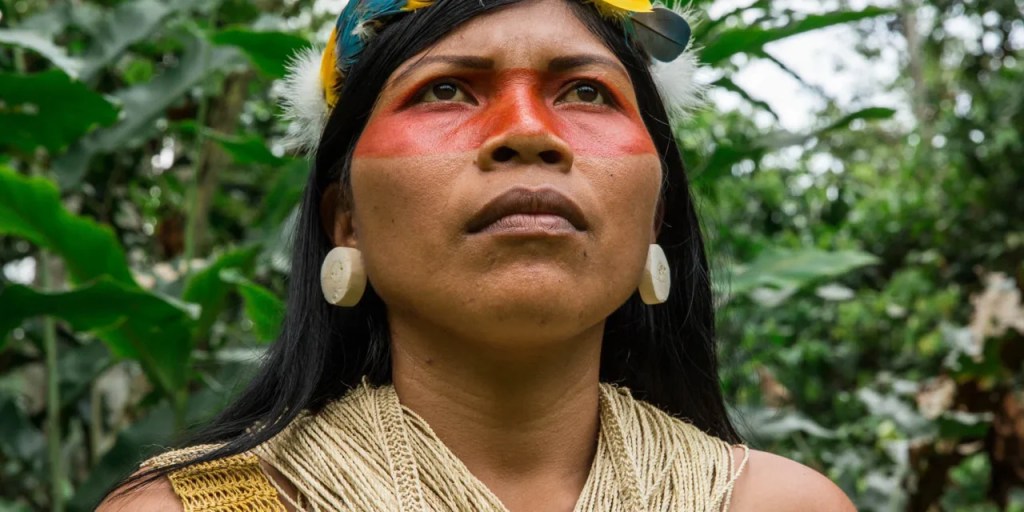
Eventually, Nemonte is fully taken in and away from her village by the missionaries to the city where she is indoctrinated further into White world with sexual abuse and rape. After years of this she is raging and lost, separated from her people and living in the city. She finds her brother and they decide to return to their people and try to find a way to change the trajectory.

“I couldn’t go home anymore. It was too late for that. I had left the forest many years ago because I believed in the white people. I had trusted them, thought they were better than us. Their skin, their teeth, their clothes, their planes, their promises. But now I knew they had no limits, that they wanted everything. They wanted to save our souls and change our stories and steal our lands. Those distant oil wells rumbling in the depths of the village night—those wells were creeping closer and closer. I still didn’t know what to do about it”(198).

Now she can speak, read, and write Spanish. Now she is educated in the White people ways. Now she can be a bridge. And what a bridge she will become.

Continue reading “We Will Be Jaguars: A Memoir of My People by Nemonte Nenquimo, part 2 by Theresa Dintino”

We Will Be Jaguars: A Memoir of My People by Nemonte Nenquimo, part 1 by Theresa Dintino

Moderator’s Note: This piece is in co-operation with The Nasty Women Writers Project, a site dedicated to highlighting and amplifying the voices and visions of powerful women. The site was founded by sisters Theresa and Maria Dintino. To quote Theresa, “by doing this work we are expanding our own writer’s web for nourishment and support.” This was originally posted on their site on May 20th, 2025. You can see more of their posts here. 

She didn’t know what the United States was. She didn’t know where it was, she called it “the land of Rachel” after the missionary in her village. She didn’t know what God was. She only knew if she went to church, she may get a pretty dress. And she wanted one.

More important than an activist tome, more important than a cry for the Amazon Rainforest and acknowledgement of indigenous peoples’ right to their own land, more important than a scathing exposé on colonialist pillage, and predatory preachers, this book is the story of a woman growing up, a woman coming of age, a woman allowing us into her personal story and her unique worldview in her own voice. This book is a treasure primarily because of that. Because we finally get to hear the story from the point of view of a Waorani woman as she experienced it.

Continue reading “We Will Be Jaguars: A Memoir of My People by Nemonte Nenquimo, part 1 by Theresa Dintino”

All That She Carried by Tiya Miles: Recovering the Untold Stories of Black Women in America, part 2 by Theresa Dintino

Part 1, appeared yesterday.

There are many women named Rose in the ledgers of unfree people in Charleston around 1850. The defining feature to find the Rose mentioned on this sack is that her daughter is named Ashley, not a common name for Black female children of the time. Miles finally locates a Rose and an Ashley in the inventory of Milberry Place Plantation, a country estate of a man named Robert Martin. When Martin died, his estate was liquidated and thus the mention of the sale of Ashley. 

“Ashley is listed among one hundred unfree people in the inventory of Martin’s enslaved property taken in the year 1853. Her attributed value of $300, in comparison to that of other women listed at $500 and $600 in the cotton boom decade of the 1850’s, suggests that she may have been a younger or relatively unskilled worker”(69).

Things were bad enough for unfree people but the disruption that came like a tsunami through their lives when an enslaver died and his property was sold was a fear most carried and trembled at the thought of. Unfree families were always being torn apart in the time that slavery was legal and allowed in this country, but when estates were being divided up, it became particularly excruciating and this is what came to pass for Rose and Ashley. 

Continue reading “All That She Carried by Tiya Miles: Recovering the Untold Stories of Black Women in America, part 2 by Theresa Dintino”

All That She Carried by Tiya Miles: Recovering the Untold Stories of Black Women in America, part 1 by Theresa Dintino

Moderator’s Note: This piece is in co-operation with The Nasty Women Writers Project, a site dedicated to highlighting and amplifying the voices and visions of powerful women. The site was founded by sisters Theresa and Maria Dintino. To quote Theresa, “by doing this work we are expanding our own writer’s web for nourishment and support.” This was originally posted on their site on November 30, 2021. You can see more of their posts here. 

First she was told about a grain sack dating from around 1851 that had these words  embroidered on it:

My great grandmother Rose
mother of Ashley gave her this sack when
she was sold at age 9 in South Carolina
it held a tattered dress 3 handfulls of
pecans a braid of Roses hair. Told her
It be filled with my LOVE always
she never saw her again
Ashley is my grandmother
Ruth Middleton
1921

Continue reading “All That She Carried by Tiya Miles: Recovering the Untold Stories of Black Women in America, part 1 by Theresa Dintino”