Exploring the F-word in religion at the intersection of scholarship, activism, and community.
Author: Judith Shaw
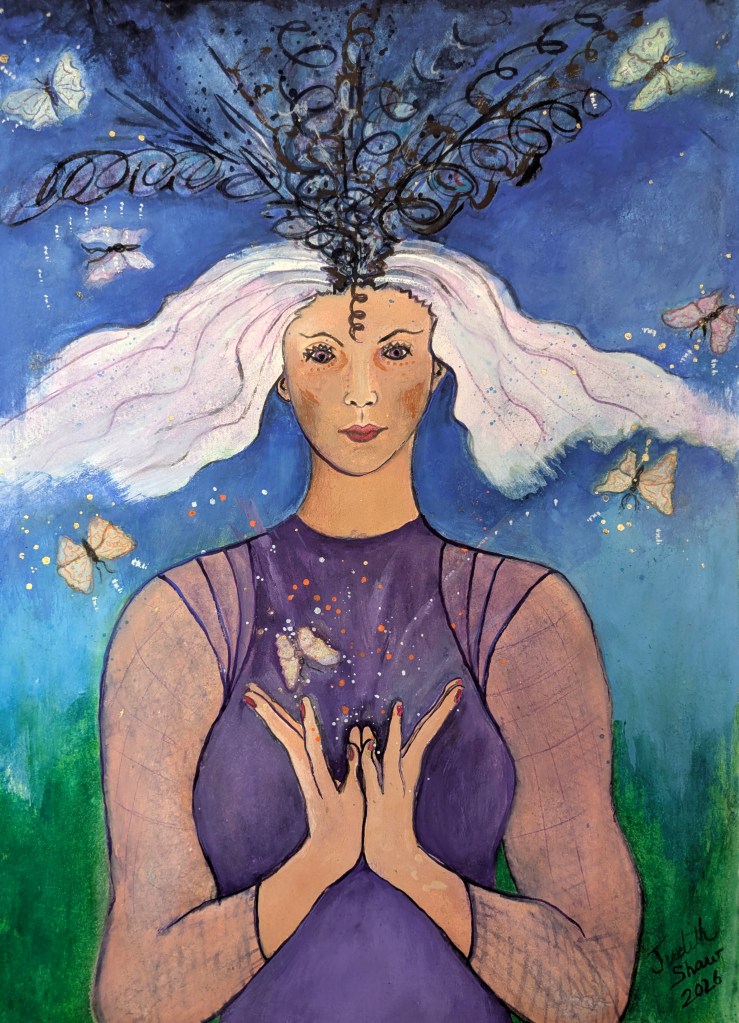
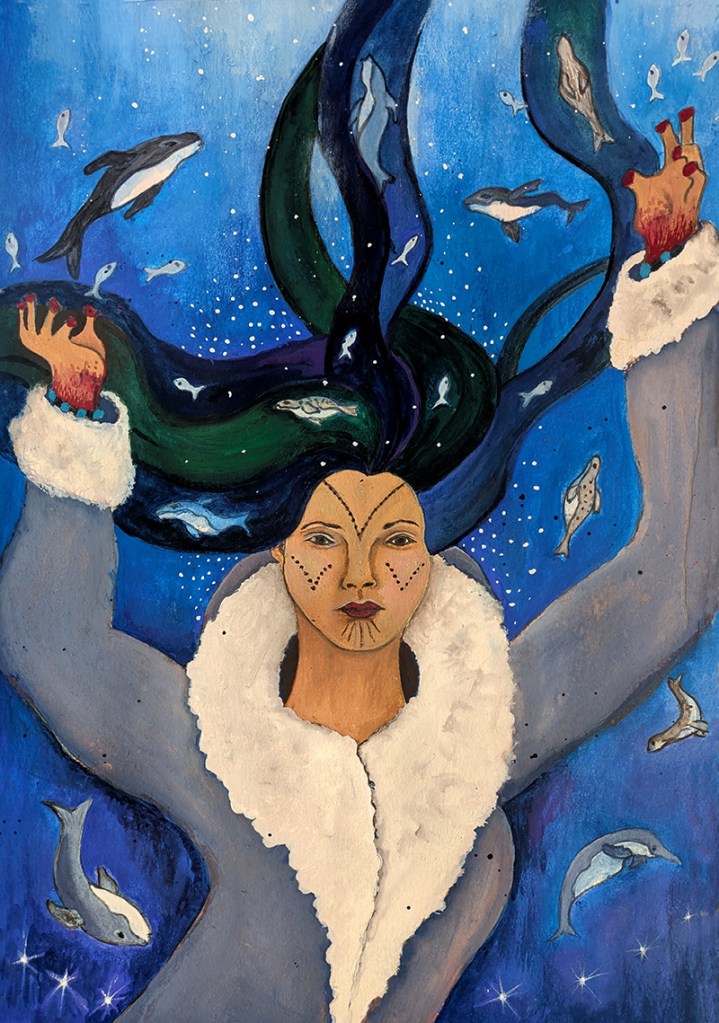
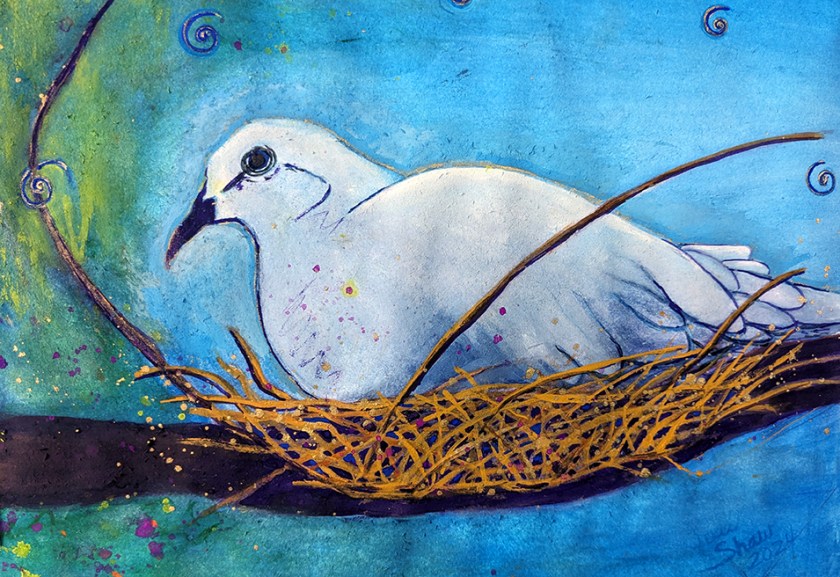
Judith Shaw, a graduate of the San Francisco Art Institute, has been interested in myth, culture and mystical studies all her life. Not long after graduating from SFAI, while living in Greece, Judith began exploring the Goddess in her art. She continues to be inspired by the Goddess in all of her manifestations, which of course includes the flora and fauna of our beautiful Earth.
Judith has exhibited her paintings in New York, San Francisco, Mytilene Greece, Athens Greece, New Orleans, Santa Fe NM, Taos NM, Albuquerque NM, Houston TX and Providence RI. She has published two oracle decks - Celtic Goddess Oracle and Animal Wisdom Oracle and is hard at work on an illustrated fairytale - Elena and the Reindeer Goddess.
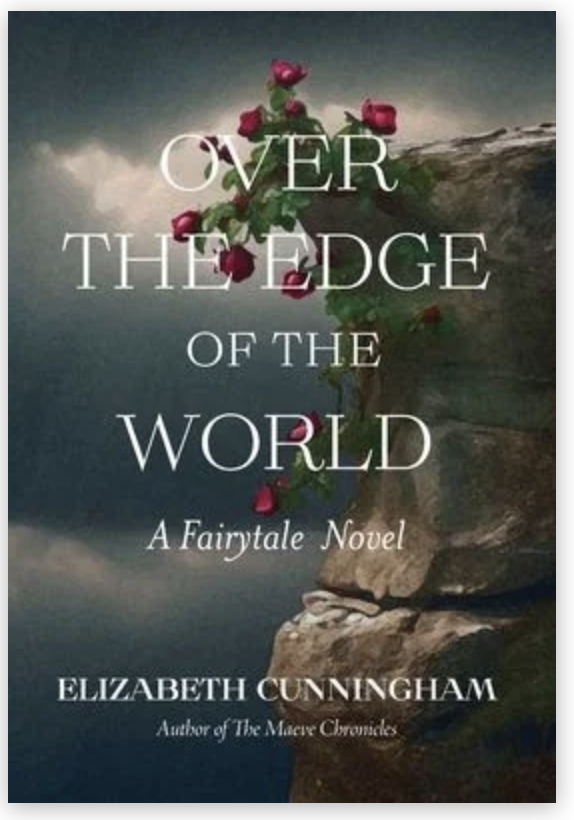
Elizabeth Cunningham’s new book is a marvel you won’t want to miss. It’s subtitled, “A Fairytale Novel” which lets you know you are in for a magical experience. Fairytales have meaning and contain wonder, beauty and truth. Fairytales awaken new insights for the reader, inspiring us all to think more deeply about our world. “Over the Edge of the World” certainly does all that. It will leave you pondering the difficult reality of our world today and the sacrifice and grit needed to create it anew.
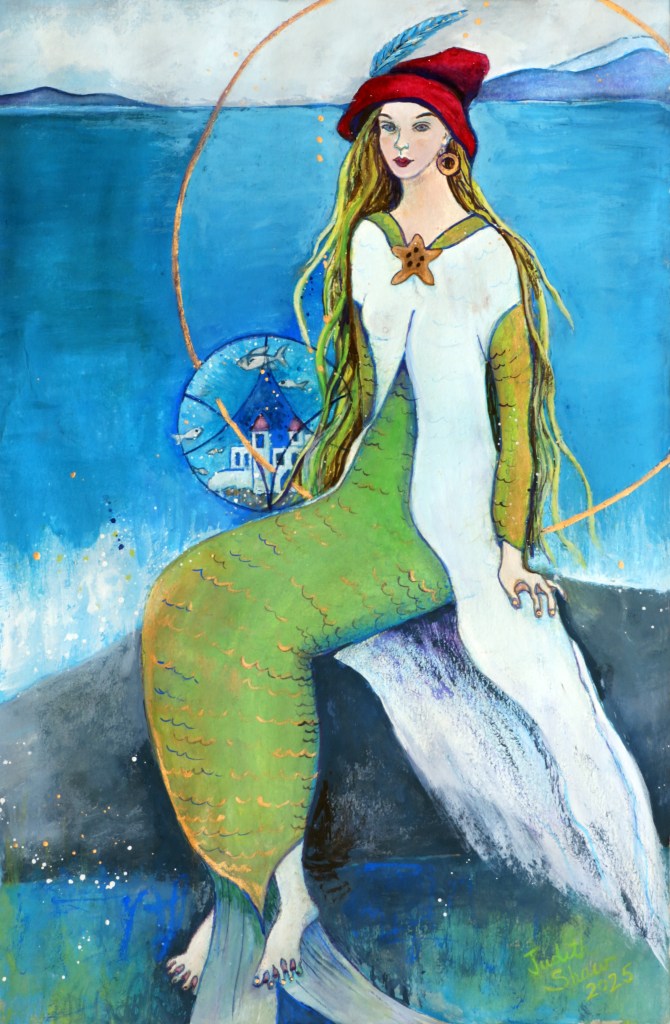
Mermaids have captivated our imaginations worldwide for thousands of years. Across cultures, mermaids are depicted in differing ways—as a dangerous seductresses like the Greek sirens, or as one who could grant immortality like the Japanese ningyo.
Celtic Ireland, with its abundance of fairies and magical beings has its own kind of mermaid, the Merrow. This term derives from the Gaelic word, “murúch,” which translates as “sea maiden.”
A Merrow‘s Longingby Judith Shaw, gouache on paper, 12″x18″
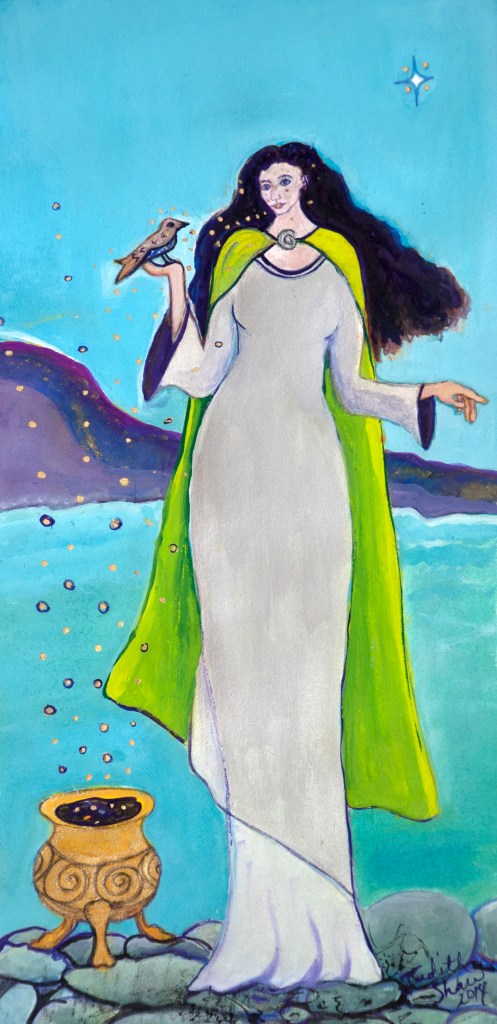
Branwen, sister of King Bran the Blessed, was cherished for her gentleness, compassion, and beauty. As the mother of the future king in the tradition of the Old Tribes of the British Isles, she embodies Sovereignty. She is the source of all life, ruling over both the spirit and the land.
Branwen: Celtic Goddess of Love and Compassion by Judith Shaw
We first meet Branwen when the Irish King Matholuch arrives, his fleet signaling peace with a great shield pointing outwards. He asks for Branwen’s hand in marriage—a significant event, as no woman of the old tribes had ever left her people for a foreigner, much less she who would give birth to the next king. Nonetheless, Matholuch is welcomed ashore, and Branwen is summoned.
With each passing day, the world spirals deeper into chaos under the weight of the most unsuitable and morally bankrupt president the United States has ever elected. In nearly every aspect of life—from politics to economics to technology to the environment—the world as we knew it is gone. We find ourselves caught between chaos and creation. We are in liminal times.
As we move deeper and deeper into full autocratic rule, the timeless themes found in mythology help me find my way.
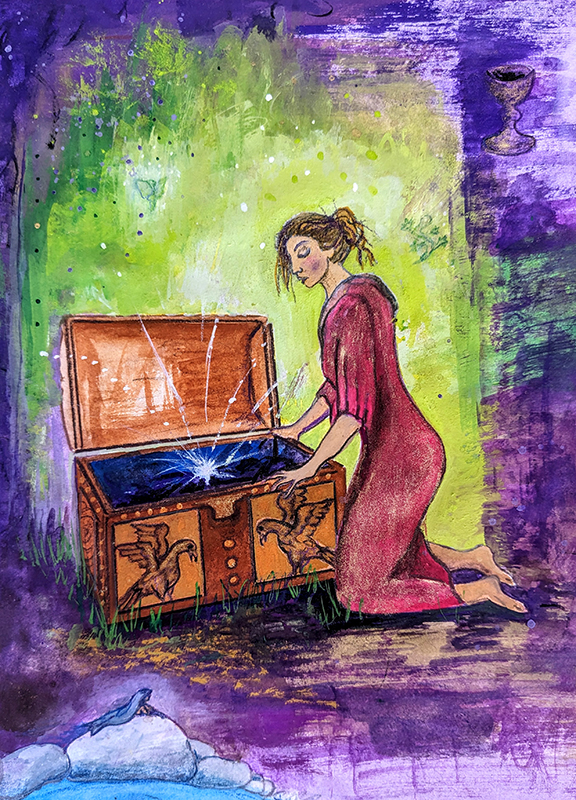
My first thought for these days was of Pandora, whose story in the myth of Pandora’s Box serves as a powerful metaphor for the complexities of human choice—relevant today by the choice of many to elect Trump, resulting in multiple destructive consequences.
In the origin stories of the Greek deities the overarching importance of water, which surrounds their domain, is undeniable. Water held the power of life, death and renewal.
In each successive pantheon of Greek goddesses and gods — the Primordials, the Titans, and the Olympians — a goddess and a god ruled the seas together. During the time of the Primordial deities, it was Thalassa and Pontus, followed by the Titans, Thetys and Oceanus, and Doris and Nereu, and finally by the Olympians, Amphitrite and Poseidon.
“Amphitrite, Greek Sea Goddess,” gouache on paper, 11″ x 17″ by Judith Shaw
The exact day of the Winter Solstice ushers in what I think of as the Winter Solstice Season — a ten day period when, in the northern hemisphere, the sun barely moves from it’s most southerly position in the sky. The days are very short and the nights are long, long, long.
At this time of year I embrace the worldview of my Celtic ancestors who relished the darkness in a way that is foreign to us today. Every day began at dusk not dawn. The new year began on October 31, as the cold set in and the world turned toward the dark. The harvest was in, thanks were given, and nature was moving into its period of death. I find an inherent wisdom in this counting of time.
In this moment, my connection to trees feels especially profound. I find such beauty in the winter trees, naked of their green and golden finery, etching stark lines in the sky. As we drew near to the solstice, I felt compelled to create a new painting that expresses my love for winter trees and the Winter Solstice.
During these transitional times, as the patriarchy struggles to maintain control, I turn to the wisdom of Medb, Celtic Sovereignty Goddess, who speaks to me in this difficult moment shaped by the MAGA movement.
Medb (pronounced maythv) ruled over war, fertility, and the earth. In ancient Ireland, a man could only become king of Connacht by undergoing a ritual of intoxication and entering into a sacred union with Medb at Connacht’s mystical center.
Halloween, with its Celtic pagan roots in the sacred day of Samhain, which later morphed into a Christian holiday, is now mainly a nonreligious celebration in Europe and North America. It’s enjoyed by both young and old with scary outdoor decorations, parties, spooky costumes, haunted houses, carved pumpkins, and candy-giving.