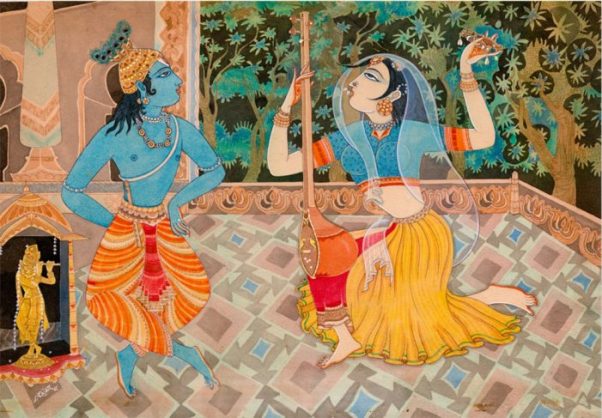
Long before the first wave of feminism in the mid-nineteenth century had its initial launch, a well-established religious movement sparked a socio-political awakening in India. The processes of social and cultural integration in the bhakti tradition have significantly reshaped medieval Indian society. To understand the reclamation inherent in the bhakti movement, one must first acknowledge the ‘dominant power structure’ that prevailed.
The orthodox Brahmanical hierarchy (the priestly class) enforced a strict monopoly over religious ceremonies, temple access, and sacred texts. On the other hand, spiritual knowledge was bound within Sanskrit, a language only upper-class men could learn. The bhakti movement arose from a desire for a direct relationship with God while rejecting society’s rules and rituals. Women and marginalised castes were heavily oppressed and restricted from public spheres. Since religious space was the only space available to women in the early medieval period, many women embraced bhakti (devotion), and it eventually provided them space to define their own voices that revised society, relationships and religions.
The bhakti movement, since its emergence in the 7th century in South India, had a seismic impact on women and marginalised groups. Ideas of inclusivity, accessibility, and connectivity were running through reforms and resistance. A small but steadily growing group of thinkers called for the democratisation of the Divine against the social hierarchy in religious practises. Many women supported this reform with resilience, as they knew that change, whether conservative or revolutionary, would inevitably shape gender relations and advance women’s rights.
Continue reading “Medieval Bhakti Women Saints: Early Voices of Feminism by Sonal Jakhar”