

Today,
I sat and let both my breath
and my thoughts be soft,
extending my hands
and feeling my life and mind unclench
if only for these moments.
On Samhain morning,
we saw a buck
in the road,
trees still clad in autumn color
lit gold behind him
as he stood at the crossroads
before leaping away
between the trees.
On Samhain evening
we saw five bucks in the road,
young males teamed up
for this season of seeking and claiming.
On the drive home
an orange moon was on the rise
cresting dark trees
and peeking between hills
like something out of mystery.
I lifted my hand and blew it a kiss
this, my own solitary rite of Samhain.
On the first of November,
I sat with my memories,
naming off my most recent ancestors,
each face briefly coming to mind
as I felt grateful
for the oldest child privilege
of knowing each of them
in the flesh
and carrying the memory
deep inside me
of how my birth was celebrated
by so many loving people now lost.
We’ve had two frosts,
the hydrangea leaves
wilted to black,
the mulberry trees bare
and so we seek
the pines once more,
watching the sinking sun
illuminate the needles
and listening to the wind whisper
in the way it does
only through tall pines.
I feel my inner cauldron bubbling,
new ideas popping up
and beginning to rise.
But,
I stop and listen.
Now is not the time for production.
It is time for pine whispers
and slow mornings.
Time for tea and quiet reflection.
Time to be curious
about what might yet arise,
and yet,
patient
as it steeps.
Tag: poetry
Two Poems by Darlene O’Dell
Quiet, Piggy
Though the slur also concerns chickens
and eggs and which came first—
did the master create the puppet
or the puppet the master?
suppose, for instance, one posits
an argument for compassion—
the bare minimum, as in let’s not
disappear people and torture families
a few crumbs under the table
hardly enough for a dog and a widow—
let’s not torment the targeted
and call it Jesus
How I Have Been Influenced by Poet Ellen Bass by Charlotte Donlon
“When You Return” by Ellen Bass
Fallen leaves will climb back into trees.
Shards of the shattered vase will rise
and reassemble on the table.
Plastic raincoats will refold
into their flat envelopes. The egg,
bald yolk and its transparent halo,
slide back in the thin, calcium shell.
Curses will pour back into mouths,
letters un-write themselves, words
siphoned up into the pen. My gray hair
will darken and become the feathers
of a black swan. Bullets will snap
back into their chambers, the powder
tamped tight in brass casings. Borders
will disappear from maps. Rust
revert to oxygen and time. The fire
return to the log, the log to the tree,
the white root curled up
in the un-split seed. Birdsong will fly
into the lark’s lungs, answers
become questions again.
When you return, sweaters will unravel
and wool grow on the sheep.
Rock will go home to mountain, gold
to vein. Wine crushed into the grape,
oil pressed into the olive. Silk reeled in
to the spider’s belly. Night moths
tucked close into cocoons, ink drained
from the indigo tattoo. Diamonds
will be returned to coal, coal
to rotting ferns, rain to clouds, light
to stars sucked back and back
into one timeless point, the way it was
before the world was born,
that fresh, that whole, nothing
broken, nothing torn apart.
This poem appears in Ellen Bass’s book “Like a Beggar” published by Copper Canyon Press in 2014 For more information on Ellen Bass and her poetry go to her website https://www.ellenbass.com/ Poem posted here under “fair use” guidance.
While warming up beside an enormous stone fireplace with a dozen other writing workshop participants in western North Carolina, I listened to an instructor read the poem “When You Return” by Ellen Bass. I had come to the retreat wrung out from church trauma and the ache of not knowing where I fit in anymore. As the flames crackled and spit, the reader spoke words that singed the edges of longings I hadn’t yet noticed—longings for crooked paths to be made straight, for broken things to be made whole. I was crying by the time he recited the last few lines— “the way it was / before the world was born, / that fresh, that whole, nothing / broken, nothing torn apart.” The tears surprised me; a snowmelt after years of frozen longing that finally began to thaw.
Continue reading “How I Have Been Influenced by Poet Ellen Bass by Charlotte Donlon”Spiritual Direction for Writers by Charlotte Donlon
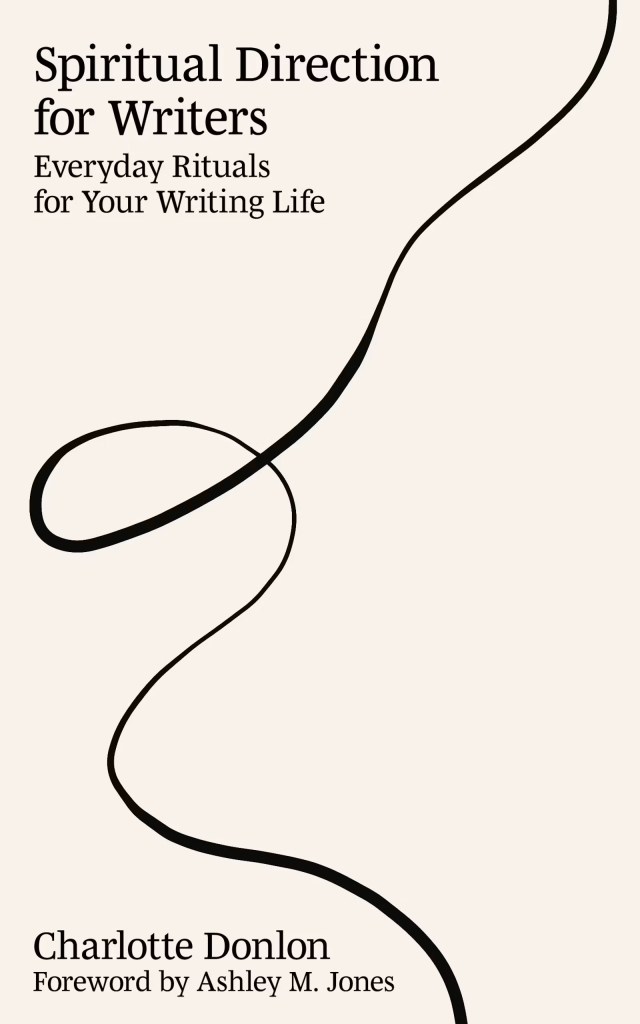
I fell in love with poetry when I began graduate school for my MFA in creative writing. Looking back at the poems I was reading and writing ten years ago, I can connect the dots among my relationship with poetry, my faith, and my rejection of the patriarchy.
Most poems felt like prayers to me back then; they still do. I often say the word “poem” when I mean to say “prayer” and “prayer” when I’m trying to say “poem.” Half the time I don’t even notice that I’ve misspoken because the words and what they represent are so tightly woven together. If I don’t sense much of a personal connection to the themes of a poem I’m reading, I view it as I view a psalm that doesn’t feel especially resonant at the moment–I know that somewhere someone will feel seen and known by the words, and I am in some sense reading on their behalf, as I hope that on my harder days, people are reading and praying on mine. I trust the collective, the mystery, the power of words to connect souls and minds across time and space.
Putting myself in the way of poetry became a spiritual practice while I was struggling to find my place in the conservative evangelical denomination my husband and I had been members of for almost 20 years. We had engaged in conversations about women in the church, racial healing, mercy and justice—topics that we viewed as intimately connected to what it means to be a Christian in our everyday lives. We pushed for change. We led small groups without shying away from difficult conversations. We brought in speakers and coordinated film nights. We tried so hard to make our local church something it wasn’t–something it would never be.
Continue reading “Spiritual Direction for Writers by Charlotte Donlon”Our Children by Annelinde Metzner
How do we bring our children along? How do we share with them all that is best about being human? All too often, I hear of events in children’s lives that no one should ever experience. Children are being subjected to trauma that will reverberate through all our lives. We are all one people, and all children are our own. These poems are just a few simple meditations on how to bring children along with the best we have to give. My own son passed on in 2004, and I honor all that we taught each other.

The Poet Walks the Woods
“That’s what I’m here for!” says the poet
to the young family,
gazing downward beside the trail.
“The Trillium- they’re called ephemerals
because they don’t last long!
They bloom in spring
just before the leaves are on the trees.
Three petals, three leaves, three everything.
So, Trillium.”
The littlest girl stows away a note
in some memory pocket.
“…When I’m an old woman,
I’ll walk the woods
looking for Trillium…”
Falling into Spring by Sara Wright
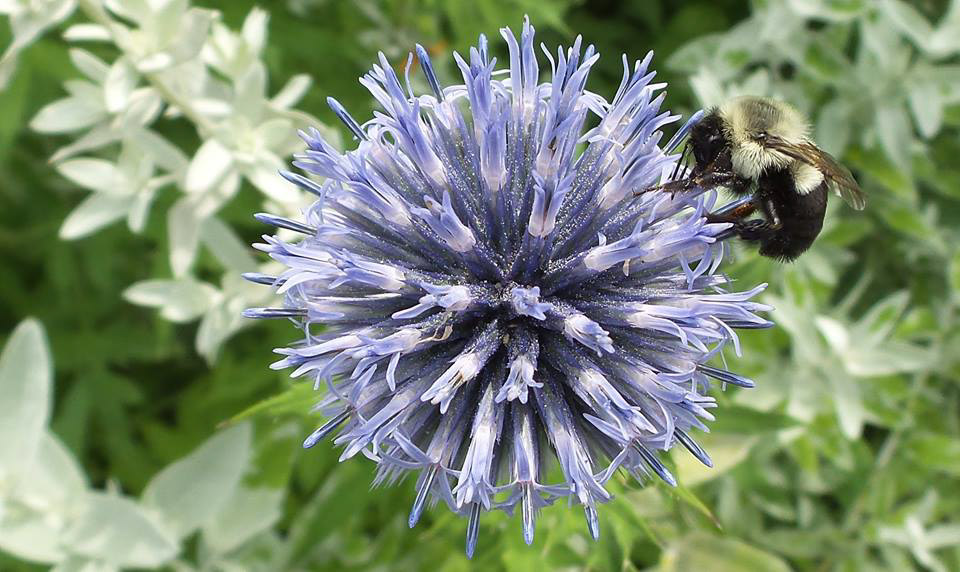
The glorious
white stars
waited in vain
for rain
for miner
sweat
mason
or bumblebee
to feast
on pollen
sacred to All
after three days
petals
drooped
golden
eyes shut
pearled
almonds
fell
one by one
next year’s
compost
soaked in
unshed
tears.
Perhaps
Bee Goddess
has a plan
Changing Woman
transforms
Sky Woman
holds the
seeds …
clasping
bloodroot
spears
and
buds
wrapped in
gray shawls
she may
yet
choose
to
intervene.
From the Archives: A Poem for Our Abortion Rights by Marie Cartier
This was originally posted on June 24, 2022
*
Fecundity: the ability to produce an abundance of new growth, but also the ability to produce new ideas
And now in the hour of our discontent, we are asked to worry about
fecundity. I suppose we can call it that—have we made enough babies yet?
As a people. A people ruled by patriarchy. No small thing. “A social system in which males dominate and hold primary power.”
Oh my god—am I sick of it? Anyone with a brain is sick of it…I want to think.
But they have brains, right? The afore mentioned patriarchs? Who are
creating this new social system?
A meme goes out on social media—I’m not pro-murder I’m pro-Ellen, thirteen years old and pregnant by her father
I’m pro-Margaret, with five kids and I cannot to afford to feed another
I’m pro-Eliza, pregnant with a baby known to have serious birth defects
I’m pro– you get the idea.
Continue reading “From the Archives: A Poem for Our Abortion Rights by Marie Cartier”Poems for Season by Sara Wright
In late November I first snowshoed our woodland trails to include the little balsam that I lit to honor all evergreens throughout the winter months. Every day when my little dog and I circled the tree I told her I loved her and called her ‘Lightbringer’. This daily encounter never lost its magic. The Goddess Lived during the darkest winter nights!!
The rest speak to the subtle changes that occurred from late winter into spring. My writing naturally follows both seasonal and intraseasonal shifts that might not be noticed unless a person is paying close attention.
(1) Lightbringer
Will she still
be there
shining
after the storm?
Moon Bear
is on the rise.
I peer through
white flakes
at dawn
light
pierces
her powdery
fringed shawl
Love lights
the darkest
Night.
Steadfast Balsam
cloaked or not
Ever-green,
Tree of Life.
Heartlines flow
crystalline
waters
pour down
deep sleep
oh,
Daughter
of the Night
Daughter of
The Light,
Light -Bringer
Life -Bringer
The Miracle
Is that
You Live.
Of Duct Tape and Dementia by Elizabeth Cunningham

I’ve climbed on a stool (which I swore I wouldn’t do again after having a bad fall while helping a friend paint a bathroom ceiling) and up onto the washing machine. A cabinet door just above has come unhinged (not unlike this author). I have considered unscrewing it and taking it off, have located the proper screwdriver, but the screw will not budge, no matter how I contort my body in this small space. If I can’t get the cabinet door to stop flopping open, I will not be able to load the washer. My hope and salvation is…duct tape. So my husband stands holding the cabinet door more (or less) still while I tear off and attach pieces of duct tape, which will more (or less) serve my purpose, till someone more skilled can do a real repair.
“Do you remember,” I ask, “when I used to say, Douglas, fix it! Whatever needed fixing.”
“No, I don’t remember.” His response to most such queries. “I don’t remember that at all.”
Continue reading “Of Duct Tape and Dementia by Elizabeth Cunningham”THE GODDESSNESS PRAYER by Annie Finch
A SACRED FEMININE VERSION OF THE LORD’S PRAYER BASED ON A TRANSLATION FROM THE ORIGINAL ARAMAIC
Genevieve Vaughan recently posted, on a Maternal Gift Economy group, a link to a new translation of the Lord’s Prayer directly from the original Aramaic. The translation is by Nabu who describes himself by saying he “decodes the hidden knowledge they buried inside religion, history and science.” Nabu recognizes Neil Douglas-Klotz as the foundational scholar of his own translations as well as adding his own notes. Click here for the link to Nabu’s site. I was excited to find the Divine Feminine playing such an important role in this translation.
When I assembled the restored versions of each line together, the resulting poem was not very well-written or easy to say, let alone to memorize. So I translated the translation into a more succinct and concrete version. I hope it will be useful.
Here is the compilation and my own version below, followed by a few notes on reasons for my translation choices.
Continue reading “THE GODDESSNESS PRAYER by Annie Finch”
