Genetic Testing: The Ethical Implications of Expanded Newborn Testing – Who Benefits? (Part Two) by Michele Stopera Freyhauf

Freyhauf, Feminism, Religion, Durham, Old Testament, Blogger, Bible, Gender, Violence, Ursuline, John Carroll

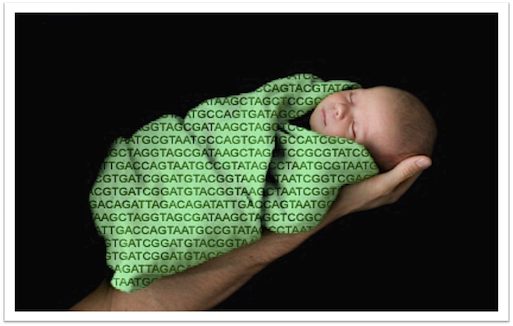
With Angelina Jolie’s decision to have a double mastectomy due to a genetic test that revealed she carried the BRCa gene, the issue of genetic testing is in the forefront once again.  This is the second part of a three-part essay exploring genetic testing on newborns (part one and part two) and concludes with exploring personal choices and the psychological ramifications of genetic testing.

False Positives, Lack of Empirical Evidence, and Dangers in Expanded Newborn Screening

In the year 2000, most states only screened for about four conditions.   As of November 2008, most states adopted screening for the 29 recommended primary conditions and up to 25 secondary conditions (See President’s Council on Bioethics, “The Changing Moral Focus of Newborn Screening,” 36).    Since no federal mandate on newborn screening exists from state to state, this number varies due to the lack of understanding of the diseases or showing no proven benefit.   In fact, the twenty-five secondary conditions recommended  by the American College of Medical Genetics do not need urgent treatment in the newborn period or have no proven treatment (Also see Mary Ann Baily and Thomas J. Murray, “Ethics, Evidence. And Cost in Newborn Screening” Hastings Center Report (38, 2008), 28 ).

Then there is the multiplex technology of tandem mass spectrometry (MS/ MS) that can screen for over 40 “inborn errors of metabolism” from a single drop of blood (See President’s Council, “The Changing Moral Focus of Newborn Screening,” 9).  While this technology has reduced the numbers of false positives, it is still far from being reliable.  This is due to screening forBabySeq rare disorders on a population wide basis – about four million babies annually.  To illustrate this point, in 2007,  3,364,612 infants were screened for Maple Syrup Urine Disease (MSUD) in the United States and 1,249 tested positive. After retesting, only 18 cases confirmed a positive result (See President’s Council, “The Changing Moral Focus of Newborn Screening,” 14).  MSUD is a well-understood condition that shows some benefit for screening.  However, when we expand screening to add conditions that are not understood as well as mandate all newborns in the United States to be tested, false positives are likely to be in the tens of thousands (See also Beth Tarini, et al. “State Newborn  Screening in the Tandem Mass Spectrometry Era: More Tests, More False Positives” Pediatrics,  118 (2006), 448-456).
Continue reading “Genetic Testing: The Ethical Implications of Expanded Newborn Testing – Who Benefits? (Part Two) by Michele Stopera Freyhauf”

Protecting our Families: How the U.S. Falls Short in Protecting New Mothers (and Fathers) by Michele Stopera Freyhauf

Freyhauf, Feminism, Religion, Durham, Old Testament, Blogger, Bible, Gender, Violence, Ursuline, John CarrollLast weekend, I had the privilege of speaking at the National Convention for American Mothers, Inc. about motherhood in the 21st Century.  Because this is such a vital issue for mothers that live in the U.S. (since a large majority of families have two full-time wage earners), I thought it would be appropriate to share my speech here.  With the understanding that this a forum for feminism, I believe that this topic fits this forum because it continues to show how unequal the treatment is between the sexes – whether it is pay, position in employment, healthcare, education, or simply balancing the responsibilities of family/career.  For those that live in the United States, there is often a sense of exceptionalism, and as I clearly demonstrate in this speech, we are certainly a far cry from being role models that when it comes to protecting mothers (whether by birth or adoption) and families.

As a side note:  One topic that was not explored, due to lack of data, is how maternity/paternity leave impacts same sex couples who become new parents – I have to believe that this is a topic to also examine (and I am would encourage any feedback here).  

Recently the United States ranked 25 out of 165 countries for being the best place to live if you are a mother.  This number is up from 31 a year ago and places us between Belarus and the Czech Republic.

You may be asking yourself, Why isn’t the United States in the top five or even in the top ten? The answer to that question becomes evident once we examine how that determination is made. The categories examined are:

  • Mother’s education;
  • Child’s Health;
  • Economic status;
  • The Election of women to government office;
  • Breast feeding programs.  In the United States 75% of mothers breastfeed their babies, 35% continue to breastfeed after six weeks. The number shrinks because mothers usually return to work and find it difficult to to pump at the office;
  • Maternal death rate is another factor, which stunned me when I found out that the US has the highest maternal death rate of any industrialized nation. Approximately 1 in 2,100 women are at risk of dying during child birth;
  • Infant death rates is another category.  Infant deaths are estimated to be 8 per 1000 births – a number that throws us behind 40 other countries;

Arrogant or Confident? by Deanne Quarrie

For a woman to know of her own sacredness, to know how powerful she is, to know that she can achieve her wildest dreams brings the greatest joy imaginable.

I grew up as an “Army Brat.”  The biggest impact that had on my life was of having to change schools often.  As an introvert I don’t integrate easily into new surroundings or with new people.  It was not horribly difficult when I attended schools in the military dependent school system but when it was time for me to enter high school, my parents decided that my brother and I needed to be exposed to “normal” life.  What that meant was we were suddenly thrown into small community schools where students seldom experienced the welcoming of strangers.

Teenagers are cruel – well, not just teenagers – children are cruel.  For the most part they are not “other” concerned.  Their focus is on “self” and while a new student in class might be a curiosity to them, in actuality a new student, if smart or attractive, is instantly a threat.  They are perceived of as competition.  I know this because it happened over and over to me as the new kid in town in three out of four of my high school years. Continue reading “Arrogant or Confident? by Deanne Quarrie”

Halloween Matters (Part II): An Immigrant Family, Christian, and Feminist Parenting Perspective by Grace Yia-Hei Kao


Halloween 2010

“[W]e have not gone the store-bought, costume-in-a-bag route, even though we recognize that the proliferation of ready-made options is a godsend to time-strapped, dual-career parents.”

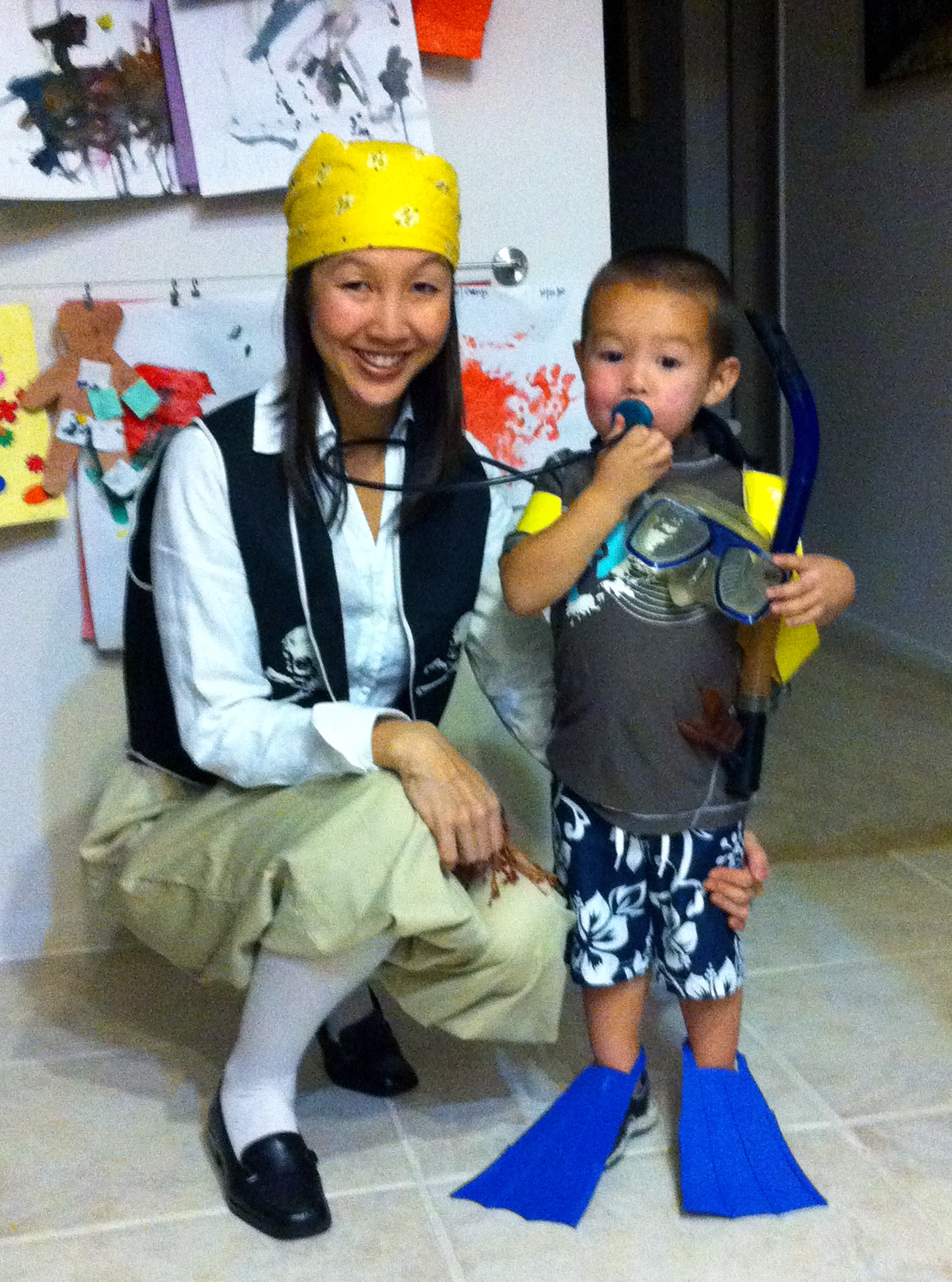
This is a second part of a previous post about the shifting personal importance of Halloween.  Now that I’m a mother of two young boys, I find that my husband and I are constantly looking for teachable opportunities. The holidays have accordingly become excellent ways for us not only to spend quality time together, but also to impart our values. We manifest our commitments even in something as simple as costume choices, as I explain below.

(1)    We do not indulge the Manichean-like stage that our four-year old child is in. As befitting a boy his age, our primo is fascinated by superheroes and has asked on a number of occasions if he could be one for Halloween.

Continue reading “Halloween Matters (Part II): An Immigrant Family, Christian, and Feminist Parenting Perspective by Grace Yia-Hei Kao”