
Muslim Feminism: On Finding Meaning in the Struggle by Jennifer Zobair

painted hands, Jennifer Zobair
Photo Credit: Brian Ziska

I threw Catholics under the bus at a book reading.

I didn’t mean to and, as a former Catholic, I felt awful about it. I was promoting my novel, Painted Hands, about dynamic, successful Muslim women in Boston. During the Q&A, someone asked why I’d converted to Islam. Pressed for time, I explained that I’d tried hard to be a Catholic feminist, referenced the fact that there was no Original Sin imputed to Eve in Islam, and admitted I’d struggled with the Trinity and welcomed a religion where Jesus was revered but not divine.

Afterwards, I fretted about the comparisons. “That was bad, wasn’t it?” I asked my husband. “Maybe,” he said gently, “stop at the fact that there are feminist interpretations of Islam. Maybe don’t say anything about other religions.”

When you’ve left one religion for another, the implication is that you did find something better.  Continue reading “Muslim Feminism: On Finding Meaning in the Struggle by Jennifer Zobair”
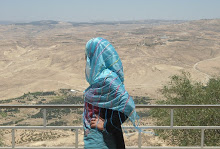
Why I am an Islamic Feminist by Shehnaz Haqqani

FAR - SHWhile Islam has undoubtedly granted women many rights—some of which were radical for much of the world in the 7th century, such as the rights to divorce, consent in marriage, education, and financial independence—many Muslim women around the world are denied those rights in practice. That these rights were “radical” for the 7th century is significant: one would think that this is an indication that our rights should be “radical” in all times. What Islamic feminism does is to help us deal with this tension of the existence of women’s rights in theory but their denial in practice.

I understand Islamic feminism to be a response to the mistreatment of Muslim women, whose rights have been marginalized, or completely denied, because of interpretations of Islam that do not acknowledge their full humanity and view them as inferior to men; Islamic feminism therefore requires re-visiting the Qur’an to re-interpret it from a standpoint that does not favor any one gender over another and sees all as equally valuable. Needless to say, Islamic feminism, or any other form of feminism, does not claim that women and men are “the same”; men and women need not be the same in order to be viewed as and treated equally and fairly. Continue reading “Why I am an Islamic Feminist by Shehnaz Haqqani”