

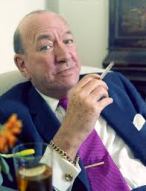
In 1936, Sir Noël Coward (1899-1973), one of England’s greatest and most prolific songwriters and playwrights, wrote a song for a play called Shadow Play, which is part of a series of ten short plays gathered under the title Tonight at 8:30. At one point, Simon steps down to the footlights and sings this song:
Play, orchestra, play
Play something light and sweet and gay
For we must have music
We must have music
To drive our fears away.
You can listen to Coward and Gertrude Lawrence (one of his best friends) singing the song here.
Shadow Play can probably best described as surrealistic: the major characters travel through dreams and flashbacks and flash-forwards as they try to figure out what on earth they’re doing. What do they fear? Probably what they’re doing to themselves with their illusions and delusions. But let’s take the song out of its dramatic context. What did people have to fear in 1936? Franco in Spain. Mussolini in Italy. Hitler in Germany.
From the 1920s to the 1950s, Coward wrote dozens of plays, many of them comedies, and acted in them, too. He also wrote more songs than I can count, most of them witty (“Sail Away”), many ironic (“Mad Dogs and Englishmen”), some romantic (“I’ll See You Again”), that not only advance the plots of the plays but also possibly distract listeners from whatever misery is happening in “real life.” As Amanda says in Private Lives, “[It’s] strange how potent cheap music is.” (Irony: she’s talking about “Someday I’ll Find You,” https://www.youtube.com/watch?v=_i3DDHL_dnw a romantic song Coward wrote that is playing offstage.) During the war, Coward also wrote and acted in popular movies to cheer his audiences.
Now let’s move into 2020. What do we have to fear? Here’s my current short list.
- That the coronavirus will get stronger and hungrier and Station Eleven (which I reviewed in April) https://feminismandreligion.com/2020/04/05/not-if-but-when-by-barbara-ardinger/ will turn from a spellbinding novel into nonfiction.
- That Trump will refuse to leave the White House in January and Washington will turn into a literal war zone.
- That patriarchy, misogynism, nationalism, white supremacy, and the gun lobby will get stronger and noisier.
- That our school-age children will never go back to school as we know school and grow up to be illiterate and innumerate.
- That climate change will destroy our blessed Mother Earth and all our kin, both animal and vegetable.
What can you add to my list? What do you fear today?
We all know, of course, that music by itself will not solve any of these problems or literally drive our fears away. But music is powerful. As William Congreve (an early 18th-century playwright) wrote, “Musik has charms to soothe a savage breast.” (No, that line isn’t from Shakespeare and, no, it’s not “savage beast.”) Music can help feel less savage…but well, yes, it can also sway us to be more savage (ask the Nazis about that). During this pandemic, perhaps music can heal us emotionally, perhaps help us deal with staying at home and meeting our friends only via Zoom. Music can both stimulate and soothe our poor, worn-out minds. Music can lift us out of depression and help us forget to worry for a while. Listening to and participating in music (maybe virtual bands and orchestras or choruses) will surely help us survive individually, maybe collectively.
Shakespeare often tells us how good music is for us. Two brief examples:
Music oft hath such a charm
To make bad good….
(Measure for Measure, 4.1)
Let there be no noise made, my gentle friends;
Unless some dull and favourable hand
Will whisper music to my weary spirit.
(2 Henry IV, 4.5)
I quit watching the Sunday TV talk shows several months ago, and now I don’t watch more news than I must to more or less keep up with what’s going on. I fill my evenings with music. What I’m totally insane about is musical theater. My all-time favorite shows are 42nd Street (Arlen and Dubin—all that tapdancing!), Ragtime (Flaherty and Ahrens), The Fantasticks (Jones and Schmitt—“Try to Remember”), Bright Star (Martin and Brickell), the balletic American in Paris (the Gershwins—“inspired by” and better than the movie), and Rent (Larson—“Seasons of Love”). How many of these shows do you know? Back when we could still go to the theater and see live actors, I saw all of these shows; now I have them on DVD, along with a gazillion others. I also like folk music (especially Pete Seeger and Arlo Guthrie…can you hum “Alice’s Restaurant”?) and classical music (especially Mozart’s Magic Flute because Papageno is so earthy and pagan). Oh, gee, another fear—what if theaters and real symphony orchestras are gone forever?
Now it’s your turn to consider the benefits of music in your life. What music do you listen to? When do you listen? Does this music help drive your fears away? Make yourself some new playlists and schedule more music into your days and nights. And remember—“we must have music.”
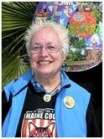 Barbara Ardinger, Ph.D. (www.barbaraardinger.com), is a published author and freelance editor. Her newest book is Secret Lives, a novel about grandmothers who do magic. Her earlier nonfiction books include the daybook Pagan Every Day, Finding New Goddesses (a pun-filled parody of goddess encyclopedias), and Goddess Meditations. When she can get away from the computer, she goes to the theater as often as possible—she loves musical theater and movies in which people sing and dance. She is also an active CERT (Community Emergency Rescue Team) volunteer and a member (and occasional secretary pro-tem) of a neighborhood organization that focuses on code enforcement and safety for citizens. She has been an AIDS emotional support volunteer and a literacy volunteer. She is an active member of the Neopagan community and is well known for the rituals she creates and leads.
 Feminism and Religion