

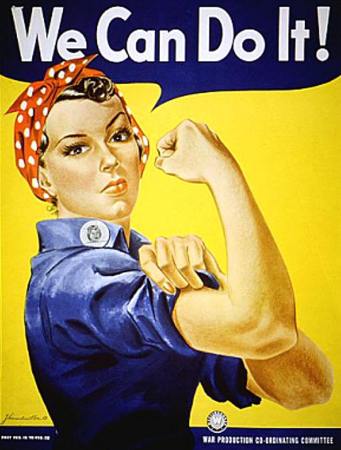
 Betty Friedan interviewed the unhappy housewives, their human potential unfulfilled by a lack of vocation outside the home. I wonder if her claim was just a premise of the lawn being more manicured on the other side. The book received criticism by reviewers asking who was really oppressed and what perspectives were ignored. I’ve been on a few lawns, and I am here to confirm there is no true green grass anywhere. Mostly it’s either covered with the blood of women who die in the Global South because of the poor working conditions that pay them too little to support their families or laced with pesticides for profit or sheets of concrete to the dismay of our feet. I suppose there might green grass somewhere, but it costs more than some of us can afford, meaning a woman would have to earn more than what is only enough to rent a room in someone else’s house, an apartment of her own being too expensive much less any sort of fund for a cabin in the woods.
I also want to talk about the middle class. Work is important. I agree with Friedan to the extent that we need something to do that inspires us, that gives us purpose. Marx liked work too. But he critiqued the capitalist tendency to cause an imbalance in the lives of the working classes. In The Grundrisse, he says, “The saving of labour time [is] equal to an increase of free time, i.e. time for the full development of the individual, which in turn reacts upon the productive power of labour as itself the greatest productive power.” Continue reading “The Feminine Mystique and Marx by Elisabeth Schilling”
 Feminism and Religion