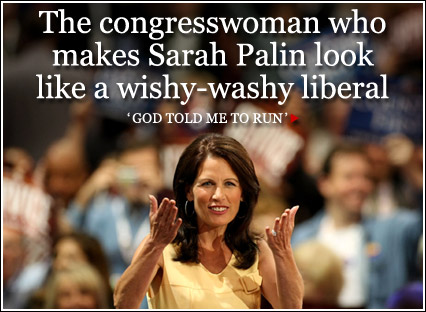
 Recently CNN ran a feature article on GOP presidential runner Michele Bachmann, an extreme conservative congresswoman from Minnesota, whose political ideologies are shaped and endorsed by the Tea Party [http://politicalticker.blogs.cnn.com/2011/06/27/michele-bachmann-evangelical-feminist/.] The article raised the question if Bachmann, like Hilary Clinton, could be considered a feminist icon, with the distinction of Bachmann as an “evangelical feminist.” While the article gives a brief history of evangelical feminism, starting with the appointment of Christian conservative Elizabeth Dole during the reign of Ronald Reagan, a huge assumption is made by not clarifying what, exactly, is a feminist and what makes one a feminist? This sin of omission thus renders the term “evangelical feminist” as a binary coupling that locates feminism to a 1970’s reformist notion of women’s equality with men, but men in their shared social status. While Bachmann may object to being identified as a feminist, I find it interesting that the writer for CNN has no difficulty (or sense of clarity) with the consideration of her as a feminist. What, I wonder, in Bachmann’s political trajectory is considered “feminist”?
In Feminism is for Everybody, author bell hooks takes to task what she identifies as “lifestyle-based feminism” which hooks argues, “suggest[s] any woman could be a feminist no matter what her political beliefs.” Enter Michele Bachmann and her beloved Tea Party. Admittedly the Tea Party is all over the map in their ideology, yet a few constants can be teased out. For example, they overwhelmingly disapprove of President Obama’s policy of engaging with Muslim countries. They support Arizona’s immigration laws, feel gay and lesbian couples should not be able to marry, global warming is simply made-up, the repeal of the Health Care legislation, repeal of minimum wage, and reduction or elimination of reproductive rights for women and men. All of which begs the question, can an individual who invest in a political ideology of extreme nationalism while further excluding those on the margins through racist immigration laws, homophobic fears, classist response to the poor and sick while promoting a misdirected Biblical position of dominance of the earth and its limited resources be consider a feminist?
Recall in the last post Rosemary Radford Ruether’s understanding of feminism as “a critique of patriarchy as a system that distorts the humanity of both women and men.” One form of distortion arises when patriarchy co-opts feminism as power gained through the exploitation and oppression of others. In what hooks identifies as “power feminism” of the 90’s, wealthy white heterosexual women became the icons of feminist success by appropriating feminist jargon while sustaining their commitment to Western imperialism and transnational capitalism. Which goes back to my initial point, we must clarify what we mean when we use the word feminist or feminism. Is it a chameleon-like identity or a political movement that seeks to end sexism, exploitation and oppression of women and men? Continue reading “Feminism in Disguise By Cynthia Garrity-Bond”




 Feminism and Religion
You must be logged in to post a comment.