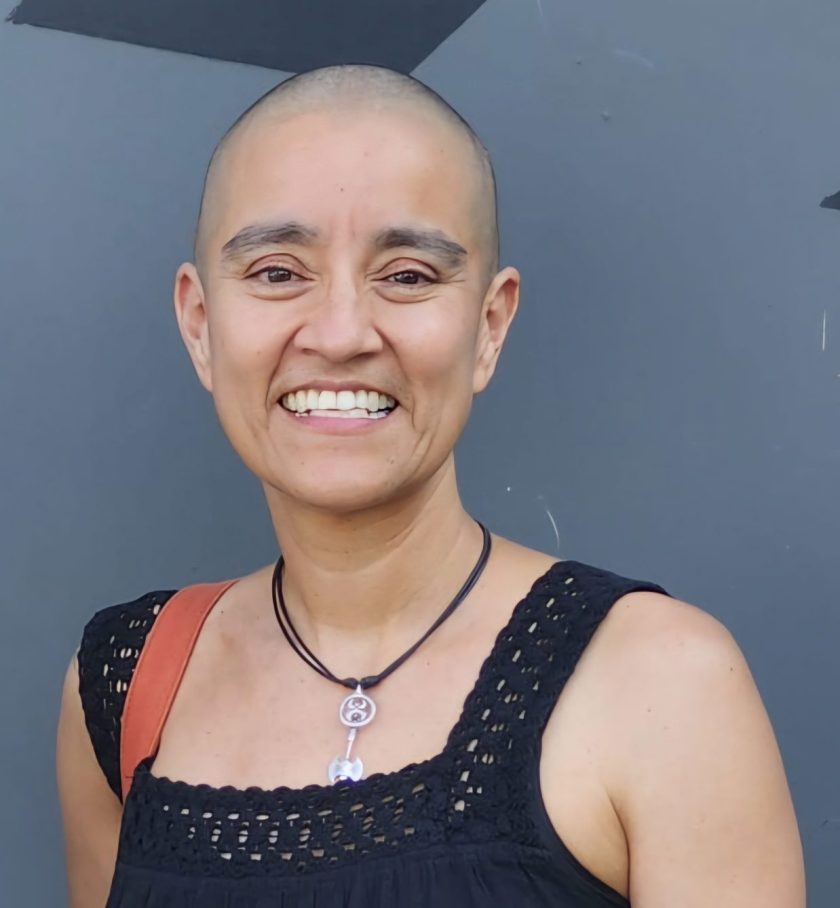
The Legacy of Carol P. Christ: Patriotism and Religion: Speaking Complexly about Complex Issues

This was originally posted on 2/23/15

carol p. christ photo michael bakas

Former Mayor of New York Rudy Giulaini recently questioned the American President’s patriotism when he asked if Obama had been “brought up the way you were brought up and I was brought up, through love of this country.” When Chris Hayes discussed the furor surrounding Guiliani’s statement on MSNBC with James Peterson of Lehigh University, I would say that they both missed the point. Their defense of the President was to insist that he is a dyed in the wool patriot. Should anyone be a dyed in the wool patriot these days? What does and should patriotism mean? These were questions not asked.

Asked to clarify his comments, Giulani opined that Obama speaks from the perspective of “socialism” and “perhaps anti-colonialism” rather than good old American patriotism. Again Hayes and Peterson dropped the ball. They were quick to agree that the American Colonialists should be considered anti-colonialist given that they rebelled against the colonial power of England. What they failed to say was that the American Colonialists were colonialists too. Though they threw England out, they had no compunction in asserting their right to take the land, the resources, and the very lives of earlier inhabitants of what became the American land.

Continue reading “The Legacy of Carol P. Christ: Patriotism and Religion: Speaking Complexly about Complex Issues”
The Legacy of Carol P. Christ: The Greek Elections and the 1%

This was originally posted on January 26, 2015

Alexis Tsipras of Greece & Pablo Iglesias of Spain hope to change Europe for the 99%

On January 1, 2016, 1% of the world’s population will own 50% of the world’s wealth, according to Oxfam.

On January 26, 2015 Alexis Tsipras will be in the process of forming a new anti-austerity government in Greece. Some believe this will be a new beginning not only for Greece, but for the world–if others follow the Greeks in resisting the domination of their economies by the international monetary interests that represent the 1%.

The bondholders and the international press tend to portray the Greek economic crisis as a morality play in which foolish Greeks borrowed too much and must suffer the consequences to pay back their loans. If Greece were a lazy teenager appearing on Judge Judy, tough love might be the answer.

But this simplistic equation cannot be made to work for a country of 10 million people, only some of whom colluded in taking out loans they could not pay back.

Continue reading “The Legacy of Carol P. Christ: The Greek Elections and the 1%”

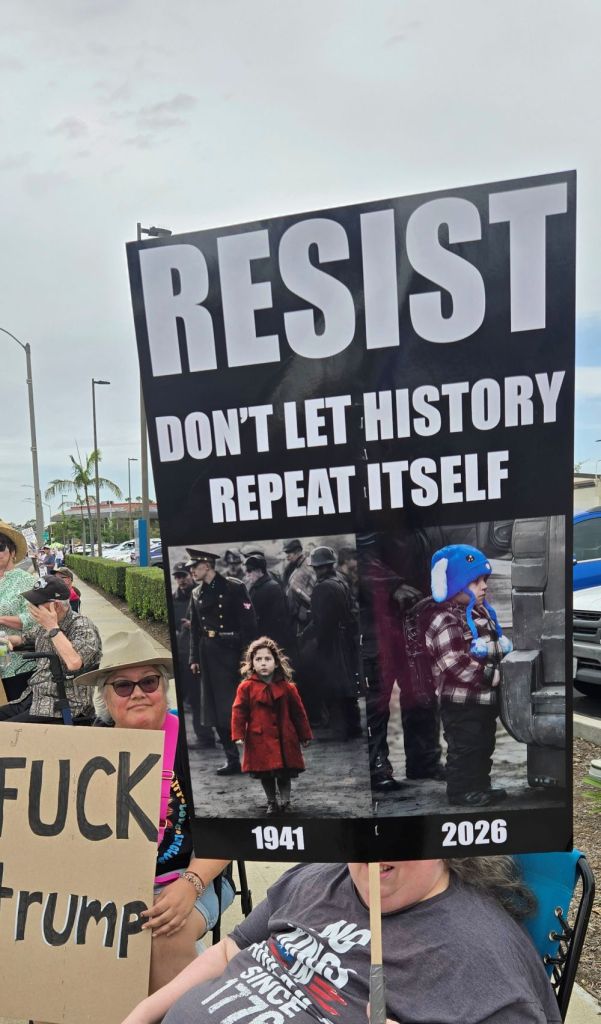
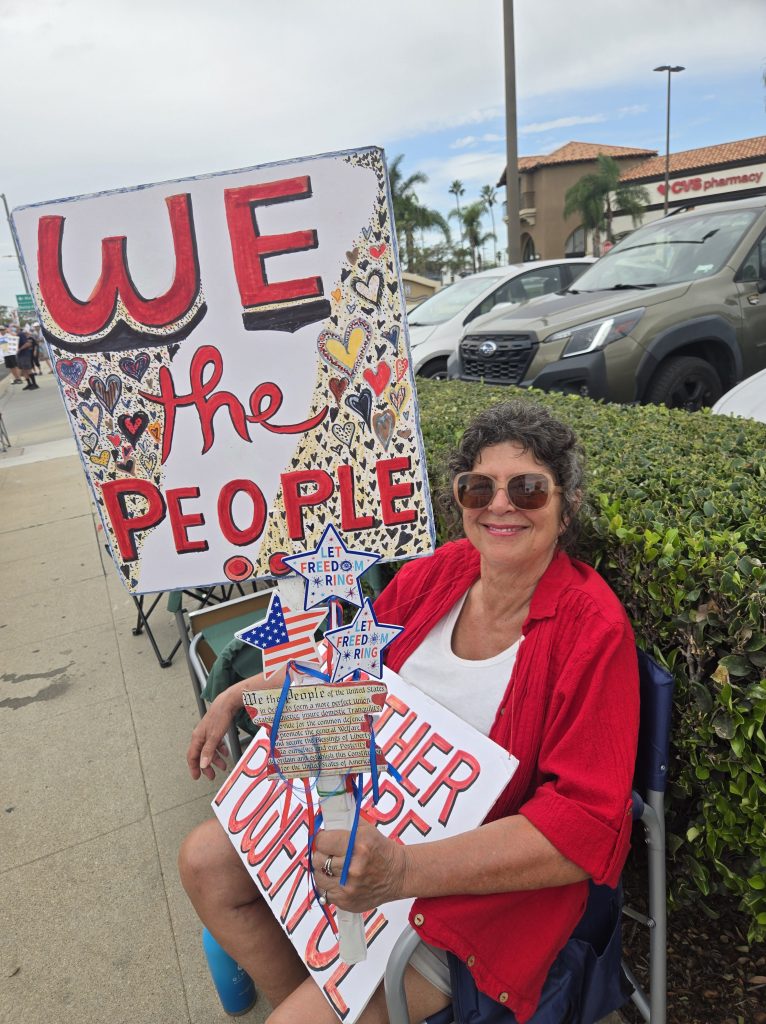
NoKings October 17, 2026: VOTE! by Marie Cartier

The NoKings rallies across the country in October, to.promote early voting, voting registration, and a nationwide blue wave at the polls. Over 3,000 rallies were held– the emphasis being on local get out the vote efforts. No Kings event draws crowds across the country : NPR

I was at the Seal Beach , California protest. You can see some pictures here- and please FAR readers Vote!

Continue reading “NoKings October 17, 2026: VOTE! by Marie Cartier”

The Aliveness of Symbols by Xochitl Alvizo

This is an embarrassingly revealing post, please forgive my younger self for her naiveté.

I grew up a proud American. I even had a collection of American flag pins, one of which said “1o1% American!,” and a giant 4×6 foot size U.S. flag hanging in my bedroom wall, which I took with me when I went off to college for undergrad. I was part of the glee club in my junior high school and proudly performed Neil Diamond’s “America” as we all process into the auditorium waving flags from all around the world. Convinced this was a beautifully diverse country of immigrants. My parents were both recent immigrants and were vocal about their appreciation of the opportunities this country provided for them. My dad always said this country gave him more than his country of origin ever did. And I bought the narrative, “hook, line, and sinker!”

Continue reading “The Aliveness of Symbols by Xochitl Alvizo”

Archives from the FAR Founders: On the Events of Charlottesville, VA by Xochitl Alvizo

This post was originally published August 13, 2o17. And even though it was about the specific attack against peaceful protesters by white supremacists in Charlottesville, VA in 2017, during agent orange’s first term, it makes me think about the current, larger, and more global forms that white supremacy has taken during his second term. It reminds me just how much greater the need for our collective action continues to be.

It is in our hearts –one’s sense of superiority exists within. We are all and each capable of hate and bigotry.

It is considered the appropriate and necessary response to say that there is no room for it “here” – that we will not tolerate, in this case, white supremacy – here. Except here is exactly where it exists; here in our country, in our cities, in our communities, laws, structures, churches, homes, hearts and mind. The thread of a people’s sense of supremacy (power to dominate or defeat) has been woven into the fabric of this colonialist nation from the very beginning of what has come to be known as the United States of America.

Continue reading “Archives from the FAR Founders: On the Events of Charlottesville, VA by Xochitl Alvizo”

Embodiment as Positive Resistance

I nearly cancelled my recent trip to the United States. The political climate felt tense, the global atmosphere uncertain, and travelling across the Atlantic seemed questionable for several reasons.

Friends encouraged me to go anyway, suggesting that meeting people in person would offer a different perspective from the one shaped by media narratives. And of course, it wasn’t headlines I was meeting, but people, in a human reality that persists beneath larger systems. Thankfully, my trust in relational experience outweighed my hesitation, and I returned from my travels with renewed inspiration.

I’m writing this essay because many people I met spoke with an apologetic tone about being American. They expressed disbelief, embarrassment or anger about their conspicuous yellow haired chief. I just want to acknowledge the warmth, generosity, care and humanity I encountered wherever I went.

The entire experience confirmed what I have long sensed in my work with movement, ritual and community: that embodied presence, especially in uncertain times, is such a remedy for heart and soul. What I encountered was meaningful human contact, even in a politically divided country.

Continue reading “Embodiment as Positive Resistance”

From the Archives: I Believe Anita! by Marie Cartier

Moderator’s Note: This has been posted on FAR twice, originally on April 7th, 2014 and then again on July 15, 2022. We are posting this a third time because of its importance. It is a piece of history that helps to illustrate how we got to where we finds ourselves today.

Marie Cartier

During the past week I attended a Los Angeles premiere of a new documentary Anita: Speaking Truth to Power (Dir: Freida Lee Mock USA, 2013). The screening was sold out and I had great seats saved for me– sitting with a friend who works at Samuel Goldwyn, the distributor of this fine film.

In 1991, Anita Hill provided testimony she hoped would serve to dissemble the nomination of Clarence Thomas as a Supreme Court justice. Although the vote would end up being close (52-48) Hill’s testimony did not serve to dissuade the decision — Clarence Thomas’ nomination was confirmed and he was appointed to a life term on the Supreme Court four days after Hill’s testimony concluded. Here is an outline of the debate.

Continue reading “From the Archives: I Believe Anita! by Marie Cartier”

From the Archives: Careful Criticism: Resisting Hetero-Patriarchy while Resisting Trump by Sara Frykenberg

This was originally posted on May 2, 2017

My students are taking their final exams this week, which means I will be spending the week frantically, but attentively grading in order to make our grade submission deadline next week. End of semester grading is a mountain of careful criticism we educators scale one step at a time, with deliberateness, towards an ultimate goal of student success (if not in our classes, then in the next, or in life, relationships, etc.). Thus, I often find myself returning to the question: what am I hoping to create in what I say and write, and in how I critique?

One of the goals of feminist pedagogies is to help us prevent recreating the domination of kyrio-patriarchy in classroom spaces. While activism is not the same thing as education, and strategies of resistance are different than pedagogy in important ways, the concern for careful critique is warranted in both praxes. What do we create in how we critique, resist, and protest? What do we recreate, wittingly or no? I have found myself concerned with this since the election of Trump, DT (cause I can only write that name so many times), to the presidency. Continue reading “From the Archives: Careful Criticism: Resisting Hetero-Patriarchy while Resisting Trump by Sara Frykenberg”

Lessons from a Tragedy by Beth Bartlett

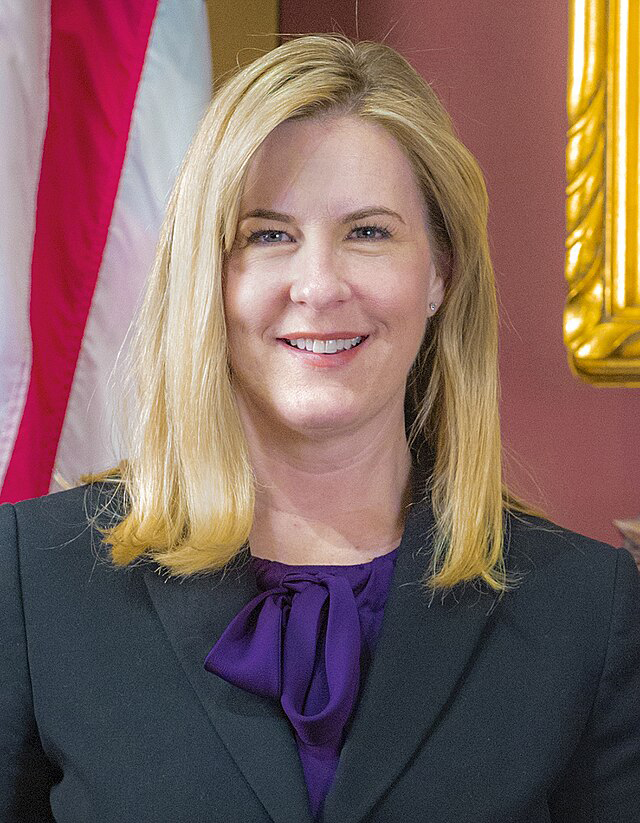
It’s been over a week now since I first heard the news on MPR that four people had been shot in their homes near a golf course in Brooklyn Park where my son once lived.  My first thought was that I was glad my son was no longer living there.  A little while later I learned that this was not a random act of violence, but rather political violence targeting two Minnesota lawmakers and their spouses.  Gradually the details came in.  The lawmakers were Democratic lawmakers, former Speaker of the House Melissa Hortman and State Senator John Hoffman and their spouses. And then came the tragic news that Hortman and her husband had been killed. As I drove to pick up a friend to attend the “No Kings” protest downtown, I listened to the news reports of warnings not to attend the protests out of an abundance of caution, with the shooter still at large, as well as the voices of protest leaders saying the tragic events of the morning only strengthened their resolve. In the first few moments of the protest, we observed a moment of silence for Hortman and her husband, and for the recovery of Hoffman and his wife. The entire rally felt like a strange mix of grief and rebellious revelry. 

As the identification and eventual arrest of the suspected shooter became known, the tragic events took on an even more ominous tone.  The suspect, Vance Boelter, is a far-right Christian nationalist extremist who had preached against abortion and gay rights. He was schooled in his religious beliefs at the Christ for Nations Institute in Dallas, Texas[i] and was aligned with a charismatic Christian movement whose leaders, in the words of The Atlantic columnist Stephanie McCrummen, “speak of spiritual warfare, an army of God, and demon-possessed politicians.”[ii]

Continue reading “Lessons from a Tragedy by Beth Bartlett”

Census in Times of Fear by Xochitl Alvizo 

I received a notice from the U.S. Census Bureau recently that I was randomly selected to complete the “American Community Survey.” It came as a letter at first with instructions to complete the survey online. A few days later I received another letter saying “A few days ago, you should have received a letter from the U.S. Census Bureau asking me to complete the American Community Survey,” with big bolded letters that my “response is required by law.” I have since then received follow-up post-card reminders, a physical form survey with the same bolded message, and another post-card that they have sent repeated requests to complete the survey.

Continue reading “Census in Times of Fear by Xochitl Alvizo “