Legacy of Carol P. Christ: How To Find Those Lost Ancestors

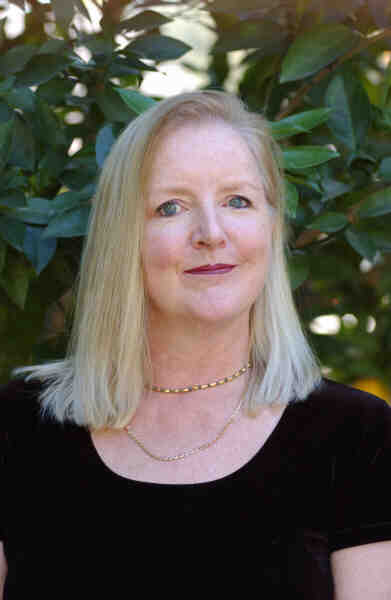
 carol p. christ 2002 color

This post was originally published on Jan. 21st, 2013

Over the past year I have written several blogs on ancestor connection.  In this blog I will share what I have learned about how to find ancestors.

I recommend the popular television series Who Do You Think You Are? which has US, UK, and Australian, and other versions, and the PBS series hosted by Henry Louis Gates, African American Lives and Finding Your RootsWhile you might think, as I did, that genealogical research is about finding the names and birthplaces of ancestors, these programs set the genealogical quest in the great flow of history.

Records show that I have ancestors who immigrated to the United States from Ireland, Scotland, Prussia, and Germany in the early 1850s.  Historical research tells me that more than a million people left Ireland and Scotland in the 1850s due to the “potato famine,”* which affected the rest of Europe as well.  History explains why ancestors emigrated.

Begin your search by asking parents, grandparents, aunts, and uncles, for names, dates, places of residence, stories, and other information they remember.  Continue reading “Legacy of Carol P. Christ: How To Find Those Lost Ancestors”

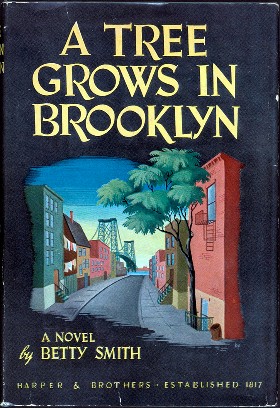
From the Archives: Writing Through the Body: Betty Smith’s A TREE GROWS IN BROOKLYN by Joyce Zonana

This was originally posted on April 29, 2017

In her 1975 manifesto, “The Laugh of the Medusa,” French feminist Hélène Cixous urges women to write: “Writing is for you, you are for you; your body is yours, take it. . . . Women must write through their bodies, they must invent the impregnable language that will wreck partitions, classes, and rhetorics, regulations and codes . . .”

“The Laugh of the Medusa” remains a thrilling essay, challenging and inspiring women to “return to the body” and to language.  “Woman must write woman,” Cixous insists, “for, with a few rare exceptions there has not yet been any writing that inscribes femininity.”

Continue reading “From the Archives: Writing Through the Body: Betty Smith’s A TREE GROWS IN BROOKLYN by Joyce Zonana”

Writing Through the Body: Betty Smith’s A TREE GROWS IN BROOKLYN by Joyce Zonana

 TreeGrowsInBrooklynIn her 1975 manifesto, “The Laugh of the Medusa,” French feminist Hélène Cixous urges women to write: “Writing is for you, you are for you; your body is yours, take it. . . . Women must write through their bodies, they must invent the impregnable language that will wreck partitions, classes, and rhetorics, regulations and codes . . .”

“The Laugh of the Medusa” remains a thrilling essay, challenging and inspiring women to “return to the body” and to language.  “Woman must write woman,” Cixous insists, “for, with a few rare exceptions there has not yet been any writing that inscribes femininity.”

Although Cixous may not have been aware of it, Betty Smith’s beloved, perennially popular 1943 novel, A Tree Grows in Brooklyn is one of those “rare exceptions” that “inscribes femininity” in precisely the way she advocates. This autobiographical novel, so often dismissed as sentimental or as a children’s book, is actually written through the female body—which may explain its lasting popularity and power. Continue reading “Writing Through the Body: Betty Smith’s A TREE GROWS IN BROOKLYN by Joyce Zonana”

How To Find Those Lost Ancestors by Carol P. Christ

 carol p. christ 2002 color

Over the past year I have written several blogs on ancestor connection.  In this blog I will share what I have learned about how to find ancestors.

I recommend the popular television series Who Do You Think You Are? which has US, UK, and Australian, and other versions, and the PBS series hosted by Henry Louis Gates, African American Lives and Finding Your RootsWhile you might think, as I did, that genealogical research is about finding the names and birthplaces of ancestors, these programs set the genealogical quest in the great flow of history.

Records show that I have ancestors who immigrated to the United States from Ireland, Scotland, Prussia, and Germany in the early 1850s.  Historical research tells me that more than a million people left Ireland and Scotland in the 1850s due to the “potato famine,”* which affected the rest of Europe as well.  History explains why ancestors emigrated.

Begin your search by asking parents, grandparents, aunts, and uncles, for names, dates, places of residence, stories, and other information they remember.  Continue reading “How To Find Those Lost Ancestors by Carol P. Christ”