
Mirroring Loss Part 2 by Elizabeth Ann Bartlett

Part 1 was posted yesterday.

As a society, we are not good at grief. Three days max, then we are expected to be back to work, keep the economy humming – shop, go to the movies and the mall, “put on a happy face.” Required to wear a cheery countenance, we deny our suffering and the suffering of others.  However, loss unacknowledged compounds its effects.  Grief will unleash itself somewhere, whether manifesting in excessive consumption – of food, alcohol, Netflix, stuff; or in unquelled anger, violence, hatred, enemy-making, and scapegoating — all of which have been erupting onto our world in devastating ways; or in the unmetabolized pain we pass on to the next generations. It is essential to our individual and collective well-being that we welcome grief, and tend it.

Continue reading “Mirroring Loss Part 2 by Elizabeth Ann Bartlett”
Hope Lives in the Twinkling of the Stars by Carolyn Lee Boyd

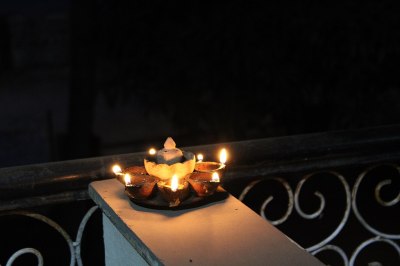
Diwali candles

For millennia, we humans have found hope in the dark of winter through holidays featuring lights or the sun such as the Winter Solstice, Diwali, Hanukkah, Kwanzaa, Soyal, Christmas, and others. As the people of our beautiful, fragile planet celebrate these traditions in these perilous and momentous times, I have been wondering what fresh perspectives on hope our global goddess myths and stories can offer.

Let’s start with the Greek goddess of hope, Elpis. In the Greek Pandora’s story as usually told, Elpis/hope is all that is left for humanity after Pandora lets misery escape into the world by opening her box, However, according to Patricia Monaghan in her New Book of Goddesses and Heroines, originally Pandora was the ever-abundant Earth goddess and her box was a pithos, a clay jar used to store food, but also remains of the dead awaiting rebirth. In her Roman incarnation as Spes, the goddess of hope also served Fortuna, the goddess of destiny who brings people together to create life. Finally, She is associated with Salus, the goddess of health. 

Continue reading “Hope Lives in the Twinkling of the Stars by Carolyn Lee Boyd”

From the Wasteland Rises Hope by Carolyn Lee Boyd

Carolyn Lee BoydFor millennia, humans have told stories of goddesses who have decreed that, because terrible crimes have been committed against their female loved ones or those under their protection, our world would become a desolate wasteland. They withdrew their spiritual power that made life possible so that no fruits or vegetables would grow to nourish us or no sunlight would warm our bodies. Only when justice was done did these goddesses heal the wasteland so human life could continue.

In ancient Greece, the youthful daughter Persephone was kidnapped from her idyllic wildflower meadow to the Underworld by Hades. Her mother, the great Earth goddess Demeter, wandered the world in great despair seeking her daughter while the crops withered and the people starved. Only when Persephone was returned to live on the Earth was it again abundant. Amaterasu, the Shinto Sun Goddess, hid her life-giving light when she was angered by her brother’s desecration of her queendom that resulted in a friend’s death. Finally, when her brother was banished from heaven and she was lured from her cave and saw her sacredness and beauty in a mirror, the sun’s rays nourished the Earth once more. You may know of more stories from your own tradition.

Continue reading “From the Wasteland Rises Hope by Carolyn Lee Boyd”

How the Dark Fairy Carabosse Found the Light by Barbara Ardinger

Barbara ArdingerThe dark fairy Carabosse was in a snit. “Here I am,” she fumed, “the smartest, most literate, least mischievous fairy in any world, and no one will listen to me. I’m the best of all possible fairies in the best of all possible worlds. And do I receive my due respect? Why am I not Goddess of the Sun?”

“Hush, dear,” said Carabosse’s amanuensis. “There’s already a sun god. There can’t ever be a sun goddess. The sun shoots out masculine energy—that’s what the mortals say. The moon absorbs and reflects the masculine energy. The moon is the feminine planet.”

“Well, I’m tired of reflecting men’s power. I’m also tired of being ruled by the phases of the moon. I demand to be a sun goddess so I can rule the moon! Grimmella, what’s the moon phase today?”

Grimmella looked at her handy pocket calculator. “It’s eleven percent waning, Almost dark. Which might explain your mood.” As Carabosse sniffed and glared at her, she added, “You can’t be a sun goddess. It’s just not done!”

“Oh, Grimmella,” the dark fairy exclaimed, “don’t be so old-fashioned! Wake up! We’re done with all that reflected light business. I want to be the source of light. Besides, it’s a new century! Even for the mortals. And I’ve done so much for them—for us fairies, too—that I deserve a reward. I deserve to the Goddess of the Sun.” When Grimmella laid her pen down and frowned, the dark fairy went on with her rant. “Do you know who that hubristic Apollo really is?” Continue reading “How the Dark Fairy Carabosse Found the Light by Barbara Ardinger”