
Interfaith Womanism and Healing Psychology Embodied Through Art by Chaz J.

A thoughtful gesture from a coworker—complimentary tickets to the Isabella Stewart Gardner Museum—stirred a quiet excitement within me. It’s curious, isn’t it, to reside in Boston, a city so steeped in history and intellectual vigor, yet find oneself so often distanced from its beautiful, intricate past? Time, energy, and finances often conspire to keep such access at arm’s length, even for a history buff like myself. It was a welcome reminder of the stories waiting to be discovered, right here in my own backyard.

I arrived at the museum expecting to immerse myself in the European art showcased on its website. Yet, to my profound surprise, the featured exhibit immediately drew me into a powerful narrative: one that centered the Black struggle for freedom, dignity, and the reclaiming of ancestral roots, in this case Haitian Vodou. These roots, I believe, have always grounded, protected, inspired, and empowered the African diaspora across the globe.

Continue reading “Interfaith Womanism and Healing Psychology Embodied Through Art by Chaz J.”
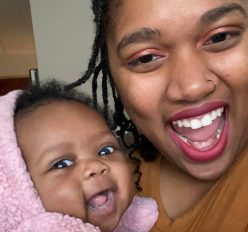
We Are Not Oppressed Because We Remember by Chasity Jones

Many questions are asked of us as a community, but the answers which are so complex that we should be commended for even attempting to answer, are heard- if they are not interrupted- but rarely understood. As a Black mother and wife, I have accepted the fact that no one will understand my struggle outside of other Black mothers and wives. After being asked questions about how my community relates to slavery, I am convinced that no one outside of my Black American community will ever understand how slavery has impacted our lives, identities, family structures, trauma, and deaths. Furthermore, it has yet to be understood how the past of slavery continues to impact these areas as a people.

Firstly, although slavery has left an immense imprint on our racial memory, the Black community is not stuck in slavery simply because we bring it up. It is brought up because it is a part of our story and we should not be made to feel ashamed of it. Just because you are tired of hearing about it or uncomfortable does not mean that Black Americans should be made to feel as though should avoid speaking of our history. Some many pro-Black groups and movements emphasize and celebrate the achievements of Black Americans before, during, after, and despite slavery. However, these movements threaten the dominant culture, and much of their achievements are ignored or perceived as threats and terrorism. It is hard to educate ourselves and our children about our ancestor pre-enslavement because our legacy, history, sacred knowledge, and culture were destroyed and our memories were erased and replaced with the bible and colonialist interpretations of scripture. Many of these scriptures are interpreted to justify slavery and are still used to justify police brutality, mass incarceration, and psychological warfare on Black Americans. Nevertheless, we do what we can to celebrate ourselves and our heritage. In doing so, we cannot ever forget slavery.

Continue reading “We Are Not Oppressed Because We Remember by Chasity Jones”