Nine Goddesses Every Woman Should Know by Annie Finch

Are you a woman (or man) who has lost touch with yourself spiritually — or

has never gotten in touch with yourself spiritually — or who just wants more joy in each day? If so, you may want to try entwining more goddess energy into your life. Many anthropologists believe that human societies were originally goddess-centered, and goddesses are still worshipped on every continent. Whatever your desire — strength, wisdom, compassion, fertility, creativity, sexuality — there is a goddess who can help you. Connecting with the goddesses who call to you — in the form of jewelry or art, words and music, or simply your thoughts — can sweeten and enhance your days with bright threads of unity, wonder, and female power.

But how to begin? The number and diversity of goddesses loved, worshipped, and celebrated throughout time and into the present, in every corner of the earth, is so breathtakingly large that trying to keep track of them can feel like counting the stars. To start you off, here are nine of my own favorite goddesses, chosen from among the most popular female divinities celebrated today (please note that many of them may also be known by different names or spellings).

Durga. The great Hindu mother goddess Durga is really nine goddesses in one. Durga’s nine manifestations — embodying qualities from courage to piety to blissful joy — are celebrated in India during a huge nine-day festival called Navarati. Durga is often pictured as a fierce goddess with many arms riding a lion. I have revered her ever since I found an ancient and powerful stone carving of her in the Asian wing of the Museum of Fine Arts in Boston. You can call on Durga’s invincible spirit when you need to be strong to your core!

Me (5th from right) with friends at a Durga Puja Celebration in Kolkata, India, many-armed Sculpture of Durga in background
Continue reading “Nine Goddesses Every Woman Should Know by Annie Finch”

Maiden, Mother, Crone: The Anthology by Madeleine White

Introduction: When I last wrote for Feminism and Religion, I shared some of the experiences that led me to write Maiden Mother Crone, a memoir in verse exploring trauma, motherhood, addiction, recovery, hope and the search for more inclusive forms of spiritual expression.

That personal journey has now opened into a wider conversation.

Maiden Mother Crone: The Anthology, published by Sea Crow Press and co-edited by me and Sea Crow Press founder and publisher Mary Petiet, is the third and culminating volume in my Crossing Places series. Drawn from around 150 submissions and developed through workshops in the UK and internationally, it brings together poets from across cultures, generations and geographies to explore body, memory, land, love, loss, motherhood, daughterhood, ageing, renewal, courage and hope.

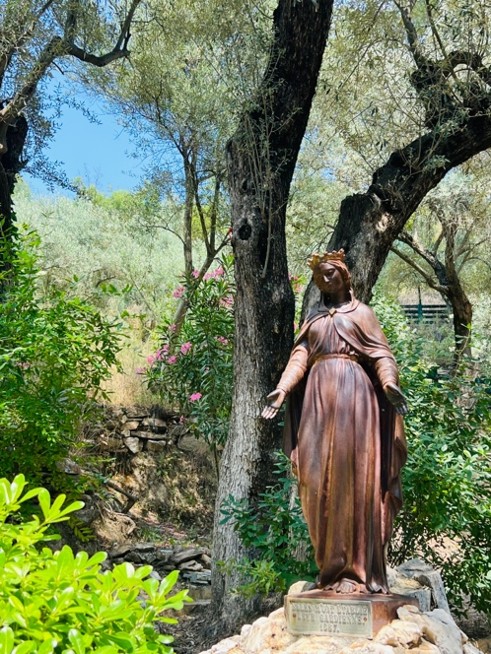
While responding to Mary’s questions about the anthology, I found myself returning to Bosorka, a statue I encountered recently in Bratislava. Created in memory of the women and men persecuted and killed after being accused of witchcraft, she seemed to embody many of the questions at the heart of the collection: whose voices are heard, whose experiences are mistrusted or erased, and how poetry and storytelling can help us remember, bear witness and create connection.

Continue reading “Maiden, Mother, Crone: The Anthology by Madeleine White”

THE COURAGE TO BE HATED by Esther Nelson

Carla Power, a prolific journalist, has written a long-awaited, insightful biography of amina wadud (b. 1952) titled THE LADY IMAM HOW AMINA WADUD’S LIFE AND FAITH CHANGED THE WORLD (One World 2026).  (Because the Arabic alphabet uses no capital lettering, amina chooses to be consistent with that script by not capitalizing her name.) 

amina and I were colleagues from the mid-1990s through the mid-2000s at Virginia Commonwealth University, Richmond, Virginia, where she was a Professor of Islamic Studies.  In this essay, I want to highlight some anecdotes from Carla’s book as well as offer some of my own reflections about amina.  This essay is not intended to be a book review, but a tribute to someone who learned to navigate her life with grace in spite of myriad  difficulties which included diagnoses of bipolar disorder and ADD/ADHD.

Notwithstanding the many words written and videos made about amina, she herself (in addition to chapters in books and essays) has written the following two books:

QUR’AN AND WOMAN  REREADING THE SACRED TEXT FROM A WOMAN’S PERSPECTIVE, Oxford University Press 1999.

INSIDE THE GENDER JIHAD:  WOMEN’S REFORM IN ISLAM, a book that demonstrates that “jihad” (to struggle) encompasses something well beyond the popular understanding of “holy war.”  Oxford: Oneworld, 2006.

Continue reading “THE COURAGE TO BE HATED by Esther Nelson”

She Changes Everything She Touches: A Reflection on Love and Loss, part 2 by Sara Wright

part 1 was posted last week, you can read it here.

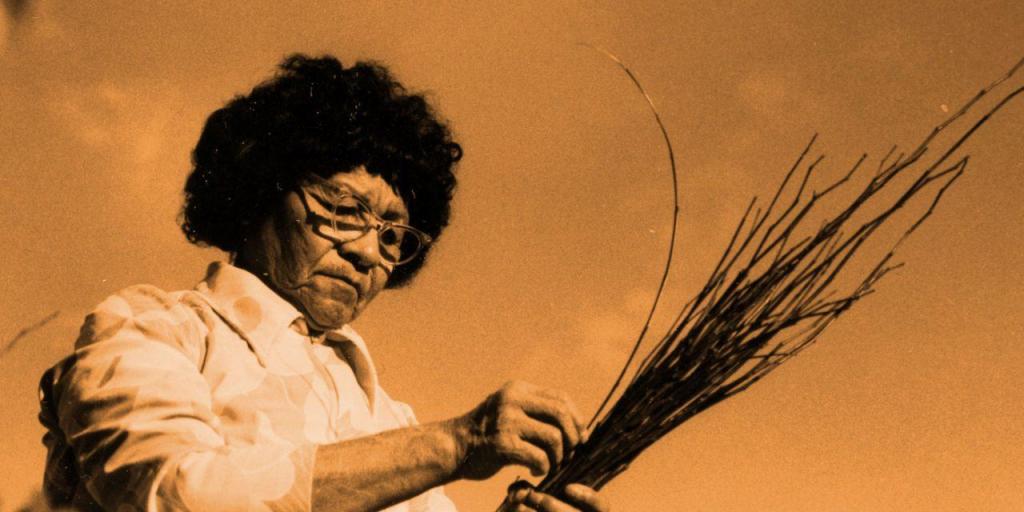
How much I like clipping by hand. Surprised by this realization I feel satisfaction rising. I was bored by this task as a child. I am delighted to meet a bevy of fat nubbly toads who appear out of the overgrown ground covers and in between sun warmed stones. Both child and ‘old woman’ feel happy that none will get mowed down by a polluting gas guzzling machine. The Peace of this Land that we belong to steals over us. Less is more. I’ll tackle the patch of bracken later, or maybe not until tomorrow. In this weather   accomplishing one simple chore a day is enough.

Well not quite. I am creating a serpentine path of fieldstone that stretches from my front door to meet the path that climbs the hill. My original intention was to have someone ‘more professional’ do the work, but they were too busy so here I am, an almost eighty-one-year-old woman, creating a mosaic out of cracked stone! ‘I am the artist’ I say, as I carry a few more irregular rocks down from the huge pile sitting in front of the garage eyeing the mosaic for the perfect fit. Illumination strikes when wind hits the stones. Blowing seeds, withered crabapple bits, pine needles and leaves into the cracks I see what is happening. Small plants like violets, creeping charlie, ground ivy, and catmint will find niches in the soil that is being created before my eyes.  Mosses will follow in the shade. Ah, Nature is going to help me craft a unique and imaginative fieldstone floor. Each time it rains the stones flatten out becoming more stable. That same feeling of satisfaction steals over me again. Vaguely I think that I may be doing something else besides laying stones in an artistic way and trusting that Nature will fill in the cracks, but I am not clear just what this might be. All I know is that it doesn’t matter how long this project takes. Process has taken precedence. This much feels just right.

Continue reading “She Changes Everything She Touches: A Reflection on Love and Loss, part 2 by Sara Wright”

How We ALL Need the Goddesses Now . . . by Annie Finch

Carol Christ, in her 1978 clarion call “Why Women Need the Goddess,” summarized four powerful, foundational ways that the Sacred Feminine urgently matters for women crawling out from under patriarchy.  Each way helps to heal the psychic damage of our upbringings and surmount the profound losses of our violated herstory.  Christ shows how Goddess belief and worship affirms the legitimacy of our power, the sacredness of our bodies, the honoring of our will—and the centrality of our connections with our foremothers and each other.

All this is still so true. All so important.

AND . . . Christ’s framing of Goddessness as a precious path of women’s transformation is not enough anymore.

Times have changed in the forty years since Christ published her essay.  Today’s world has been fast plummeting into an even more blatantly hellish (no, I don’t want to insult the source of that word, Goddess Hel, guardian of life and death—so I will change the adjective!) into an even more blatantly patriarchal state of affairs.

Continue reading “How We ALL Need the Goddesses Now . . . by Annie Finch”

Islam: A Feminist/Womanist Faith by Jamilah Ali

American media and the Taliban in Afghanistan have both long disparaged Islam regarding the status of women. I would like not only to correct the contention that women are second-class, but to provide for you an argument that Islam is, based on our Prophet and the Holy Quran, a feminist and egalitarian religion. It has been falsely maligned.

For your convenience I will use the English word for Allah, God, throughout this piece. (Did you know Arabic speaking Christians call God; Allah?)

Please note Muslims believe that all the Holy Books, the Bible and Torah, were indeed revelations from God. Belief in all the Holy Books is one of Islams 7 articles of faith. However, according to Muslim creed the Bible has been changed by humans through time deliberately or not. Thus Quran, the most recent revelation sent 610 years after Christ, is relatively unaltered from its original. It was radical, even then, for providing women the rights to inheritance, to have their own money and property, and for them to retain the dowry paid for marriage, not the father.

Continue reading “Islam: A Feminist/Womanist Faith by Jamilah Ali”

 NPR meets My Telepathic Bird Lily b, part 1 by Sara Wright

Lily b

I begin this story with a vignette and an invitation to meet my current family. This morning my four -pound Chihuahua made her usual rounds and ended up in the bathroom where my 3O plus year old African Collared Dove, a free flying house bird has a roost and his very own plant window. Lily b had flown onto the floor and was visiting with Coalie.

The first time I witnessed this exchange between bird and dog I instinctively swept Lily off the floor and deposited him on his perch, feeling relieved no damage had been done, though oddly Lily b was not the least bit agitated. A few days later I discovered him on the kitchen floor as Coalie was backing him into a corner. Or was she? Lily b was initiating these exchanges, so I was baffled.

Every morning Coalie stops by to see if Lily b is perched on his basket. They exchange salutations meeting eye to eye before Coalie moves on unless Lily flies down. It is impossible not to conclude that these two are engaging in some kind of play on days they meet on the floor. If Coalie can’t resist pulling at one of Lily’s feathers, he promptly spreads out a wing using it as a shield to block her. Back off he says and she does! Lily b never flies away.

Continue reading ” NPR meets My Telepathic Bird Lily b, part 1 by Sara Wright”

The Legacy of Intergenerational Violence/ Silence, part 1 By Sara Wright

 Patriarchy begins at home.

Author’s Note:  One reason I am sharing this story is that I hope that it will ease another round of suffering. However,  I would dearly like to believe that others might reflect upon the ways they have been impacted by family violence or silence in their own lives, so we don’t get caught by projecting these patriarchal roots outside of us onto the collective while dismissing them in ourselves. That dark  patriarchal seed is present in all of us, and I think that telling our personal stories keeps us attached to the whole with humility – a challenge in this time of monstrous ethical, social, political, ecological breakdown.

  I often have dreams that leave me with  questions, dreams that provoke deep personal reflection, dreams that stay with me as the following one did. At mid-life I had written tributes for two men that mentored me from a distance who brought ‘good fathering’ into the foreground because each encouraged me to believe in myself, to celebrate my original thinking, to trust my intuition and more.

Continue reading “The Legacy of Intergenerational Violence/ Silence, part 1 By Sara Wright”

The Glorians written by Terry Tempest Williams, discussion by Sara Wright

The Glorians: Visitations from the Holy Ordinary is an astonishing book written by internationally acclaimed  writer Terry Tempest Willams that is predicated on the necessity of bearing compassionate witness to all beings during these troubled times. It is a book about family, friends, earth and dreams, the later of which inspired the title. The volume is composed of a series of essays, only one of which I will discuss here.

Terry, who teaches at Harvard Divinity School, writes about the Divinity Tree, a two-hundred-year-old red oak that was removed from the Commons. Listening to this narrative as a ‘Tree Woman’ was/is excruciatingly painful. My stomach roils in misery, but I am compelled to listen, over and over, because this is my story too.

I came to the mountains because I was in love with trees and bears discovering an evergreen paradise or so I thought until the dreams began. In my night stories all the trees were being slaughtered and there was nothing I could do. Since I was surrounded by fragrant forests that stretched from horizon to horizon, I could make no sense of these terrifying warnings and let them be.

Continue reading “The Glorians written by Terry Tempest Williams, discussion by Sara Wright”

Burning Woman, by Lucy H. Pearce, 10th Anniversary Edition, Book Review by Beth Bartlett

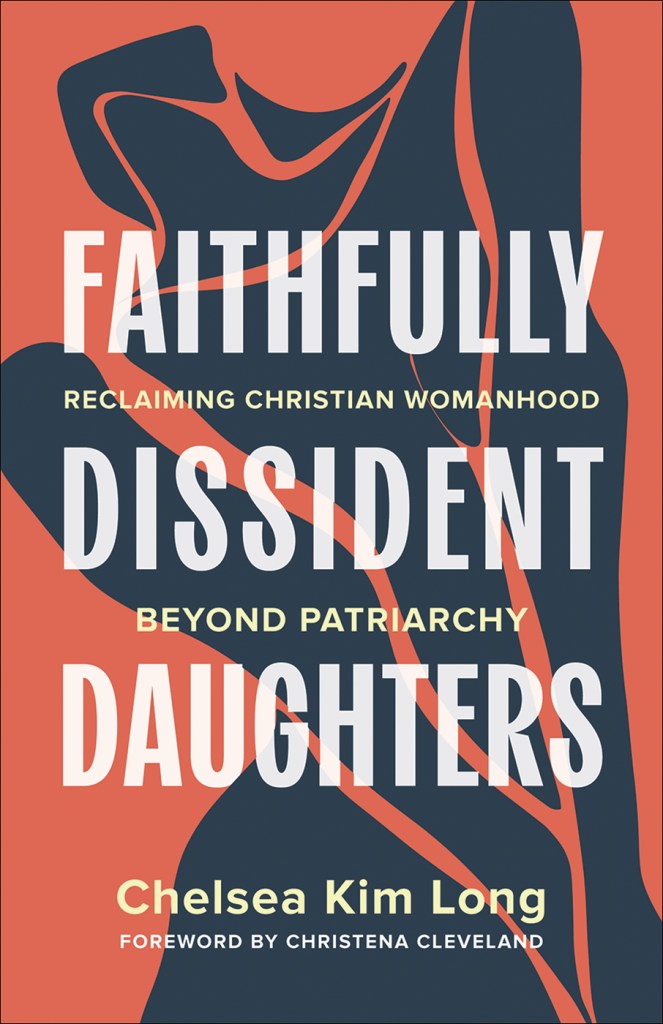
As someone who came into feminism in the late 1970s early 1980s, reading Lucy Pearce’s Burning Woman was re-entering the power and promise of women-centered feminism – the heyday of Adrienne Rich, Audre Lorde, Mary Daly, Clarissa Pinkola Estes, Andrea Dworkin, Charlotte Bunch, China Galland, Riane Eisler, Carol Christ, Gloria Anzaldúa, Susan Griffin, Starhawk, Sara Ruddick.[i]  It was the era of reclaiming the Feminine from its patriarchal definitions and women defining themselves outside of patriarchy – celebrating women’s spirituality, art, music, language, bodies, sexuality, birthing, voices, and power – when feminism was about transforming patriarchy rather than fitting into it — when Meg Christian proudly sang Betsy Rose’s “Glad to Be a Woman.” 

And then everything changed.  Just as women were coming into our own beyond patriarchy, women-centered feminism came to a halt due to pressures both from within feminism and without – with a whole school of deconstructionist feminists[ii] now critiquing women-defined women as “essentialists,” and moving back to minimizing rather than maximizing the differences between the sexes,[iii] with an emphasis on abolishing the gender binary, welcoming trans and non-binary folk, and questioning the whole concept of “women.”  Indeed, one of my Women’s Studies, now Gender Studies, students asked me privately if it was okay to call herself a “woman” because the term had become so forbidden among many of the students.  At this time, feminist theorist Nancy Hartsock raised the important question, “Why is that just at the moment when so many of us who have been silenced begin to demand the right to name ourselves, to act as subjects rather than objects of history, that just then the concept of subjecthood becomes problematic?”[iv]

Continue reading “Burning Woman, by Lucy H. Pearce, 10th Anniversary Edition, Book Review by Beth Bartlett”