

 With Angelina Jolie’s electing to have a double mastectomy because she carried the BRCa Gene, and her mother and aunt died at a very early age of the disease, the issue of genetic testing is in the forefront again. This is a three-part essay explores genetic testing when it comes to newborn testing (part one and part two) and concludes with exploring personal choices, availability, and psychological ramifications of genetic testing.
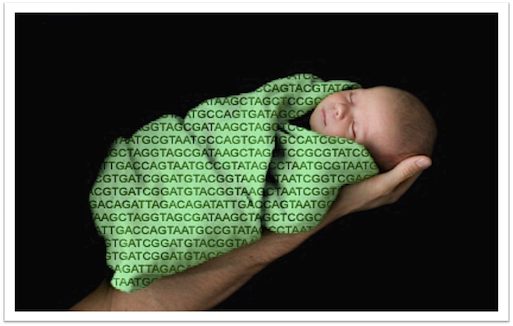
After nine months of worrying and diligent pre-natal care, the day to meet your unborn child is here. Labor is long and for hours you lie in the birthing suite riding out contraction after contraction. The moment finally arrives and you discover you have a son; ten fingers, ten toes and seemingly healthylungs by the cry that you hear. He is then quickly taken over to the nurse’s station and a drop of blood from his heel is placed into a machine that in seconds will decode his entire genome. Soon your son’s future will be written in stone; he has a life expectancy of 30.2 years and has a 99% chance of dying from heart failure. In that instance, your son has been labeled as an in-valid and he is now doomed to exist within a lower class of society, one that will prohibit him from pursuing his dreams. Society has discriminated against your new baby boy based solely upon his DNA. A new form of eugenics is born.
This was the opening scene of the 1997 science-fiction movie called “Gattaca.” Besides pushing the bounds of human imagination, science fiction can serve as a warning about a future caused by the abuses of humankind. The opening birth scene in this movie is quickly becoming a potential reality. Now, a person’s entire genome can be decoded and in an instant, a person knows whether he or she will be susceptible to Parkinson’s disease, Alzheimer’s disease, Cancer, or other life threatening conditions. Proponents of genetic sequencing believe that this is the holy grail of medical care and tout phrases like “personalized medical care” and “significantly reduced costs of healthcare.” There is a rapid movement towards this goal through the proposed expansion of newborn screening for eighty-four conditions, most of which are not understood or have no known treatment. Continue reading “Genetic Testing: The Ethical Implications of Expanded Newborn Testing – Who Benefits? (Part One) by Michele Stopera Freyhauf”
 Feminism and Religion