
Boundaries: A Poem Drawn from the Well of Jacob by Marcia Mount Shoop

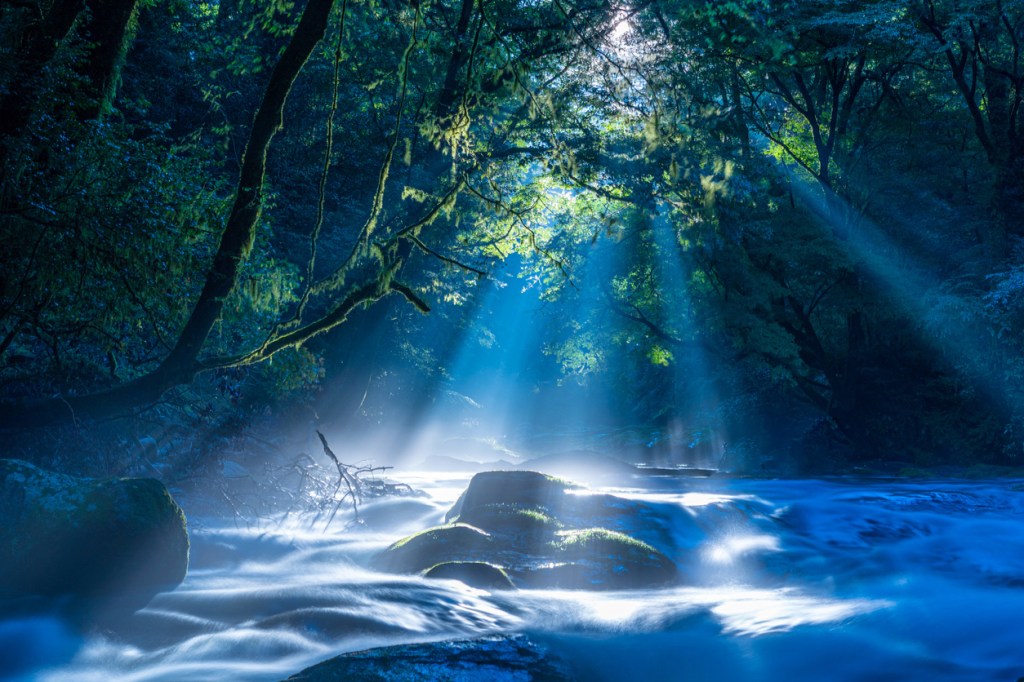
kikuchi valley, waterfall and light lay in the forest, kikuchi, kumamoto, japan

Today is the day in the Christian church year that we remember Jesus’ last supper with his friends/chosen family before he was betrayed by some of those same friends/chosen family. He talked to his beloved circle that night about many things, including betrayal and their capacity to embody Divine Love in a broken world after his death. Just a few days later he was executed by the Roman government because his prophetic and compassionate life was a threat to the powers that be of his day–both governmental and religious. In honor of this day in my faith tradition, I share a poem I wrote about one of the women in Jesus’ life before he was executed by Empire. Since Jesus’ death, he was kidnapped again by multiple Empires who have used him to put an ecclesial and even divine seal of approval on systems of oppression and genocide. The woman at the well gives us a window into Jesus the liberator. May we have space to remember him today as another Easter Sunday approaches for Christians around the world.

Continue reading “Boundaries: A Poem Drawn from the Well of Jacob by Marcia Mount Shoop”
The Mixed Bag that is Toldot by Ivy Helman.

The parshah for November 26th is Toldot, Genesis 25:19-28:9.  In it, we have the struggles of Isaac and Rebecca to conceive, the relations between Abimelech and Isaac’s family, the birth of Esau and Jacob, and the loss of Esau’s birthright and his father’s blessing.  As we will see, this is a tricky portion from a feminist perspective because of Rebecca, yet, from an ecofeminist perspective, I find the way in which the portion discusses the interconnection between the water, the land, and divinity helpful.

Let me begin with the water and then we will look at Rebecca.  Toldot takes place in and around the city of Gerar in Philistine territory, while Abimelech ruled.  Isaac and his family travel through the land quite a bit between verses 26:16 and 26:32.  Most of this section pertains to them moving and then digging new wells, the covering of wells, and the finding of water.  What I find particularly interesting here is the way in which water and peace seem to go together.  For example, in 26:20-21, Isaac and his family have constructed a well but it is causing them to have troubles with the locals.  Isaac seeks peace and thus leaves.  In verse 26:26, Isaac is visited by Abimelech and eventually a formal peace is declared.  This is followed in 26:32 by Isaac’s servants finding water in a freshly dug well.  In other words, Isaac is willing to uproot his family time and again to cultivate peace; he is not willing to go to war over what in the desert really is a quite limited resource.  

Continue reading “The Mixed Bag that is Toldot by Ivy Helman.”