

Mary Saracino’s statement on poetry: Poetry is based on intuition, emotion, something that is not really express-able other than through the poem. It’s a dialogue or conversation between the poet and the Soul (the collective unconscious, in my opinion), which then presents itself to the world. It can be a powerful medium for restoring, reviving, and revitalizing the memories of the Divine Female and reclaiming female sovereignty. Our planet, humankind and our plant and animal kin are in dire need of a paradigm shift, returning us to the time before patriarchy defiled women and usurped the natural order of the world.
Resurrection By Mary Saracino
Deep in the coils of memory our DNA
sings ancient songs of life, death, regeneration.
We each turn on our own axis,
as the Earth turns through her seasons,
winter’s fallow followed by spring’s eternal greening.
All sacred litanies arise from her soil,
take to the sky, return their blessings
to the wells, the rivers, the oceans.
Why can’t we remember?
Our souls are hung on crosses,
our limbs bound, our hands and feet
nailed to unrelenting dogma,
our tender ribs pierced with thorny spears,
our vulva-wounds ooze with bloody amnesia.
We have forgotten where we come from:
the dank caves of consciousness
littered with the bones of
stone age lovers painted ochre-red
to honor menstrual blood, the original river,
to honor, too, its womb-source, our primal passageway
the portal from which we all emerged, mouths open, wailing
for our mother’s breast,
seeking the milk that sustains us.
Like spring we are born again and again;
we circumnavigate our lives, spiraling forward,
circling back, orbiting our hearts
until we open to the sun
like red tulips in a once-fallow field,
dancing in the breeze, loose with joy,
sharing our subterranean secret,
reviving the buried bulb’s dormant hopes,
reveling in our resurrection.
Previously published: “Resurrection,” April 5, 2013
Subterranean Rage By Mary Saracino
Deeper than bone
deeper than muscle or sinew
or tenacious tendon
this howl of ages
rivers through bloodlines, ancient as oceans
salty as the primeval seas
this is what happens to women who
out-step their bounds
dare to be bold, brazen
speak up, name the subterfuge
women who grit their warriors’ teeth
fight on, for their children
their lovers, their nation
their homes, their hearts’ desires
branded as heretics: witch, bitch, cunt, whore
they race through forests and fields
trying to outrun the acrid scent of their own sweat
running from the hellish hounds
the priestly proclamations
the wrenching bite of the strappado*
running for their lives
caught between sinner or saint
rarely allowed sovereignty over Self
over mind & womb, over laws meant to undo them
Thousands of straggled cats launched the Plague
tender necks swinging from tree limbs
flaccid, cold paws an omen: the rats will have their day
Crucibles of change, cauldrons
of sorrow, voices stymied for ions by the threat of extinction
womb-wisdom silenced by public outcry
burned at the stake of cultural conditioning
the subterranean outrage
seeps out, sharp as knives
sharp as memory
sharp as justice denied
sharp as the bloodied knives
eviscerating their midnight powers
Deep is this grief
Deep this anger
A dirge of rage lost to the winds of time.
The weeping memory wails, still.
Hear it the moonless night sky,
touch it in the hot light of noon
smell it in the poisoned soil
taste it on your remembering tongue
see it in the burning irises
that bear witness to this unyielding genocide.
* Strappado is a form of torture, employed by the Inquisitional tribunals against women accused of witchcraft. Victims were suspended in the air by means of a rope attached to their hands which were tied behind their backs, causing their arms to be dislocated.
Previously published: “Subterranean Rage,” October 30, 2013
Tharros, Sardegna By Mary Saracino
The stones share their secrets with the sea,
the brilliant blue sky, the tasseled grasses,
the trees—and any humans who will listen—
defying history’s edicts to remain silent.
Parched by the wind and the rain,
the stones speak fiercely of love and of times lost
as outcroppings of brilliant wildflowers
sing sacred songs in the sunlight.
This ancient place is nestled
against a rugged shoreline,
its far-away culture castaway like a forgotten dream,
buried beneath rocks and earth;
here, the outcast souls bloom once more
in the red poppies
whose bloody tongues
whisper: “Remember, remember, remember.”
Author’s note: This poem was inspired by the ruins at Tharros, Sardegna during a visit I made in 2004 as part of a Dark Mother Study tour of that island led by Lucia Chiavola Birnbaum. I think of these ancient places as sanctuaries, containers, wombs, collecting and holding the memory of the Great Cosmic Mother; I see the flowers, the red poppies (sacred to Astarte) sprouting up among the archeological ruins, as Her resurging; blood red poppies, blood lines, blood flow; menstrual memory, carriers of life of memory, of lineage—blood-red, like flowery blooming tongues, telling their stories; reclaiming their truths; waving in the breeze, bending into the wind, but not submitting, allowing the wind to carry their message, carry their poppy seeds of memory out across the fields; kernels of memory—like an amnesic remembering, then speaking.
Previously published: “Tharros”, June 19, 2015

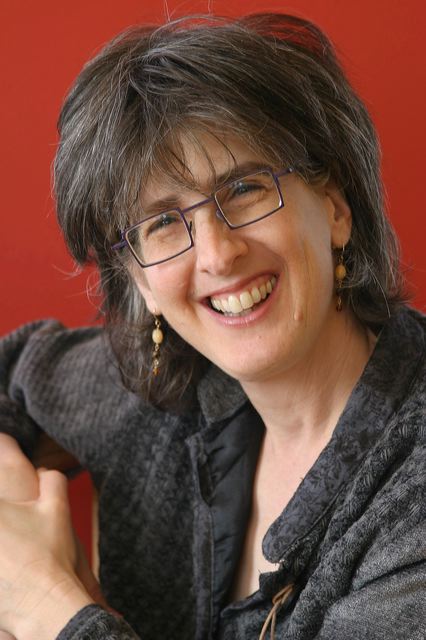
Mary Saracino is a novelist, poet, and memoir writer who lives in New Mexico. Her most recent novel is Heretics: A Love Story (Pearlsong Press 2014). Her novel, The Singing of Swans (Pearlsong Press 2006) was a 2007 Lambda Literary Awards Finalist. She is the author of the novels, No Matter What and Finding Grace, and the memoir Voices of the Soft-bellied Warrior. Mary’s short story, “Vicky’s Secret,” earned the 2007 Glass Woman Prize. Her poetry, fiction and creative nonfiction have been published in a variety of literary and cultural journals and anthologies, online and in print.
 Feminism and Religion