
The Road Back Home, part 1 by Terry Folks

Review: In my first four posts sharing my recent Goddess Pilgrimage to Crete, I combined Joseph Campbell’s mono-myth with Maureen Murdock’s feminist version.

In this post and the final one to come, we complete the journey home. In Murdock’s feminist adaptation, I am now poised to Integrate the Feminine and Masculine within. My hybrid combines Campbell’s Reward (Seizing of the Sword), the Road Back, Death and Resurrection, and my Return with the Elixir.

Briefly: Having tested positive for COVID on the first day of the pilgrimage, I was required to quarantine at Hotel Idi near the village of Zaros near the Psiloritis foothills in the bosom of Mother Mountain Ida. Four other sisters eventually joined me and we formed the Avocado Sisterhood, meeting daily for support and encouragement. However, I spent much of my time alone, moved inward, became very still, and underwent a personal spiritual transformation during this liminal time. My sisters left before I did as I still had not tested negative.

Stage Ten – The Road Back – Integration of the Feminine and Masculine

Continue reading “The Road Back Home, part 1 by Terry Folks”
My Pilgrimage to Crete – September 2023, Part 1 by Terry Folks

Carol Christ’s Legacy honored by Laura Shannon, and the Ariadne Institute

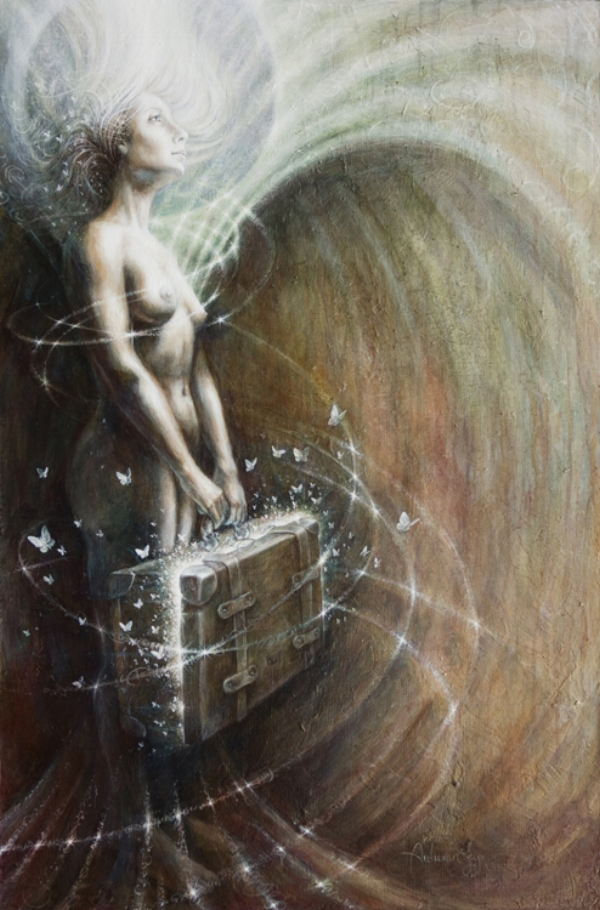
Adventure by Autumn Skye with permission of artist

When I teach the Heroine’s Journey in my Sophia Women’s Wisdom Group, I draw on Joseph Campbell’s idea of the mono-myth, an archetypal story that resonates with every human across time: The Hero’s Journey. I combine Campbell’s ideas with pieces of feminist Maureen Murdock’s heroine’s journey to recognize the unique pathway of the feminine. I call this my hybrid heroic journey. If you are not familiar with Maureen Murdock’s work, I invite you to see how she brought her feminist eye to Campbell’s iconic Hero’s Journey in her book The Heroine’s Journey: Woman’s Quest for Wholeness. After her conversation with Joseph Campbell six years prior to his transition, Murdock felt he missed “that the focus of female spiritual development was to heal the internal split between woman and her feminine nature” (p. 2). In my hybrid heroic journey, that split in the early stages is internalized negative masculinity. The rejection of our feminine nature may appear differently in each woman’s life but it is often characterized by treating ourselves how we imagine men perceive us.

My recent Pilgrimage to Crete was astonishing; my epiphany, gradual. As I share my adventure, imagine stages of your own heroine’s journey wherever you are in that cycle. I hope that by sharing this series, you will experience a real life example of Dion Fortune’s definition of magic: ‘The art of changing consciousness at will’. Starhawk, Truth or Dare, 1988.

Continue reading “My Pilgrimage to Crete – September 2023, Part 1 by Terry Folks”

The Via Feminina: Revisioning the Heroine’s Journey by Mary Sharratt

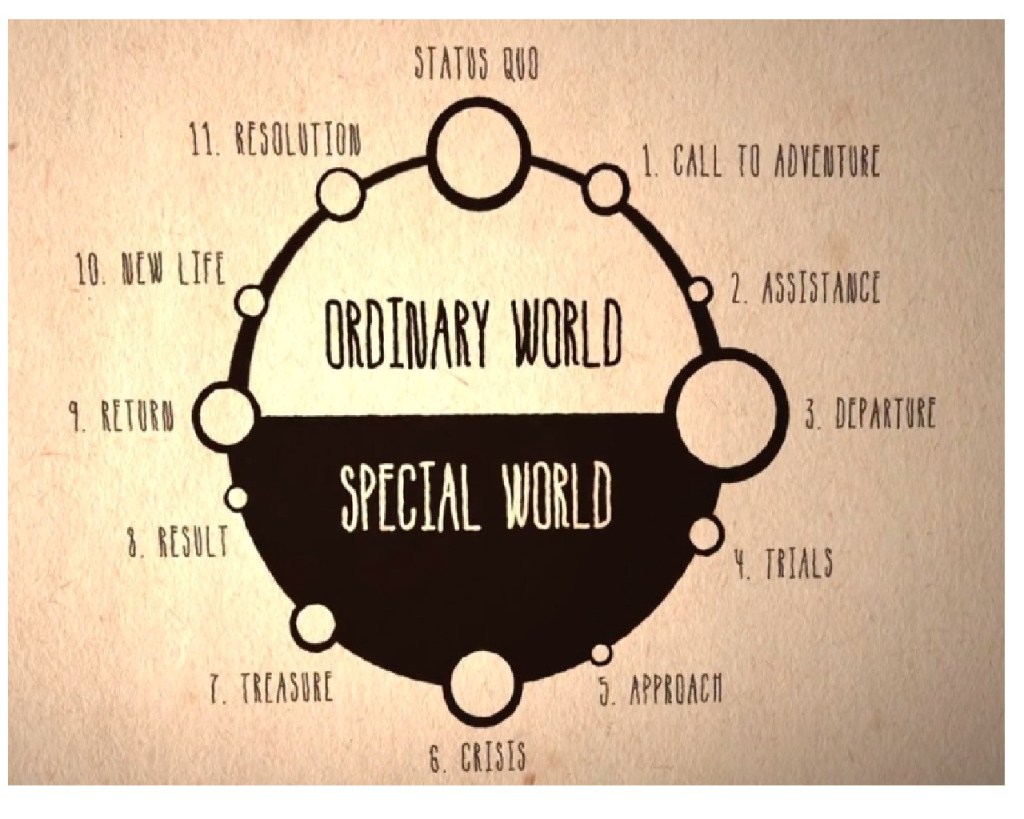
Campbell’s Hero’s Journey

Joseph Campbell’s monomyth, the Hero’s Journey, is outlined in his 1949 book, The Hero with a Thousand Faces. Drawn from his studies of comparative mythology and Jungian psychology, the Hero’s Journey has become a foundation myth of modern culture. The hero, generally young and vigorous, sets off into the unknown to battle antagonistic forces and returns transformed, a hero and guide to his people.

As Campbell writes in The Hero with a Thousand Faces:

A hero ventures forth from the world of common day into a region of supernatural wonder: fabulous forces are there encountered and a decisive victory is won: the hero comes back from this mysterious adventure with the power to bestow boons on his fellow man.

The Hero’s Journey has served as the go-to template for Hollywood screenwriters and bestselling novelists. We see this mythic pattern of the conquering male hero played over and over again in popular culture. Think Luke Skywalker in the original 1977 Star Wars—or any protagonist in a George Lucas or Steven Spielberg movie. Creative writing teachers encourage their students to pattern their story arcs on the Hero’s Journey to give a sense of archetypal depth and resonance. But this technique has been overused to the point of becoming a cliché. A deeply sexist cliché. Continue reading “The Via Feminina: Revisioning the Heroine’s Journey by Mary Sharratt”