Legacy of Carol P. Christ: Rituals Of Spring and Greek Easter

This was originally posted on May 6, 2013

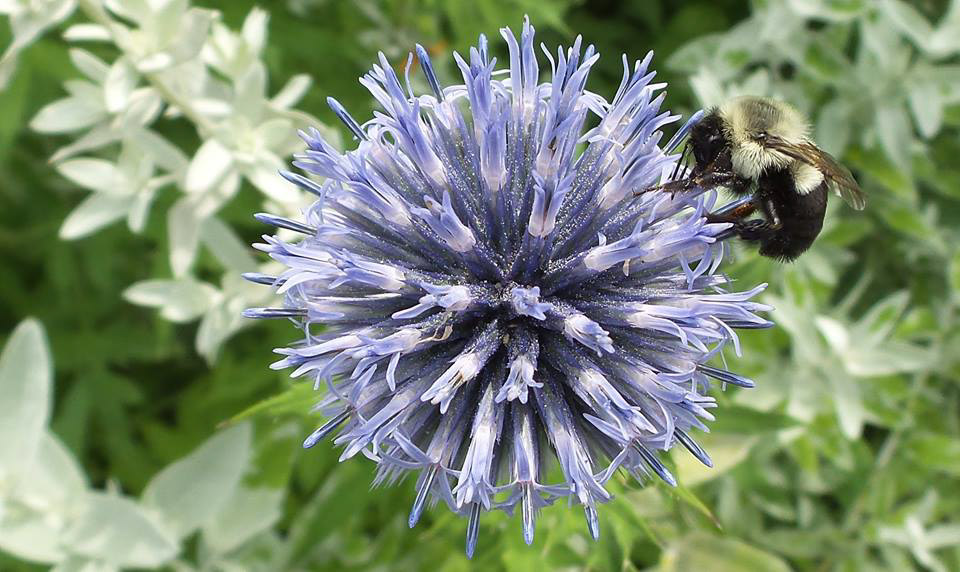
Though I am not a Christian any more, I don’t want to sit home alone on Easter Day.  Besides being a Christian ritual, Greek Easter is a time to eat lamb with family and friends, and to celebrate the coming of spring by feasting out-of-doors in flowering fields or in a garden filled with flowers, bees, butterflies, and birds.  Such rituals have been celebrated from time immemorial.

lavender

Greek Easter came late this year, only yesterday, May 5.  I prepared for an Easter party in my garden for weeks.  My garden is planted with herbs and aromatics—lavender, thyme, oregano, rosemary, curry plant, rue, sage, cistus, rose-scented geranium, sweet william, cat mint and several other kinds of mint, bee balm, and roses and fruit trees, including lemon, bitter orange, pomegranate, olive, quince, and cherry.  Everything blossoms in spring, attracting bees and butterflies.

purple sage

I began weeding and pruning about 6 weeks ago.  This year I had to remove many overgrown lavender plants.  For the last 3 weeks in addition to ongoing weeding and pruning, I have been replanting lavender which I have promised myself to prune “way back” in the fall, along with purple sage, blue daisies, and thyme.  Though there is bare ground in some parts of the garden, in other parts mature plants and trees are in full flower.

Continue reading “Legacy of Carol P. Christ: Rituals Of Spring and Greek Easter”

Legacy of Carol P. Christ: COMPLICATIONS AND CONFUSIONS IN DISCUSSIONS OF THE GODDESS

This was originally posted on May 12, 2014

carol christ

Although writing in patriarchal Greece from a patriarchal perspective, Hesiod said in his Theogony or Birth of the Gods that Gaia or Earth alone was the mother of the Mountains, Sky, and Sea. With the male Sky she gave birth to the next generation of deities known as the “Titans,” who were overthrown by Zeus. Hesiod’s was a “tale with a point of view” in which “it was necessary” for the “forces of civilization”–for him represented by warrior God and rapist Zeus–to violently overthrow and replace earlier conceptions of the origin life on earth and presumably also to overthrow and replace the people and societies that created them.

With the triumph of Christianity in the age of Constantine in the 4th century AD, Christus Victor replaced Zeus in the cities, while the religion of Mother Earth continued to be practiced in the countryside. Over time, many of the attributes of Mother Earth were assimilated into the image of Mary, and priests began to perform rituals earlier dedicated to Mother Earth, such as blessing the fields and the seeds before planting. In the Middle Ages “the Goddess” re-emerged within Western Christianity in devotion to the Virgin Mary, the female saints, and figures such as Lady Wisdom, at the same time that the history of the Goddess was being erased.

In the middle of the 19th century, in Das Mutterrecht (The Mother Right), J. J. Bachofen stunned the scholarly world with his theory that matrilineal kinship, matrilineal inheritance, and reverence for the Great Mother were to be found at the origins of civilization. Bachofen challenged the view that patriarchy and the worship of male Gods had existed “from the beginning .”

Continue reading “Legacy of Carol P. Christ: COMPLICATIONS AND CONFUSIONS IN DISCUSSIONS OF THE GODDESS”

Mother/Meter: Reclaiming Poetry’s Sacred Goddess Languages by Annie Finch

Enheduanna poem to Inanna on tablet

Those of us on the paths of the Divine Feminine can go to great lengths to approach Her.  We might read and study hard-to-find books, invest time and money to visit temples and museums, and seek out Goddesses-related power spots around the world. We might acquire ceremonial jewelry and devotional artworks, attend conferences, track down Goddesses-inspired music, and apprentice with teachers from spiritual traditions that may be far removed from our own heritage. We might invest in supplies and training to craft devotional music, art, sculpture, and apparel, and create or attend performances, healings, and rituals honoring the Feminine Sacred.

Yet there is one important ritual activity that we routinely forget and ignore, one that we know was key to Goddess worship whenever we have written prayers, from Demeter to Inanna, Isis to Freyja, Hekate to Sarasvati. This time-honored practice is simple to learn, costs nothing to use, and quickly, safely, and legally creates an altered state of mind that brilliantly and efficiently connects us with our spirits, the natural world, the Divine Feminine, and each other. And furthermore, this ancient sacred craft is not limited to indigenous or ancient cultures but is already part of the familiar heritage of anyone who speaks English, so there is no danger of cultural appropriation in using it.

Continue reading “Mother/Meter: Reclaiming Poetry’s Sacred Goddess Languages by Annie Finch”

My God Bleeds With Me by Jsabél Bilqís

My god bleeds with me
Her feet right beside mine for morning gratitudes
Soles to soils, we touch skin to skin
She’s vast like me
And I love her

My god grieves when I do
My sorrows meet Hers at the ocean shore
Vial for vial, our tears make our medicine
She can transmute anything, just like me
And I love Her

She courts me
leaves me love notes in the shapes of flower petals
winks at me in amber sunsets
morning serenades and juicy fruits
She loves me! She lifes me!
And I love and I life Her too

Continue reading “My God Bleeds With Me by Jsabél Bilqís”

Goddess Architectures: How Cultures Shape Sacred Feminine Power

In this essay, I address a gap in goddess spirituality, between a rhetoric of celebrating the body, and lack of truly embodied practice. I reflect on the archetypal language commonly used in goddess spirituality, tracing its roots in Greek mythology and depth psychology while questioning its cultural limits.

By introducing the notion of “goddess architectures”, I explore how ecological, social and cosmological contexts shape symbolic structures, and how sacred feminine power can be named, distributed, embodied or obscured across cultures. Finally, I propose movement as a way back to lived experience beyond symbolic and linguistic frameworks.

Goddess Spirituality into the Lived Body

Over the past thirty years of researching and practising goddess spirituality, I noticed a persistent discrepancy. While this field speaks about honouring the body as sacred, in practice it often feels like rhetorical lip service. The language of embodiment is present, but remains disconnected from the body on many levels. 

Continue reading “Goddess Architectures: How Cultures Shape Sacred Feminine Power”

Moving through the Midlife Threshold

Goddess Qi Gong as a New Compass

There is a deep and insidious taboo around ageing that leaves so many of our experiences as women unspoken, as if the physical, emotional, hormonal and mental shifts of growing older should be suffered alone and hidden behind doors.

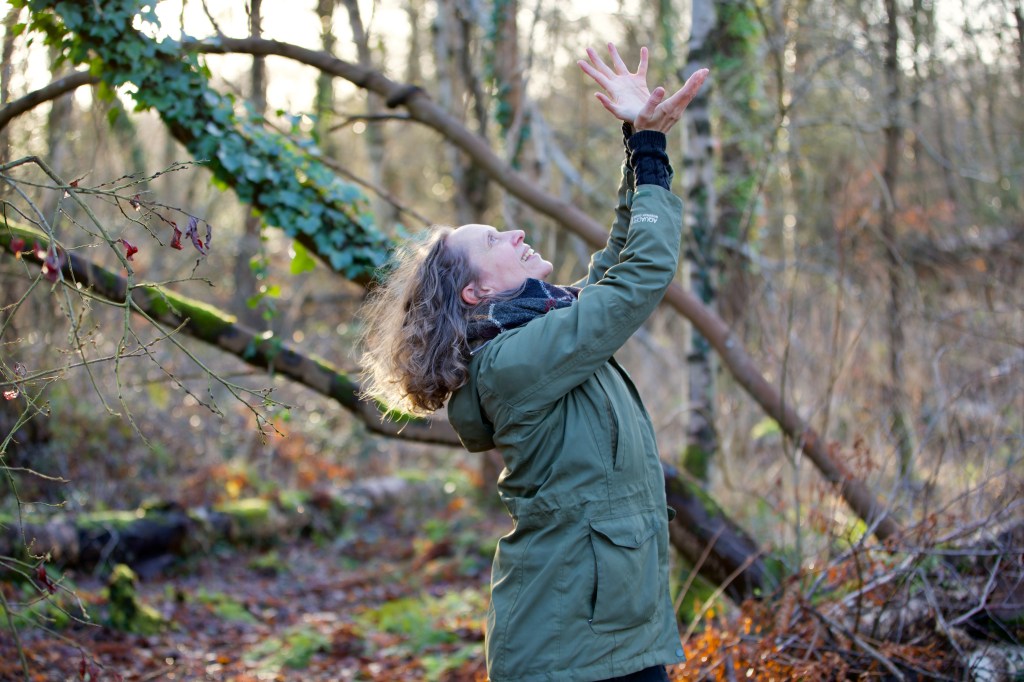
What if we can turn midlife into a positive initiation that we share together? Would it be possible to learn to read our body and psyche differently? Might practising conscious movement literally help us move through this phase? And what would happen if we re-orient ourselves towards the many faces of the Goddess?

Continue reading “Moving through the Midlife Threshold”

From the Archives: Fireless Altars and Crone Encounters By Barbara Ardinger

This was originally posted on Nov 10, 2021

We’ve just entered November, the beginning of winter, the season of darkness. Twenty-odd years ago, I led a group of students through the Wheel of the Year in a class I called Practicing the Presence of the Goddess. (I also wrote a book with the same title.

At Imbolc (February 1), we held a divination party at Louise’s house. At Beltane (May 1), we met at Rose’s house, painted our faces, created wreaths of fresh flowers to embody our summer wishes, and then carried our wreaths of flowers through the streets of Huntington Beach to the ocean, where we cast them into the tide. At Lammas (August 1), we harvested our gardens and cooked a feast in my kitchen.

Continue reading “From the Archives: Fireless Altars and Crone Encounters By Barbara Ardinger”

Legacy of Carol Christ: Can You Kill the Spirit? What Happened to Female Imagery for God in Christian Worship? by Carol P. Christ

When I first began to think about female language and images for God I imagined that changing God-He to God-She and speaking of God as Mother some of the time would be a widespread practice in churches and synagogues by now. I was more worried about whether or not images of God as a dominating Other would remain intact. Would God-She be imaged as a Queen or a Woman of War who at Her whim or will could wreak havoc on Her own people?

Forty years later, very little progress has been made on the question of female imagery for God. I suspect that most people in the pews today have never even had to confront prayers to Sophia, God the Mother, or God-She. Most people consider the issue of female language in the churches to have been resolved with inclusive language liturgies and translations of the Bible that use gender neutral rather than female inclusive language.

In her new book, Women, Ritual, and Power: Placing Female Imagery of God in Christian Worship, Elizabeth Ursic states that one of the reasons that the issue of female language seems less pressing than it once did is because those for whom the issue was important have for the most part left the church. But the question is why.

Continue reading “Legacy of Carol Christ: Can You Kill the Spirit? What Happened to Female Imagery for God in Christian Worship? by Carol P. Christ”

Threshold Time, by Molly M. Remer

Step by step,
we make our way.
Breath by breath,
we choose.
Day by day,
we see where we are.
Let us remember
that we do not really finish anything,
we tumble with the turning
which is right where we belong.

It is now
in this liminal space
between the cauldron
and the cave,
as obligation struggles
to come roaring back
into center,
that we sense what we truly need
whispering beneath the surface
of all that clamors to co-opt our time
and all that howls
to claim our attention.
Stand steady.
Inhabit your own wholeness.
Cast a one word
spell of power: return.
Step into the sacred
right where you are.
Re-collect yourself.
Reclaim your right
to your own life.
Defend your edges.
Give clarity space
to crystallize
and your own knowing
space to emerge.
It is vital,
this work of reclamation.
Hold it holy.
Let the knots unravel.
Set yourself free.

Continue reading “Threshold Time, by Molly M. Remer”

Legacy of Carol P. Christ: MATRIARCHY: DARING TO USE THE “M” WORD

carol-christ

This post was originally published on Feb. 17th, 2014.

For me the word “matriarchy” expresses the certainty that “another world” can exist—a world not based in domination and hierarchy or violence and war. 

The word “matriarchy” makes people’s hair stand on end as they imagine the mirror-image of patriarchy: societies in which women dominate men, beat men, rape men, hold men as slaves, and demand obedience from men.  Some who do not protest very loudly or at all against patriarchy are horrified by the very idea of matriarchy. To be fair, most feminists have also been schooled not to use the “m” word.

Early in my academic career, I read “The Myth of Matriarchy” by Joan Bamberger and learned that the idea of matriarchy gone wrong has been used by men to justify patriarchy. From other academics I learned that in matrilineal societies, uncles have a great deal of power—so therefore there never was a matriarchy.  I was also aware that Jungian and other proponents of a “matriarchal stage” in the development of culture have argued that matriarchy had to be succeeded by patriarchy in order for societies to evolve to a “higher” stage. Unlike many of my colleagues I stubbornly held onto the belief that there must have been “a better way” prior to patriarchy. Continue reading “Legacy of Carol P. Christ: MATRIARCHY: DARING TO USE THE “M” WORD”