

Introduction: Beyond Being a Mountaineer a Feminist Icon of the Himalayas

When we hear the name Mount Everest, the world’s highest mountain, we involuntarily think of rugged, macho explorers battling ice and thin air. Pasang Lhamu Sherpa’s existence defies that stereotype. Not only was she the first Nepali lady to reach the summit of Everest, but she was a living testament to feminine strength, determination, and will. Her life is a stirring affidavit to feminism in its very extreme forms, where gender discrimination is as hard to overcome as the mountains themselves.
Early Life: A Sherpa Girl Raised Among Giants Dreams beyond Tradition
Born in 1961, in the high-altitude town of Lukla, Pasang Lhamu Sherpa was brought up in the shadow of the Himalayas, under a centuries-long patriarchy-dominated culture. Sherpa women had assumed support roles—cooks, caregivers, assistants to climbing expeditions—while the men assumed the risky climbs.
But ever since childhood, Pasang was captivated by the mountains, her aspirations reaching as high as the mountains themselves. Defying cultural expectations that she seek domesticity, Pasang applied herself diligently and acquired competence which would make her a trailblazer in the years ahead.
Continue reading “Pasang Lhamu Sherpa: The Fearless Sherpa Lady Who Conquered Everest and Shattered Patriarchy by Bikash Khanal” In the winter of 2013, I went on pilgrimage to Kathmandu, Nepal. While there, I visited the Khachoe Ghakyil Ling (Pure Land of Bliss) Tibetan Buddhist nunnery, the largest in Nepal with about 400 nuns. It’s affiliated with the nearby Kopan monastery where I stayed in the retreat housing. The nuns gave a group of us a tour of the gompa (meditation room), classrooms, workshops, and kitchen. The studies at the nunnery include math, science, and English, Nepali, and Tibetan languages, as well as meditation, debate, ritual arts, and chanting, the same education that the monks receive at the monastery. When not engaged in prayer and education, the nuns produce herbal incense renowned for its healing properties, which clear and uplift the mind. Not surprisingly for their ambitious program, a nun’s average day is 14 hours long.
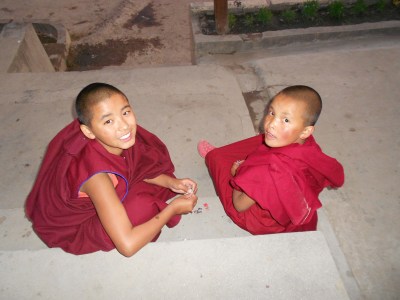 Since I am averse to crowds and rebellious by nature, I ducked out of much of the sight-seeing and instead spent my time engaging with the novitiates, the young nuns who were milling about before dinner because they had completed their classes, daytime prayers, and other duties. We asked each other questions like “What’s your name?” and “Where are you from?” Then I was treated to “Watch me do this!” and “Can you do this?” because the language of children is universal. Yet, what was special about these girls was that they were being given food, shelter, and an education — opportunities that many their ages, especially girls, would never know.
  Feminism and Religion