

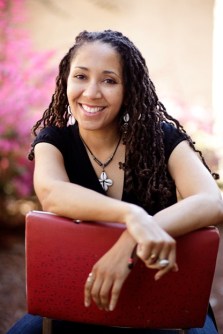
 In national quarantine and sheltering-in-place or is it “safer-at-home,” all I could think about was that we were living in a scene from the late Afrofuturist writer Octavia Butler’s book Parable of the Sower. So I texted my friend, Afrofuturist writer Tananarive Due and said: hey let’s do a webinar on this. And this turned into weekly – then monthly – free webinars on the wisdom we can glean from Octavia Butler as we live through these political days.
Here, I share a recent workshop and dialogue that lifts up Octavia’s Parable of the Sower and highlights themes of prophecy, dystopia, theology and a way forward in times like these.
If you are interested in engaging more intimate work centered on Octavia’s work, visit OctaviaWebinar.com for more information.
Dr. Monica A. Coleman is Professor of Africana Studies at the University of Delaware. She spent over ten years in graduate theological education at Claremont School of Theology, the Center for Process Studies and Lutheran School of Theology at Chicago. Coleman has earned degrees from Harvard University, Vanderbilt University and Claremont Graduate University. She has received funding from leading foundations in the United States, including the Ford Foundation, the Andrew W. Mellon Foundation, and the Woodrow Wilson Fellowship Foundation, among others.
Dr. Coleman offers workshops, lectures and books for your organization, university or church. She warmly connects with people as she shares principles for growth and liberation. Read her story here.
 I love reading fiction, particularly science fiction and fantasy literature. However, since the birth of my daughter
  Feminism and Religion