
Evolution of Cinema and Shift of the Moral Universe by Sabahat Fida

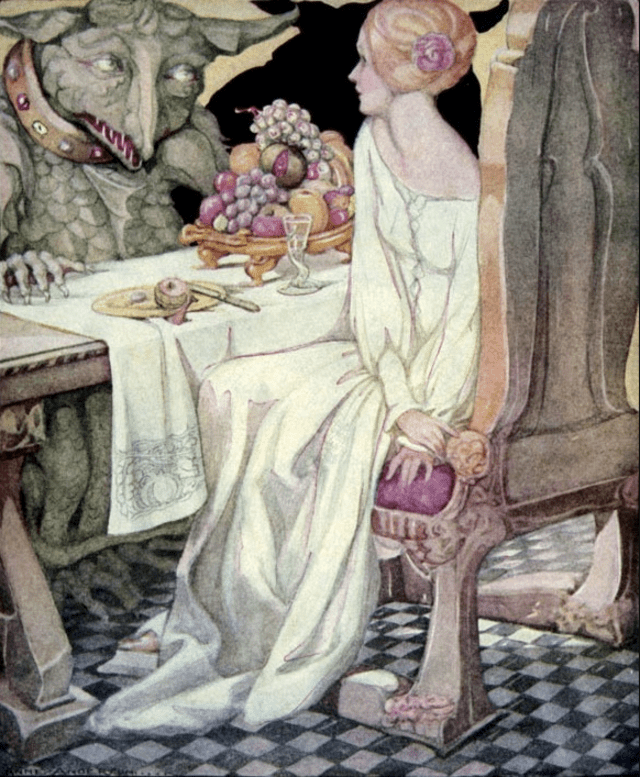
Annie Anderson, Beauty and the Beast, wikimedia commons, public domain

For most of cinematic history, the moral universe of film was anchored in clarity. The hero was dharmic—principled, disciplined, and guided by a moral compass that was neither ambiguous nor negotiable. The villain, by contrast, represented a clear rupture in the ethical order. Actions had consequences; justice was intelligible; human beings possessed agency, responsibility, and accountability. Main stream cinema reflected a world in which right and wrong, virtue and vice, were not merely narrative devices but metaphysical coordinates. One could locate a character on the map of moral compass with precision.

Older Indian cinema often adhered to a strong moral framework in which even the most charismatic or beloved protagonists were ultimately required to pay for their transgressions on screen. Unlike today’s era of morally ambiguous films—where anti-heroes may triumph, consequences are negotiable, and ethical lines are intentionally blurred—classic cinema rarely allowed wrongdoing to go unpunished. Yet this does not mean that earlier films lacked sophistication or ambiguity; rather, they explored moral conflict within a clear ethical horizon, allowing audiences to empathize deeply with flawed characters while still witnessing their inevitable downfall. For example, in Deewaar (1975), Amitabh Bachchan’s Vijay becomes an iconic rebel whom audiences passionately sympathize with, yet he must die in the end to restore moral order. In Parwana (1971), his obsessive, morally dark character meets a tragic ending, demonstrating the same principle. Even beyond Bachchan, iconic villains like Gabbar Singh in Sholay (1975) was originally written to die as a narrative necessity. Through such storytelling, older cinema balanced empathy with accountability, illustrating that complexity and moral clarity once powerfully coexisted.

Continue reading “Evolution of Cinema and Shift of the Moral Universe by Sabahat Fida”

The Second Skin: Lipstick, Lies and Lead part 2 by Sabahat Fida

part 1 appeared yesterday

It is mind-boggling to consider how standards for women’s bodies have been normalized over time. Centuries ago, practices like binding women’s feet in ancient China or forcing the use of corsets to narrow the waist which are now universally condemned as cruel and uncivilized. Throughout history, women have been subjected to extreme and often harmful beauty standards.  Foot binding created tiny “lotus feet,” causing lifelong pain and disability, while in Europe, tightly laced corsets compressed ribs and displaced organs to produce an exaggerated hourglass figure. In parts of Southeast Asia, neck rings elongated the neck but weakened muscles over time, and in Africa, South America, and Asia, lip and ear stretching permanently altered tissue as a marker of beauty or status. Pale skin was prized in ancient Egypt, Asia, and Europe, often achieved through toxic powders containing lead or arsenic, while teeth were filed, blackened, or inlaid to meet local ideals. Women were also expected to meticulously shape or remove hair and conform to strict weight norms, whether forced thinness or fattening, depending on the era. Across centuries, these practices reveal a clear pattern: women’s bodies were controlled, altered, and harmed in the name of beauty ,  a coercion that, in many ways, continues today through cosmetic interventions and socially enforced aesthetic standards.

Continue reading “The Second Skin: Lipstick, Lies and Lead part 2 by Sabahat Fida”

The Second Skin: Lipstick, Lies and Lead part 1 by Sabahat Fida

A woman’s body has become a site of commodification to such extreme that even her most basic necessities are not spared. Products meant for hygiene or comfort ; razors, deodorants, tampons, shampoos  are packaged, scented, and coloured in ways that signal femininity, pushing them into a hyper-aesthetic zone of the departmental store. This creates a glaring economic contradiction: men’s products, often identical in function, are sold cheaper, while women pay a premium simply for their gender. But the exploitation is not merely financial. By demanding that her essentials adhere to socially approved standards of beauty, the market sends an unambiguous message: a woman’s needs, her very body, are only legitimate when they are commodified, beautified, and consumed in accordance with society’s expectations. The Pink Tax is thus not just a matter of inflated prices, it is a subtle enforcement of control, conditioning women to invest continuously in an ideal that is neither natural nor negotiable.

But this exploitation extends far beyond commercialized markets and seeps into the routines of everyday life. A tailor may charge different rates for the same shirt depending on the gender it is intended for, while a simple haircut at a salon can cost women far more than men, despite the identical service. Men’s consumption remains largely practical, functional, and unembellished, whereas women are expected to pay for aesthetic compliance at every turn. This raises the question: is the female market driven merely by trends or gullibility, or is it a reflection of deeper societal pressures — an unspoken demand that a woman’s body and appearance must conform to rigid standards of femininity in order to be socially acceptable?  Is the answer  in the very language and design of advertising  Taglines like “You’re worth it” or “Strong is beautiful” which  carry a psychological imperative, subtly instructing women to compare, conform, and continually invest in their appearance as a measure of worth ? These subliminal marketing strategies are deeply rooted in social comparison theory, objectification and fear appeal/protection motivation theories.

Continue reading “The Second Skin: Lipstick, Lies and Lead part 1 by Sabahat Fida”