
Shariah is not a Law by Esther Nelson

I will never forget the day Nasr Abu Zaid (1943-2010), an Islamic Studies scholar and teacher extraordinaire, told me, “Shariah is not a law.”  In spite of his assertion, many people—both Muslims and non-Muslims—are convinced that Shariah is synonymous with archaic legal rulings that are at odds with democracy and modernity.


What is Shariah, then, if not a law?  When we see or hear the word Shariah, the word “Law” almost always follows.  Shariah literally means a path—a well-trodden path such as animals use on their way to a watering hole.  Shariah, then, can be understood as something that when embraced has potential to give life and sustenance.


Muslims believe that the Qur’an was revealed to Prophet Muhammad by the angel Gabriel circa 600 C.E.  That revelation—Muslims believe it to be God’s actual speech—took place over a period of approximately twenty-one years. The Qur’an contains Shariah (path) in the form of information, narrative, and poetry.  Since Shariah is essentially a path that leads to life, the critical question centers on how Shariah can be appropriated, leading us to the water that sustains.
Continue reading “Shariah is not a Law by Esther Nelson”

ISIS and the Larger Muslim Crisis by Hanadi Riyad

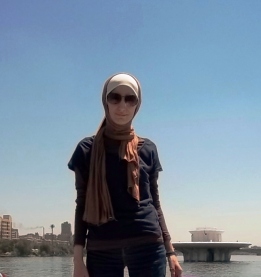
Hanadi Riyad croppedIt is heartening to hear the many condemnations Muslim scholars have issued of ISIS and its methods and actions. One of the latest attempts comes in the form of an open letter addressed by a coalition of one hundred and twenty six Muslim “scholars” from across the world to Abu Bakr al Baghdadi and ISIS followers and supporters. The seventeen page letter is one of the most detailed responses to ISIS I have read. However, just like other responses, it fell short of my expectations as a Muslim woman. I checked the list of the signatories and I could not find any women amongst them.

I am saddened to note that the authors of the letter fall into the same mistake they accuse ISIS of: they quote some Quraanic verses and Hadiths selectively, out of context, and portray them as sufficient rebuttal against ISIS actions, never mind the sources, verses, and Hadiths ISIS has been quoting just as selectively to justify its crimes. The letter explains about the methodology of Islamic legal theory (usul al-fiqh) that it stipulates “to consider everything that has been revealed relating to a particular question in its entirety, without depending on only parts of it, and then to judge if one is qualified based on all available scriptural sources.” There’s no explicit logical explanation for why the parts of the scripture and interpretations quoted by the writers of the letter should be given precedence over the ones quoted by ISIS.

The implicit reason, however, resides in the authors’ assertion of their authority as Sunni “scholars”  and their opinion as “a scholarly opinion.” We should take their word because they have the authority that ISIS does not. The assumption that ISIS cannot count amongst its ranks scholars is neither explained nor defended. The doctrinal connection between ISIS and Wahhabi ideology upheld by many Saudi scholars – like ibn Baz and his disciples— goes unacknowledged. Continue reading “ISIS and the Larger Muslim Crisis by Hanadi Riyad”