
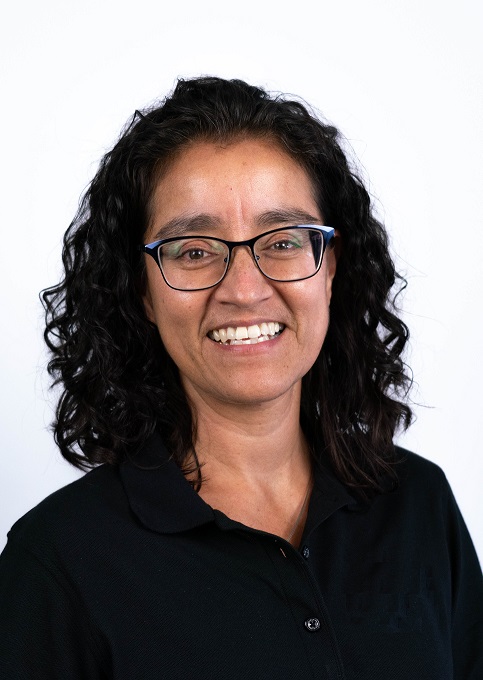
Revisiting Our Sisters’ Feminisms by Xochitl Alvizo

This post draws much from a previous post I wrote back in 2013, which generated great discussion in the comments. I came back to it as I was reflecting on our sisters’ revolution in Iran, Women, Life, Freedom, following the death of Mahsa “Zina” Amini while she was in the custody of the “morality police” in Iran. This woman-led movement has been nonstop for seven weeks. I’m in full support of the women and have continued to learn more about their context and history. The movement is powerful and inspiring, heavy and difficult, but its energy is alive and blazing. There is an impromptu song that has come to represent the movement; the song was created by linking real-time tweets and Instagram posts together – you can hear the song, read the lyrics, and see the screenshots in the video below:

Now the post I’m drawing back to from 2013 – a little different from the original – but one intended to invite us to reflect on our engagement with and support of one another across place and difference. And about the relationship between the local and global, and the need to hold a balance of both.

Continue reading “Revisiting Our Sisters’ Feminisms by Xochitl Alvizo”
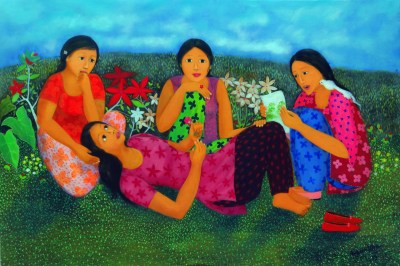

Caring as Resistance and Sisterhood by Vanessa Rivera de la Fuente

sisterhood

Every week, the women participating in my workshops easily share their experiences in the social, political or community world. However, it is difficult for them to talk about themselves. Several of them face complex situations: A divorce or a long layoff, illness of a relative whom they are caretakers, raising a disabled child. They are ashamed to speak up about how they feel; this should not be so. We women have the right and the duty to speak openly about what ails us in our private lives. The idea that the personal is political has to be a perfect circle.

Bisi Adeleye-Fayemi says that the lack of attention to physical, emotional and spiritual needs of women has become one of the weak points in the work of feminists. In our own social and institutional spheres where we work, the combined effects of the strong reactions against women’s movements, harassment on social networks, cultural and religious fundamentalisms, the pressures for leadership and the challenge of finding a balance between multiple spheres of life make it difficult to conserve energy.

While activisms mean resistance to the hegemonic system, some dynamics could reproduce patriarchal control’s devices on women’s emotions and impact us negatively: The expectation of renunciation and silent sacrifice as supreme feminine virtue. Sadness, illness or emotional distress are political issues and a way to control us with them is through the imposing or adopted silence about. Continue reading “Caring as Resistance and Sisterhood by Vanessa Rivera de la Fuente”

Sisterhood is . . . (Well) Complicated by Carol P. Christ

When I wasCarol Molivos by Andrea Sarris 2 a girl, the women in the neighborhood looked out for each other, and my mother had a wide circle of women friends. My grandmother lived nearby, and she and my mother spoke on the telephone nearly every day. My mother and I had a close relationship cemented by caring together for my baby brother.

In graduate school when I was one of a few women in a male-dominated field in a hostile environment, I discovered that “sisterhood is powerful” when I joined a group of women who came together to share experiences and change our lives. Having grown up in a community in which women supported each other, I found it relatively easy to support and seek support from women in a feminist environment.

At the same time, my newfound feminist identity deepened a rift that had opened in my relationship with my mother when I decided to go to graduate school. Continue reading “Sisterhood is . . . (Well) Complicated by Carol P. Christ”

Our Sisters’ Feminisms by Xochitl Alvizo

 We live in a very small and connected world that at the same time is a very large and disparate one. Sometimes I am overwhelmed by all the news available of the things that occur all over the world, to which I have such quick and easy access online. It makes everything feel so close and connected. At the same time, I also experience a huge disconnect between my very particular and local context and that of others around the globe; women whose reality and life experience I know little about. Even as news about them flash before my eyes, it’s not possible to reduce them to those brief flashes of information or claim to know something substantive about them. In reality, how much am I even able to say about the woman who lives across the street from me, much less women who I only know about online? And yet, my feminism compels me to call them my sisters.

Continue reading “Our Sisters’ Feminisms by Xochitl Alvizo”