
Carol P. Christ’s Legacy: Why Don’t Feminists Express Anger At God? by Carol P. Christ

Moderator’s Note: We here at FAR have been so fortunate to work along side Carol Christ for many years. She died from cancer in July, 2021. Her work continues through her non-profit foundation, the Ariadne Institute for the Study of Myth and Ritual and the Goddess Pilgrimage to Crete. To honor her legacy, as well as allow as many people as possible to read her thought-provoking and important blogs, we are pleased to offer this new column to highlight her work. We will be picking out special blogs for reposting. This blog was originally posted July 9, 2012. You can read it long with its original comments here.

My relationship to God changed when I accused “Him” of everything I thought “He” had done or let be done to women—from allowing us to be beaten and raped and sold into slavery, to not sending us female prophets and saviors, to allowing “Himself” to be portrayed as a “man of war.”

In the silence that followed my outpouring of anger, I heard a still small voice within me say: In God is a woman like yourself. She too has been silenced and had her history stolen from her. Until that moment God had been an “Other” to me. “He” sometimes appeared as a dominating and judgmental Other, and at other times as a loving and supportive Other, but “He” was always an “Other.” I as a woman in my female mind-body definitely was not in “His” image. 

Continue reading “Carol P. Christ’s Legacy: Why Don’t Feminists Express Anger At God? by Carol P. Christ”
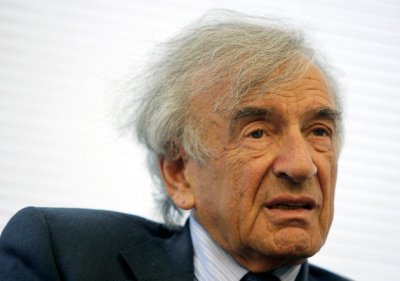
Elie Wiesel’s Stories: Still the Dialogue by Carol P. Christ

Elie Weisel is interviewed by Bob Edwards in New York, Wednesday, June 20, 2007. (AP Photo/Seth Wenig)

This blog is dedicated to Elie Wiesel, September 30, 1928-July 2, 2016

During the summer following my second year [as a graduate student] at Yale, I read Elie Wiesel’s The Gates of the Forest[1], which someone had recommended as a book in theology and literature. Elie Wiesel was not well-known, and I had not heard of him. I was totally unprepared to enter into his world. I had heard about the concentration camps and had read Anne Frank’s The Diary of a Young Girl, but I had not faced the reality that was the Holocaust, nor had I connected what happened to the Jews to my belief in the God of the Old Testament.

Reading The Gates of the Forest challenged my theology to the core. I believed God was powerful, loving, and good, and I believed that He had a special relationship with the Jews. Continue reading “Elie Wiesel’s Stories: Still the Dialogue by Carol P. Christ”

WHY DON’T FEMINISTS EXPRESS ANGER AT GOD? by Carol P. Christ

 My relationship to God changed when I accused “Him” of everything I thought “He” had done or let be done to women—from allowing us to be beaten and raped and sold into slavery, to not sending us female prophets and saviors, to allowing “Himself” to be portrayed as a “man of war.”

In the silence that followed my outpouring of anger, I heard a still small voice within me say: In God is a woman like yourself. She too has been silenced and had her history stolen from her. Until that moment God had been an “Other” to me. “He” sometimes appeared as a dominating and judgmental Other, and at other times as a loving and supportive Other, but “He” was always an “Other.” I as a woman in my female mind-body definitely was not in “His” image. 

After I expressed my anger to God, God transformed from an Other into what Whitehead once described as “a fellow [or should I say female] sufferer who understands.”  Although I had already been searching for a “God in my image” or “in whose image I could be,” I had yet to find Her. In the quiet after the storm, I came to believe that I would.   Continue reading “WHY DON’T FEMINISTS EXPRESS ANGER AT GOD? by Carol P. Christ”