God is a Midwife by Halley Kim

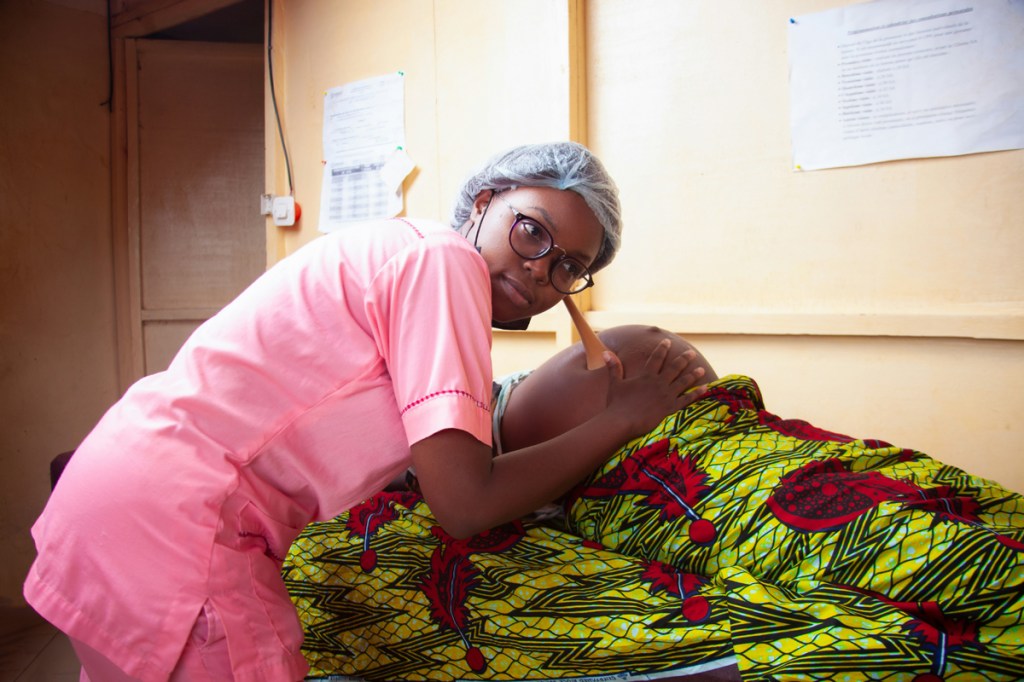
It was four in the morning in the north Georgia mountains. A woman labored quietly but powerfully in her home, with her partner at her side. Her watchful midwife hovered nearby. I was a nursing student and a zealous “birth junkie,” tickled pink by the invitation to observe childbirth. At just the right time, the mother delivered her child from her womb to the world. The sun rose with a new soul suddenly among us, and I knew I would never be the same.

Feminist theology has long-invoked the image of God as a laboring mother, and progressive theologian Marcus Borg suggested that humanity is God’s midwife. But less has been written about the opposite metaphor. Imagine that we are in labor, in pain, and God is our midwife. 

The word “midwife” means “with woman,” and that’s what midwives do: they are with birthing people through it all. They empower and guide, safeguard and witness, but they do not save. Midwives facilitate the birth process, but they don’t—they can’t—take the pain away. They don’t deliver babies; that honor belongs to their clients. Like physicians, they monitor the health of parent and baby, and can deftly manage a cord around a baby’s neck or stop a postpartum hemorrhage. But they mostly rely on the power of presence to bring babies earth-side. 

Continue reading “God is a Midwife by Halley Kim”

Get Compassion: Reflections on Childbirth and Privilege by Katey Zeh

hospital-840135_1920

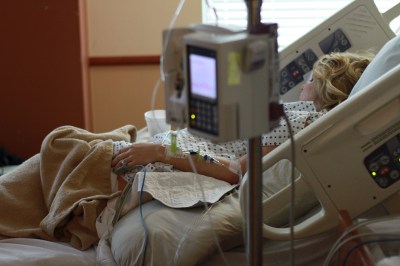
Jessi Klein wrote an Op-Ed in last Sunday’s New York Times entitled “Get the Epidural” in which she takes on the arguments for “natural” childbirth and makes an astute point about its premise: “It’s interesting that no one cares very much about women doing anything ‘naturally’ until it involves their being in excruciating pain.”

Thinking back to the months leading up to my daughter’s birth, I remember occasions similar to the one Klein describes in this article in which I was asked about my pre-natal care and plans for the birth, though admittedly they did not often come from strangers in the grocery store line. While Klein’s response was different from mine (I birthed without pain medication, and as you might have guessed from the title, she planned for an epidural), we each experienced feeling judged by others when they heard about our intended plans for birthing.

Klein alludes to this childbirth debate as symptomatic of our increasingly competitive culture around motherhood. I agree with her. But I worry about what happens when we talk about birth as primarily a parenting event rather than a physical one. When we divorce our intentions for our babies from what we desire for our bodies.

As with any piece having to do with childbirth, this article made the rounds on my Facebook feed and incited the usual divisiveness that all social media posts seem to do, splitting my friends and acquaintances into those who felt affirmed by Klein’s words and those who felt silenced by them. My reaction was to applaud that we have the ability to make different decisions about our health care, and that no matter how we plan our births—or how they turn out in the end—that is something to celebrate.

In my attempt to be diplomatic, I also quickly overlooked the assumptions of privilege at play in Klein’s piece and in my own response. Let’s start with the concept of a birth plan. A plan assumes that different options are available and acquirable. I’ve often written about how my pregnancy was one of the times when I felt my white, educated, middle-class privilege most acutely. I was able to have an intervention-free birth in large part because my family could afford to pay a doula on top of covering the costly medical fees related to the pregnancy and birth.

I wonder among my circles of privileged parents, why do we occupy so much of our time and expend so much of our energy arguing over which school of medically-sound thought regarding childbirth is best when there are so many people who bring life into world with inadequate or no health care at all?

Years before I got pregnant I began working with faith communities as an advocate for the full range of reproductive health care needs that people have throughout their lives, including safe and respectful childbirth. I’ve spent a lot of time reading and retelling the biblical stories of women giving birth and comparing them to the stories of global women today who face enormous challenges in their labor and deliveries. Tragically each year hundreds of thousands of women lose their lives as they bring new life into the world.

Pieces like Klein’s remind me of how easily people like me get caught up in our own spheres of experience and become blinded by the privilege that affords us the ability to fixate on details of our own lives rather than turning our gaze toward the world’s immense suffering.

As a faith-based advocate for gender justice, I’m currently working on a book with the FAR Press called Women Rising in which I look at the lives of ten biblical women through the lens of our current struggles for women and girl’s freedom and well being around the globe. One of my chapters focuses on the story from the book of Genesis in which Rachel dies in childbirth, and another looks at Mary’s delivery of Jesus as the miracle of maternal survival. My hope is that those of us who identify with the sacred stories of the Jewish and Christian scriptures will re-encounter them in a way that leads us back to a place of compassion for one another rather than judgment.

Katey Zeh, M.Div is a strategist, writer, and educator who inspires intentionalKatey Headshot communities to create a more just, compassionate world through building connection, sacred truth telling, and striving for the common good.  She has written for outlets including Huffington Post, Sojourners, Religion Dispatches, Response magazine, the Good Mother Project, the Journal for Feminist Studies in Religion, and the United Methodist News Service.  Find her on Twitter at @kateyzeh or on her website www.kateyzeh

The Paradoxical Perception of Midwifery in American Culture By Stacia Guzzo

This past Sunday night, midwife Robin Lim was named CNN Hero of the Year at a formal award ceremony in Los Angeles, California. The award, which was given after eleven weeks of public voting on CNN.com, came with $250,000 to support Lim’s quest to provide quality prenatal, labor, birth, and postpartum care for the poor and underserved in Indonesia.  She accepted the award amidst a standing ovation, and closed her words of acceptance by simply saying: “Every mother counts. And health care is a human right.”

The recognition of Lim—or Ibu (“Mother”) Robin, as she is called by those whom she serves— is well-deserved.  An American woman, Lim provides midwifery care at the Bumi Sehat clinics which she helped to establish. Each year, she helps thousands of Indonesian women get care and attention during their pregnancies and the births of their children.  She began her work in 1994, seeing pregnant women and children under five for free out of her home. As her reputation spread, supporters of Lim, along with local business and community leaders, helped to advance her cause. Today, the village-based Bumi Sehat clinics are located in both Bali and Aceh. They provide free prenatal and birthing care as well as breastfeeding support to any woman who needs it, regardless of her ability to afford it.  Ibu Robin’s words to CNN reflect that her commitment to her cause is an altruistic one: “”Every baby’s first breath on Earth could be one of peace and love. Every mother should be healthy and strong. Every birth could be safe and loving.” Continue reading “The Paradoxical Perception of Midwifery in American Culture By Stacia Guzzo”

Enduring the Trials of Graduate School: From Conception to Labor Pains and Birth By Michele Stopera Freyhauf

Going back to school at 30-something to complete a B.A. in a completely different field (from accounting to Religious Studies and Theology) was an interesting endeavor.  After many years of legal and business writing as well as crunching numbers, learning how to write academically, including formatting citations and using new technology was quite an undertaking that has proven to be rewarding.  All the searchable databases in the library no longer included card catalogues and microfiche.  This was amazing!  No more correction ribbon and electric typewriters (am I showing my age yet?!)  Going to college in 1985 is different then going back to college in 2006.

The transition did not stop with technology and formatting papers.  With each class and each instructor, a new transition was introduced on my way to the finish line.  It was a very large transition and more difficult when you sit in classes with students your own children’s ages. Add to that the reintroduction of the grammar game; in-text citations or footnote citations, semi-colons or dashes, commas or no comma, etc.  With the help of great mentors and patient professors, I prevailed and moved on to my next task (I mean transition) – Graduate School.  New professors, new demands, different writing styles, scholarly growing pains in abundance.  The research and writing intensified (which is an understatement).  Then there is the addition of critical reviews, peer reviews, and multiple presentations.  Each professor with his or her own format and requirement. Each with their own style of subjectivity or, if you are lucky, a specific grading protocol with tangible prompts or goals.  It is a world of unexpected twists, but, in my opinion, better than undergraduate work.  Continue reading “Enduring the Trials of Graduate School: From Conception to Labor Pains and Birth By Michele Stopera Freyhauf”

A Different “Right to Choose”: America’s Cultural Denial of True Choice in Childbirth By Stacia Guzzo

The first time I became aware about my birthing choices was during a call to a local midwife to inquire about her practice. By this time, I had been diagnosed with PolyCystic Ovarian Syndrome, uterine fibroids, a possible uterine septum, and had experienced a miscarriage two months before becoming pregnant with my son. On spiritual and psychological levels I didn’t trust my body, and certainly wasn’t experiencing the empowerment and holy wonder that I expected pregnancy to bring. Instead of feeling the strength of my ability to bear life, I felt the frailty of the threshold between life and death, and struggled with my body’s role in that space. I acutely felt my body’s assumed “brokenness.” I couldn’t access my inherent dignity, nor could I grasp the “hope [that] does not disappoint” (Romans 5:5). I was willing to let anyone tell me what I needed to do because I felt I couldn’t trust myself. I just wanted to be able to bring my baby to term and to have a healthy son.

During this time I didn’t even consider how the pregnancy or labor would affect me—emotionally, physically, psychologically, or spiritually. Yet my discussion with that midwife made me realize how deeply the experience of pregnancy was shaping me. The space God was carving out within me was incredibly powerful, and the closer I got to birthing my son, the more I realized how spiritually and psychologically charged the birth experience could be. It was laden with the potential for either transformative beauty or despair. Continue reading “A Different “Right to Choose”: America’s Cultural Denial of True Choice in Childbirth By Stacia Guzzo”

Women Standing as Sacred Witness to One Another By Stacia Guzzo

The following is a guest post written by Stacia Guzzo.  She received her MA in Theological Studies from Loyola Marymount University and is currently working toward a MDiv through Fuller Theological Seminary. She is also in the midst of completing certification in Childbirth Education and periodically serves women in her community as a labor doula. She has taught on the elementary and high school levels, led retreats, and spoken at regional congresses through the Los Angeles Roman Catholic Archdiocese. She lives with her husband, son, two dogs, two cats, seven chickens, and five beehives on a small homestead in Tehachapi, California.

“Hands!” The young woman gasped as the next contraction swelled. I quickly put the wet washcloth I had been using to dab her face back in the small bowl of water beside me and grabbed her hands. She squeezed them, moaning low. Her husband stood behind her in the birthing tub, pressing on her hips. Two midwives stood in the background, their encouragement silent and strong. The dim light of dawn was beginning to shine through the window of their home. In another room, the couple’s two-year-old son slept. Continue reading “Women Standing as Sacred Witness to One Another By Stacia Guzzo”