
The Dark Heart of Winter

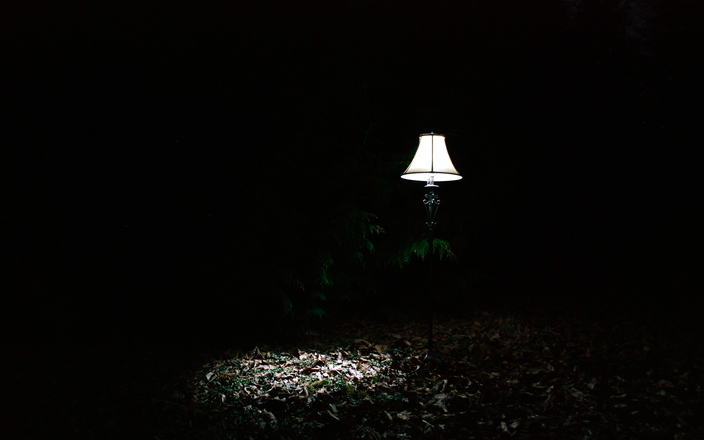
I have long struggled with winter. I grew in Minnesota where winters were long and brutally cold. I remember hauling myself through hip-deep snowdrifts on my walk to elementary school and that was in the suburbs! The North of England, where I lived for nearly twenty years, has a much milder climate. But being so far north, I was plunged into infernal darkness from Halloween to Candlemas. It started getting dark at 3:30 in the afternoon and by 4:00 it was pitch dark. Remember those horror movies where it’s dark ALL THE TIME?? That’s Lancashire in midwinter. I felt I was trapped inside some brooding gothic novel.  

Now that I’ve moved to the Silver Coast of Portugal, I get a lot more daylight in winter, but also storm winds and torrential rain. My Welsh pony is not impressed!

Continue reading “The Dark Heart of Winter”
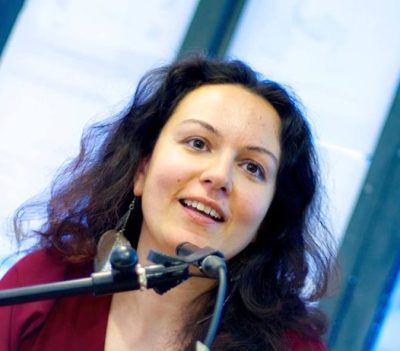
The Sacred Face of Death by Eirini Delaki

The archetype of the Weaver is being widely activated. Thousands of women and men come forth to incarnate it by creating webs of spiritual awakening, by honoring ancestral ways of being, and by promoting practical and sustainable ways of living and thriving.

However, many of these efforts collapse due to a lack of genuine communication inside the group.  How can we direct our intentions into grounding a vision that is broader than ourselves? How can we weave together in such a way that each feels heard and, at the same time, willing to deeply listen and feel into, not only the group as a set of individuals, but also to what is making its way into birth out of the group as a unit?

Although it seems easy, group synchronization is not a light task and, in order for this to happen at a substantial level, one has to start from oneself.  It is necessary for a kind of initiation to take place, an initiation called “soul individuation.” Soul individuation is a deep dive into one´s own underworld in order to unearth and liberate experiences that have caused one´s soul to fragment. Until this is achieved, one can communicate only from that broken place, not from a place of wholeness and authenticity.  Journeying to the underworld is not a pleasant process but, it is a necessary step towards balance and integrity. Continue reading “The Sacred Face of Death by Eirini Delaki”

Feminism, Impasse, and the Redemption of Hugo Schwyzer by Cynthia Garrity-Bond

In Constance FitzGerald’s article Impasse and Dark Night,* she draws from sixteenth century Spanish mystic and reformer St. John of the Cross-and his Dark Night of the Soul.  FitzGerald moves from the individual’s experience of impasse to a larger societal impasse.  By impasse she means those experiences that bring life as you know it to a stand still, where every attempt of extracting the self from suffering is a lost cause. In what is known as the principles of  “first order change”—reason, logic, analysis, and planning, do not work to move the self forward and out of impasse. In other words, the skill set you have come to rely upon to move you out of the grip of darkness no longer works. Continue reading “Feminism, Impasse, and the Redemption of Hugo Schwyzer by Cynthia Garrity-Bond”

The Dark Night of a Theological Education By Cynthia Garrity-Bond

Yesterday I decided I would attend Sunday Mass.  I have been involved in some fairly weighty theological conversations with my friend, bringing to the surface awareness that I am restless and in a state of holy longing for the Absolute One. I do not usually attend conventional Mass. The exclusive language of the liturgy is like a cacophony of painful sounds, each one more abusive than the next.  But this morning I thought it would be different because I was different.  The hole in my heart was larger, more pronounced and in need for that which I could not name.

I should say that my academic studies have lifted me far from a loving encounter with Jesus or for that matter, any part of Christian orthodoxy, which is why my decision to attend mass is confusing.  In fact, through my initiation into theology as a discipline, I have become a paradox to myself.  On the one hand, I am informed on enough theological matters that I might be able to swoop a Jeopardy category of say, “Anything having to do with Christianity.”  But when it comes to articulating my beliefs with regard to such doctrines as the Virgin birth, divinity, miracles, prayer or, (gasp) the validity of the Bible, I’m stalled. Even more than that, I’m inclined to suspend most confessional statements about the Divine because, in spite of my education and degrees, I do not know what I think I should know. Continue reading “The Dark Night of a Theological Education By Cynthia Garrity-Bond”