

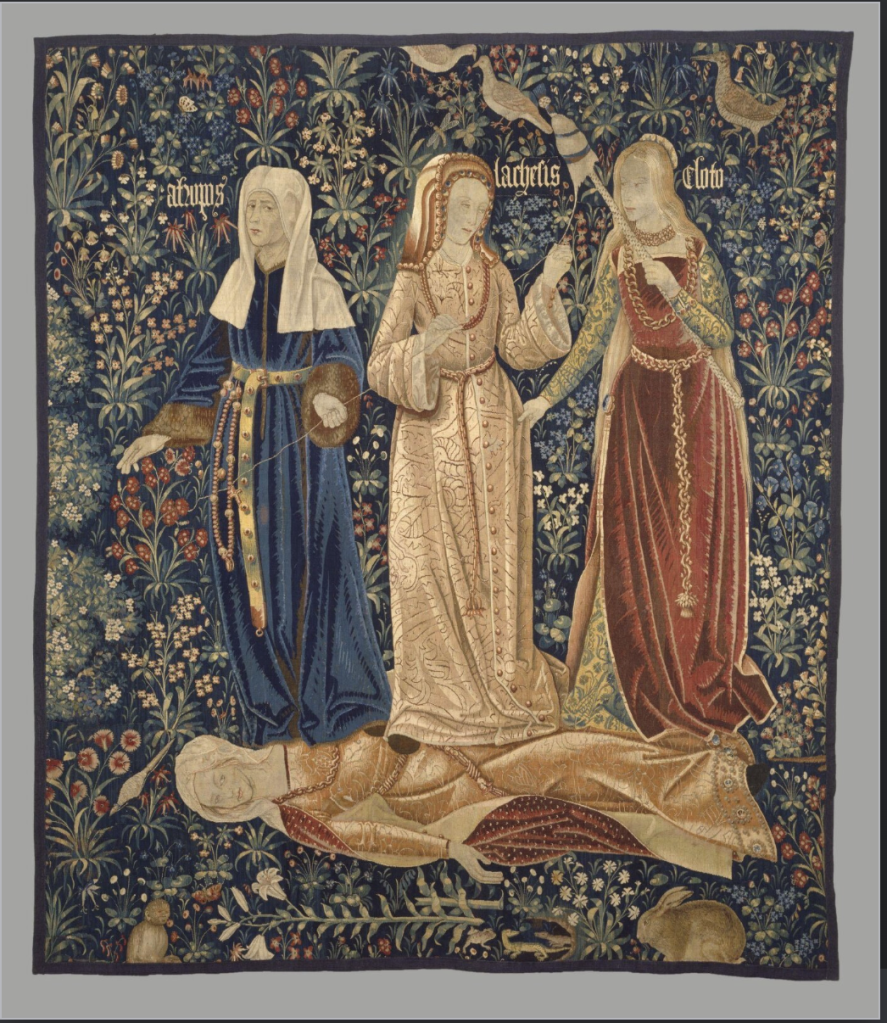
There is an old Yiddish incantation, documented from the 18th century forward, that features three mysterious women. It is a folk spell warding off the evil eye–the negative influence that may come either from demons or from the jealousy and spite of others (or both). Fear of the evil eye is the reason it was traditional not to compliment cute babies or talented people—because the evil eye might be attracted to such beauty or talent and cause harm. The evil eye, to give a personal example, is the reason my father, who was normally not a religious person, refused to allow my mother to shop for a crib until I was born, lest the evil eye notice they were going to have a baby and prepare some terrible fate for me.
Continue reading “Three Women Sit on a Stone: Images of Fate in a Jewish Incantation by Jill Hammer” From our very beginnings, women have danced with time. Our bodies’ moon cycles have always been a human calendar. As the first agriculturists, we partnered with the seasons to feed our families and communities. When we served as midwives and carers for the dead, we ushered our species into and out of their Earthly lives.
 Feminism and Religion