
Shariah is not a Law by Esther Nelson

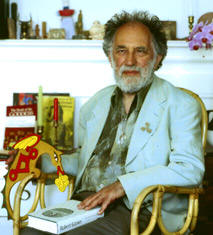
I will never forget the day Nasr Abu Zaid (1943-2010), an Islamic Studies scholar and teacher extraordinaire, told me, “Shariah is not a law.”  In spite of his assertion, many people—both Muslims and non-Muslims—are convinced that Shariah is synonymous with archaic legal rulings that are at odds with democracy and modernity.


What is Shariah, then, if not a law?  When we see or hear the word Shariah, the word “Law” almost always follows.  Shariah literally means a path—a well-trodden path such as animals use on their way to a watering hole.  Shariah, then, can be understood as something that when embraced has potential to give life and sustenance.


Muslims believe that the Qur’an was revealed to Prophet Muhammad by the angel Gabriel circa 600 C.E.  That revelation—Muslims believe it to be God’s actual speech—took place over a period of approximately twenty-one years. The Qur’an contains Shariah (path) in the form of information, narrative, and poetry.  Since Shariah is essentially a path that leads to life, the critical question centers on how Shariah can be appropriated, leading us to the water that sustains.

Continue reading “Shariah is not a Law by Esther Nelson”

THE INTERPRETER; or An Introduction to Hermeneutics by Daniel Cohen

 He showed us that every text contains two messages, one formed by the ink and the other by the spaces left between the inked letters, the material included and that which was excluded, and that the message was never complete if only the first text was read.

(Hermeneutics: The art or science of interpretation, especially of scripture. Oxford English Dictionary)

It was all the interpreter’s fault.

He came to our city looking for employment. It was soon clear that he had a wide knowledge of many languages, and most of our merchants began to employ him in their dealings with foreign traders. We saw him speeding from one to another, in those sandals of his with the odd widening at the heels, often pausing to tell one merchant of a recent purchase of interest by another. It seemed that trade prospered with his coming. Our merchants became wealthier and busier than they had ever been. Continue reading “THE INTERPRETER; or An Introduction to Hermeneutics by Daniel Cohen”

Practice What You Preach by Corinna Guerrero

The underlying principle that links a feminist critique to every other critical lens since the rise of feminist discourse is the “hermeneutic of suspicion.” Essentially,  a hermeneutic of suspicion identifies the disconnect between rhetoric and a lived reality. The lived lives of women are different than the pontifications espoused directly and indirectly by the traditionally patriarchal social, political, cultural, religious, and educational structures in which individuals participate.

I like to think that I live my life bucking these structures whenever possible because the roles a woman plays in her own life should: 1) be determined by her; and 2) if she negotiates more “traditional practices” (e.g. marriage, motherhood, etc.) then these practices do not limit her to traditionalist practices (e.g. staying at home, spousal servitude, etc.). Granted, I used the two most generic examples of traditional and traditionalist practices, but the point is still valid. When I go to holidays with my extended family there are very few questions or comments about my PhD program, but many comments about the fact that I do not make a plate of food  for my husband.   Continue reading “Practice What You Preach by Corinna Guerrero”