
Connection to Ancestors in Earth-based Theology by Carol P. Christ

carol p. christ 2002 color“I am Carol Patrice Christ, daughter of Jane Claire Bergman, daughter of Lena Marie Searing, daughter of Dora Sofia Bahlke, daughter of Mary Hundt who came to Michigan from Mecklenburg, Germany in 1854.  I come from a long line of women, known and unknown, stretching back to Africa.”

Like many Americans, my ancestral history was lost and fragmented due to emigration, religious and ethnic intermarriage, and movement within the United States.  Though one of my grandmothers spoke proudly of her Irish Catholic heritage and one of my grandfathers acknowledged his Swedish ancestry, I was raised to think of myself simply as “American,” “Christian” and “middle class.”  Ethnic and religious differences were erased, and few stories were told. 

Over the past two years, I have begun to discover details of my ancestral journey, which began in Africa, continued in the clan of Tara, and was marked by the Indo-European invasions.  In more recent times, my roots are in France, Holland, England, Germany, Ireland, Scotland, and Sweden.  In the United States, my family has lived in tenements in New York City and Brooklyn, in poverty in Kansas City, and on farms in Long Island, Connecticut, upstate New York, Michigan, and Pennsylvania.  My parents and grandparents settled in northern and southern California during the 1930s.  I have lived in southern and northern California, Italy, Connecticut, New York, Boston, and now Greece.

Learning details about family journeys has created a shift in my sense of who I am.  Continue reading “Connection to Ancestors in Earth-based Theology by Carol P. Christ”

Solstice Comes But Once A Year, Now It’s Here! by Carol P. Christ

carol p. christ 2002 colorActually it comes twice, once in midsummer, the longest day of the year, and once in midwinter, the longest night.  Winter Solstice is also known as the first day of winter.
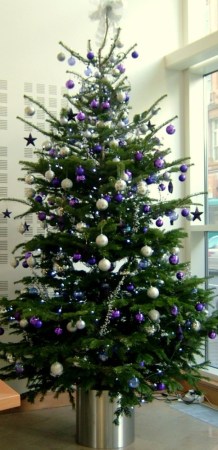
For those of us attuned to the cycles of Mother Earth, Winter Solstice is a time to celebrate the dark and the transformations that come in the dark. Many of the customs associated with Christmas and Hannukah, including candles, Yule logs, and trees decorated with lights were originally associated with Winter Solstice.  The extra pounds put on during winter feasting were insulation against the cold winter nights.

Those who fear that many of the customs of the Christmas season might be pagan are right.  As we learn again to honor our place within the cycles of birth, death, and regeneration, we can return these customs to their roots in the circle of life.

ChristmasTrees20060001

Continue reading “Solstice Comes But Once A Year, Now It’s Here! by Carol P. Christ”

Why a Goddess Pilgrimage? by Carol P. Christ

What is a Goddess Pilgrimage and why are so many US, Canadian, and Australian women making pilgrimages to ancient holy places in Europe and Asia?  The simple answer is that women are seeking to connect themselves to sources of female spiritual power that they do not find at home.

Traditionally pilgrims leave home in order to journey to a place associated with spiritual power.  “Leaving home” means leaving familiar physical spaces, interrupting the routines of work and daily life, and leaving friends and family behind.  For the pilgrim, “home” is a place that has provided both comfort and a degree of discomfort that provokes the desire to embark on a journey.  The space of pilgrimage is a “liminal” or threshold space in which the supports systems of ordinary life are suspended, as Victor Turner said.  A pilgrim chooses to leave the familiar behind in order to open herself to the unfamiliar—in hopes that she will return with new insight into the meaning of her life.  Continue reading “Why a Goddess Pilgrimage? by Carol P. Christ”

THE CARELESS SPIRIT OF ANNIE CORLISS: TRUMPING DESPAIR IN THE NEW WORLD by Carol P. Christ

Annie Corliss was my great-great-grandmother. The Corliss name, also spelled Corlis, Corless, Corlies, Corlers, and Carlis, is derived from “careless” meaning someone who is “carefree” or “happy-go-lucky.”

Annie Corliss was the daughter of James and Mary Corliss, both born in Ireland. Her parents may have been tenant farmers, but given that their surname could refer to someone who doesn’t settle or own property, they may have been Irish Travellers– itinerant craft persons and traders, sometimes called tinkers because they mended cooking pots and farm implements.  “Irish Travellers are a traditionally nomadic people of ethnic Irish origin, who maintain a separate language and set of traditions. … Irish Travellers have their roots in a Celtic (and possibly pre Celtic) nomadic population in Ireland.” Continue reading “THE CARELESS SPIRIT OF ANNIE CORLISS: TRUMPING DESPAIR IN THE NEW WORLD by Carol P. Christ”

Songs We Sing By Barbara Ardinger

Even though I’m a spiritual feminist—and a pretty cranky one—I like the old familiar Christmas carols. I’m listening to a CD of Christmas songs in my car. One of the songs on the CD has the line, “God is watching us from a distance.”

There’s a reason Plato banned music from the Republic. Music gets into our heads and it stays there. Not only the tune and the rhythm, but the lyrics, too. So what idea does this song plant in our heads? God is out there. Watching us like we’re being baby-sat From a distance. So if we should happen to fall down, maybe he’s only watching and he doesn’t have long-enough arms to reach down and pick us up.

Passive watching is a key difference, of course, between the standard-brand religions (also called the religions of the book) and the Goddess religion. They’ve got a transcendent god somewhere up in heaven, up in outer space, up on the mountain, sitting up in the judge’s throne. Keeping an eye on us so if we misbehave, he can slam some thunderbolts down at us. Continue reading “Songs We Sing By Barbara Ardinger”