

In honor of the enormous success and moon joy of the Artemis II project I wanted to use this month’s Herstory Profiles to focus on three extraordinary women who helped make this possible, even if it was over 70 years ago. These three women have just recently in the last nine years been brought to the forefront due public recognition and the Hollywood film Hidden Figures. The film not only inspired by the 2016 non-fiction book written by Margot Lee Shetterly but by the actual women themselves.
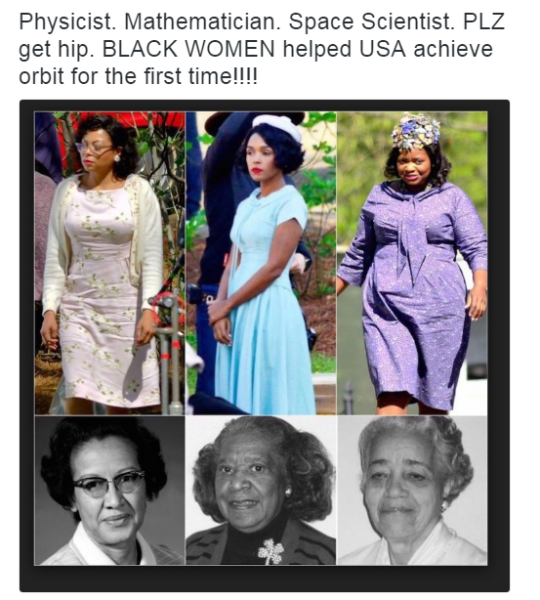
Katherine Johnson (1918-2020) was one of NASA’s influential human computers of the 20th Century. It was Johnson’s calculations – by hand – that helped make trajectories, launch windows, return paths, and the actual Space Shuttle Programs successful. From an incredibly early age, Katherine showed incredible mathematical skills. She enrolled in an accelerated high school at the age of 10 and graduated at 14! That same year she would enroll at a Black College (segregation was still legal everywhere in the US). She graduated college (summa cum laude) in 1937 at the age of 18. She became the first black woman to enroll in a master’s program in West Virgina. She would start her career as a teacher before accepting a computing job with NASA in 1953. She would work for NASA until she retired in 1986.
Katherine started off as a ‘computer,’ a person that inputted, calculated mathematical equations, and verified engineers and projects equations. It was Katherine who computed the trajectory of Alan Shepard’s space flight (the first American in space). She would later calculate Shepard’s 1961 Mercury mission’s launch window. One of her main jobs was to calculate the navigation charts and rescue paths for all missions. She was forefront to the introduction of electronic computers being introduced into NASA’s protocols but was asked personally by Astronaut John Glenn to verify everything before the start of the mission where he would become the first American to orbit the earth.
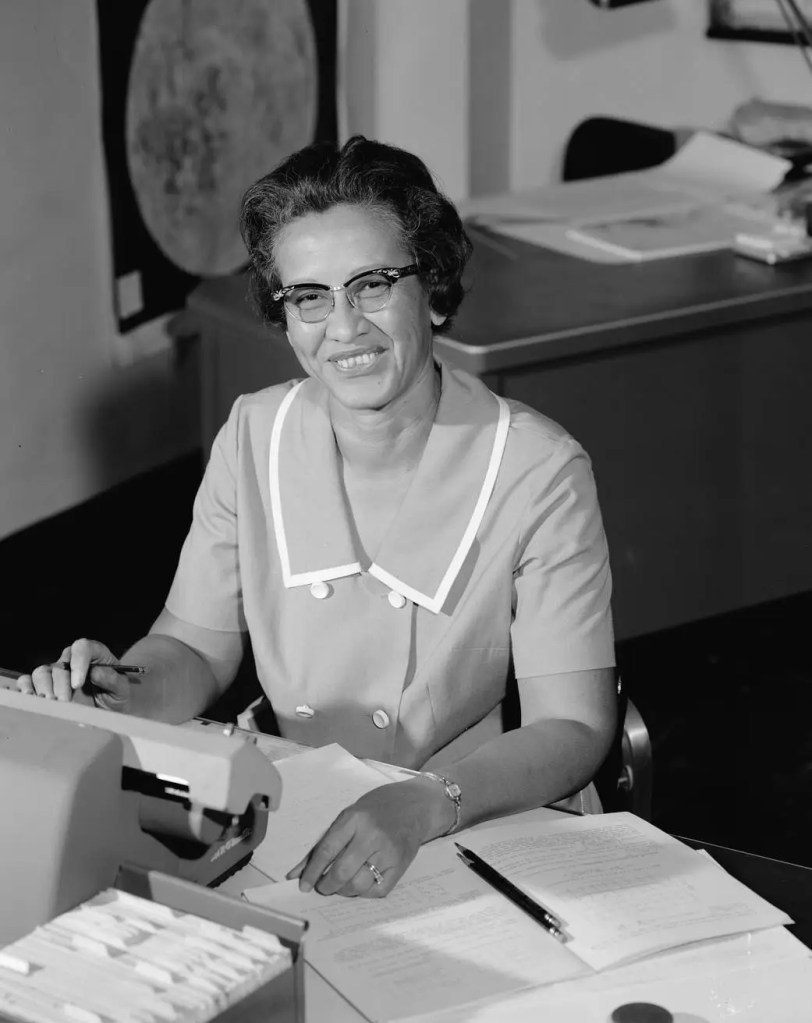
Katherine’s mathematic skills were crucial to the successful recovery of Freedom 7, the trajectory of Apollo 11, and it was her navigation charts and rescue paths that helped bring back Apollo 13. The trajectories, navigation charts, and calculations on reentry paths were used in this month’s Artemis II’s Moon mission. In 2015, President Barak Obama awarded Katherine the Presidential Medal of Freedom. In 2019, the US Congress awarded her the Congressional Gold Medal. She was portrayed by actress Taranji P. Henson in the 2017 blockbuster film. She died at the age of 101 but her work, her intelligence, and her dedication continues to live on.
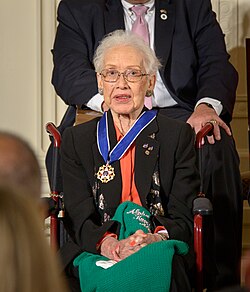
Dorothy Vaughan (1910-2008) was a NASA human computer and computer programmer. Dorothy was valedictorian and received a scholarship to attend Wilberforce University where she received a degree in mathematics in 1929. She decided to become a schoolteacher to help bring in money during the Great Depression instead of going to graduate school. In 1943, Dorothy started working at NASA as a human computer where she worked on flight paths, the SCOUT project, and one of the first to start work on computer programming. She became the first Black woman supervisor in 1949 where she oversaw the African American women’s computing unit.
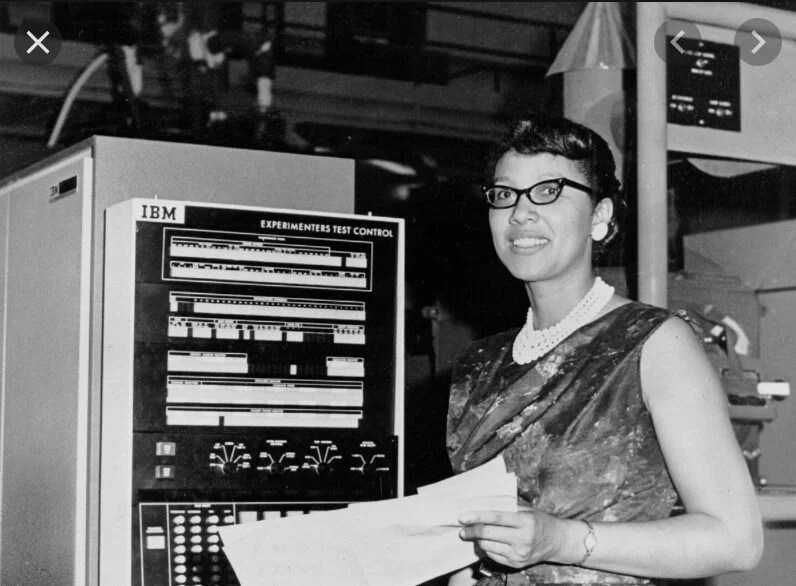
Dorothy was on the forefront of the integration of electronic computing. She taught herself how to code and correctly work the systems. After she learned the FORTRAN system, she tutored other women in her unit so that when the electronic computing systems started to take over – it was the African American women within NASA that lead the way. She also worked alongside Katherine for Alan Shepard’s mission, John Glenn’s orbit, and Neil Armstrong’s Moon walk. The Dorothy J. Vaughan Academy of Technology opened in 2017 in Charlotte, North Carolina. She was portrayed by Octavia Spencer in Hidden Figures. In 2019, she was awarded the Congressional Gold Medal and had a crater on the Moon named after her.
Our last phenomenal woman is that of Mary Jackson (1921-2005). Mary was a NASA computer who later became their first black female aerospace engineer. Mary was also a highly gifted student and graduated with dual bachelor’s degree in mathematics and physical sciences from Hampton University in 1942. She was a Girl Scout leader for over 30 years. She was a teacher for just under a year before she started office work. She was specifically recruited in 1951 to join the computing program at NASA.
She worked under Dorothy and alongside Katherine until she was accepted to work with engineer Kazimierz Czarnecki in 1951 in the Supersonic Pressure Tunnel. It was under Czarnecki’s guidance and encouragement that Mary started not only actively working on the project but undergo training. She had to petition the city of Hampton to allow her to attend the graduate night program as segregation was still prevalent.
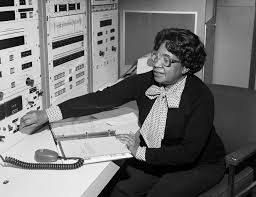
After Mary received her graduate training, she was promoted to NASA engineer in 1958, become NASA’s first Black female engineer. She continued to work in the Supersonic Pressure Tunnel analyzing wind currents, air flow, thrust and drag forces to improve military planes and space shuttles. She authored and co-authored over 12 scientific journal articles, many of which she wrote alongside Czarnecki. Mary was influential in helping others including minorities and women to achieve promotions and advancements. She worked with NASA in varying degrees until her retirement in 1985. She died at the age of 85 in 2005. Janelle Monáe in Hidden Figures portrayed Mary. She received the 2019 Congressional Gold Medal.
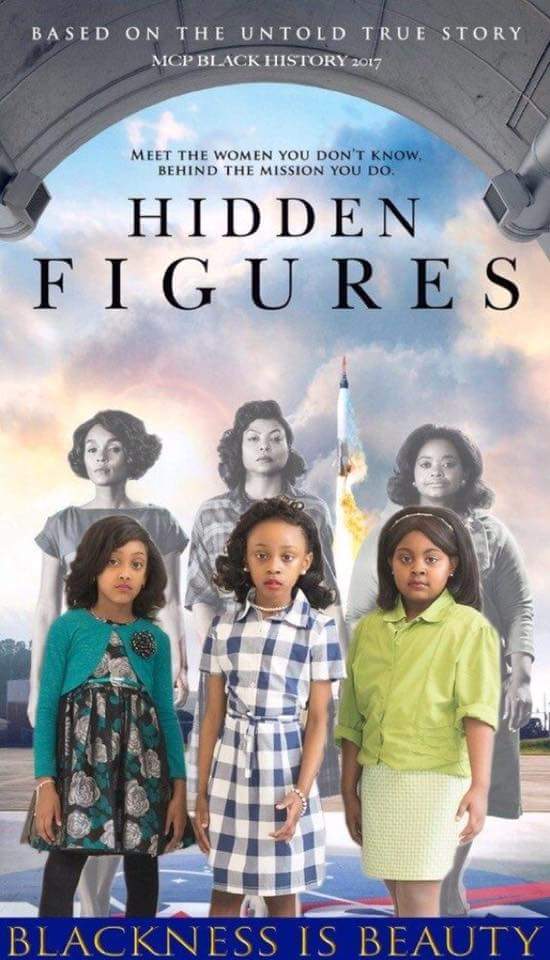
All three of these women experienced many decades of racism, sexism, and bigoty. They fought throughout their lives to learn, to live, and to thrive. Their persistence and ingenuity helped solidify the US’s entrance and success in their space programs not just in their own lifetimes but for the last 70 years. It was their work that helped to make Artemis II’s April 2026 mission not only viable but one of the most successful missions to date. Their legacy has allowed for the current generations today to experience what has been called ‘Moon Joy” these last two weeks.
Discover more from Feminism and Religion
Subscribe to get the latest posts sent to your email.


Wonderful tribute – I confess I never heard of these women – so many are hidden in the shadows. I do wish we would honor the women scientists who are working on behalf of the earth – we can’t seem to generate any excitement for earth – work perhaps because the latter focus on the planet, while excitement belongs to the moon, for reasons that remain unclear to this naturalist. We are talking about a rock that was once part of the earth.
LikeLike
Inspiring and important. Thank you!
LikeLike