

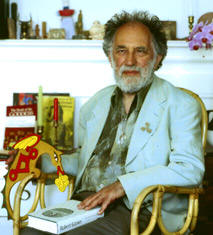
 He showed us that every text contains two messages, one formed by the ink and the other by the spaces left between the inked letters, the material included and that which was excluded, and that the message was never complete if only the first text was read.
(Hermeneutics: The art or science of interpretation, especially of scripture. Oxford English Dictionary)
It was all the interpreter’s fault.
He came to our city looking for employment. It was soon clear that he had a wide knowledge of many languages, and most of our merchants began to employ him in their dealings with foreign traders. We saw him speeding from one to another, in those sandals of his with the odd widening at the heels, often pausing to tell one merchant of a recent purchase of interest by another. It seemed that trade prospered with his coming. Our merchants became wealthier and busier than they had ever been. Continue reading “THE INTERPRETER; or An Introduction to Hermeneutics by Daniel Cohen”

 Feminism and Religion