

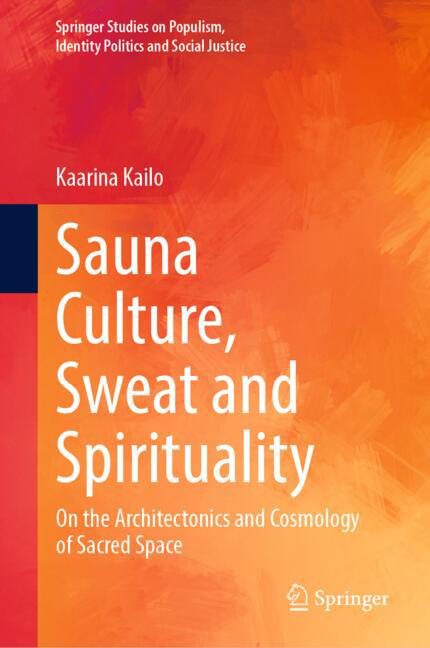
Living as I do in the midst of both Finnish immigrant and Anishinaabe cultures, and where the two merge in the many here who identify as “Findians,” I was intrigued by the description of Kaarina Kailo’s book, Sauna, Culture, Sweat and Spirituality, as a comparative exploration of Indigenous sweat lodges — madoodiswan in Anishinaabemowin — and Finnish saunas.[i] As an outsider to both cultures, I have no ancestral or traditional knowledge of either saunas or sweat lodges and I wanted to learn more about both. Kailo’s book did not disappoint. What I hadn’t expected and was delighted to discover was that Kailo connects both with ancient goddess religions, contemporary feminist spiritualities, and ecofeminism.
Kailo’s book is a widely and deeply researched cross-cultural comparative study of the elements, practices, intentions, and spiritualities of sweat cultures ranging far beyond various Native American sweat lodge practices – Delaware Great Houses, Anishinaabe sweat lodges, Pueblo kivas – and the Finnish sauna,to Iberian/Galician saunas, Irish sweathouses, and Old Europe. As Kailo herself says, the value of such cross-cultural studies is the way they help to expand our thinking, enabling us to see things we might not have otherwise. She repeatedly says that she is looking for the “affinities” among these various sweat cultures, rather than focusing on their differences, and she finds many. In the process, she reveals the role of sweat lodges, sweat houses, and saunas as sacred spaces of healing, restorative balance, connection with the spirits, rebirth and regeneration, women-centered spirituality, and Great Bear religions. Infiltrated throughout are her reflections on how reviving the widespread use of sweat cultures and saunas, and the woman and life-centered spiritualities at their heart, would provide an antidote to the current economic, ecological, and political threats to the world.
 Feminism and Religion