I’ve mentioned before that I’m quite the fan of Jim Rigby, one of the current ministers at St. Andrew’s Presbyterian Church in Austin, Texas. Jim writes a short column four or five times a week and posts them on Facebook. I, along with many others, follow him there; however, I’ve also begun to join the Sunday morning service at St. Andrew’s via Zoom.
As a preface to the Sunday morning services I’ve attended, Jim gives a short explanation of his use of the word “kin-dom” instead of kingdom, fully acknowledging that the word kin-dom was coined by Ada Maria Isasi-Diaz (1943- 2012), a Cuban-American, Mujerista theologian. (Mujer is the Spanish word for woman.)
“You need to take a step back. You need to take a pause, relax, reassess. Two steps back, you can see more clearly, then you can move forward.” That’s what my brother first told me as I shared with him the overwhelmingness of my life. My first reaction was: Well – that is easier said than done. Plus, the thought of taking a pause and relaxing only made me think about how much more behind I’d fall on everything. I confessed to him that beside my regular teaching-related responsibilities, I commit to too many other things – only to end up feeling poorly about my performance.
“Do not be that person,” he said. I knew he was right. Some of my situation of overwhelmingness I do to myself; knowing I have limited time available, I nonetheless say “yes” more often than I say “no.” This is born of my own compulsion and socialization. But, as Dawn noted in a comment she left on Tuesday’s post, I need to remind myself that “my compulsion…is often just my compulsion.” Much of the time, I can choose otherwise. Continue reading “Listening Deeply to Yourself by Xochitl Alvizo”
“Yo soy mujer en busca de igualdad, no aguantar abuso ni maldad. Yo soy mujer y tengo dignidad, y pronto la justicia serd una realidad. Mujer, tù eres mujer, porque supiste ver, la realidad de tu poder. Hoy canto al Dios del Pueblo en mi guitarra, un canto de mujer que se libera” – From “Mujeristas: A Name of Our Own!” – Ada María Isasi-Díaz [i]
Translation: I am woman searching for equality; I will not put up with abuse and wickedness. I am a woman and I have dignity, and justice will soon be a reality. Woman, you are woman, because you have known how to recognize the fact that you are powerful. Today I sing to the God of my people with my guitar, I sing a song of a woman who liberates herself.
Labels, names, and categories can evoke prejudice and oppression. Ada Maria Isasi-Díaz, the founder of Mujerista Theology, wrote:
To be able to name oneself is one of the most powerful abilities a person can have. A name is not just a word by which one is identified. A name provides the conceptual framework and the mental constructs that are used in thinking, understanding and relating to a person.[ii]
These words relate to U. S. Hispanic women, who, according to Isasi-Díaz, struggle against ethnic prejudice, sexism, and in many cases classism [and who] have been at a loss as to what they should be called.[iii]In finding that common name, lyrics from three different songs inspired Isasi-Díaz who developed the term “Mujerista Theology,” replacing Hispanic women’s liberation theology:
“Yo soy mujer en busca de igualdad, no aguantar abuso ni maldad. Yo soy mujer y tengo dignidad, y pronto la justicia serd una realidad. Mujer, tù eres mujer, porque supiste ver, la realidad de tu poder. Hoy canto al Dios del Pueblo en mi guitarra, un canto de mujer que se libera”[iv]
For Isasi-Díaz, mujerista unifies Hispanic women and embodies strength. Mujeristas are those:
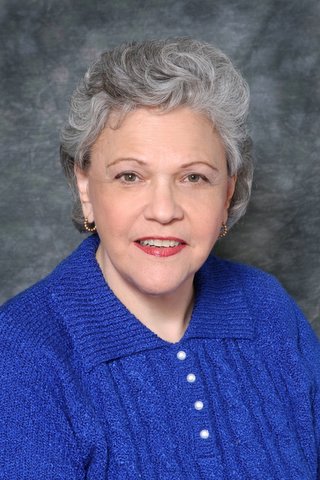
Ada Maria Isasi-Díaz Picture From Drew University’s website
Who desire a society and a world where there is no oppression.
Who struggle for a society in which differences and diversity are valued.
Who know that our world has limits and that we have to live simply so others can simply live.
Who understand that material richness is not a limitless right but it carries a “social mortgage” that we have to pay to the poor of the world.
Who savor the struggle for justice, which, after all, is one of the main reasons for living.
Who try no matter what to know, maintain, and promote our Latina culture.
Who know that a “glorified” self-abnegation is many times the source of our oppression.
Who know women are made in the image of God and, as such, value ourselves.
Who know we are called to birth new women and men, a strong Latino people.
Who recognize that we have to be source of hope and of a reconciling love.
Who love ourselves so we can love God and our neighbor.[v]
For Isasi-Díaz, Mujerista Theology is defined as:
“a process of enablement for Latina Women, insisting on the development of a strong sense of moral agency, and clarifying the importance and value of who they are, what they think, and what they do….mujerista theology [also] seems to impact mainline theologies, the theologies which support what is normative in church, and, to a large degree, in society.”[vi]


 “You need to take a step back. You need to take a pause, relax, reassess. Two steps back, you can see more clearly, then you can move forward.” That’s
 Feminism and Religion