War has led to an increase in the number of female-headed households, as many men are killed, go missing, or are forced to migrate. This situation has, more than ever, resulted in a surge in poverty, economic instability, and severe psychological pressure among these women.
In wartime conditions, female heads of household face multifaceted crises. Given that the majority of them are engaged in informal and home-based occupations (such as knitting, tailoring, and food production), the war has dealt a direct blow to their family income by closing marketplaces, disrupting supply chains for raw materials, and reducing the purchasing power of customers.
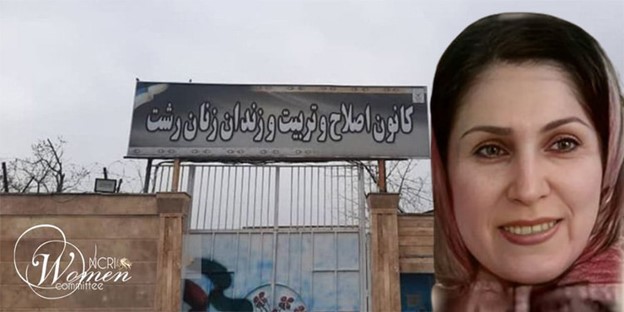
According to a report by one of the state websites, passengers in a Tehran metro carriage, in response to the street vendors’ advertisements, say they have no money. According to this report, the faces of the female vendors are exhausted. Some of them are over sixty years old and plead with people to buy their goods. (Shafaqna, October 6, 2025)
Moderator’s Note: This post has been posted in cooperation with the NCRI women’s committee. NCRI stands for the National Council of Resistance of Iran. This was first posted on their website on May 18, 2026. You can learn more information as well as see this original article by clicking by link below. A description of their Council can be found at the end of this post. We feel it is especially important to hear women’s voices from Iran esp here in the United States where a lot of misinformation is being disseminated along with the guns and bombs of war.
Introduction
Life for the Iranian people under the religious dictatorship is fraught with hardship and peril from every perspective. Whether through the lens of economic deprivation, poverty, and unemployment; the degradation of the environment and infrastructure; crises involving water, electricity, and air pollution; or devastating floods and earthquakes—the current generations of Iranians are experiencing a living hell. This suffering is further compounded by the comprehensive violation of human rights, characterized by suppression, torture, and executions, as well as the squandering of national wealth on nuclear and missile projects and terrorism, which has effectively led to foreign conflict.
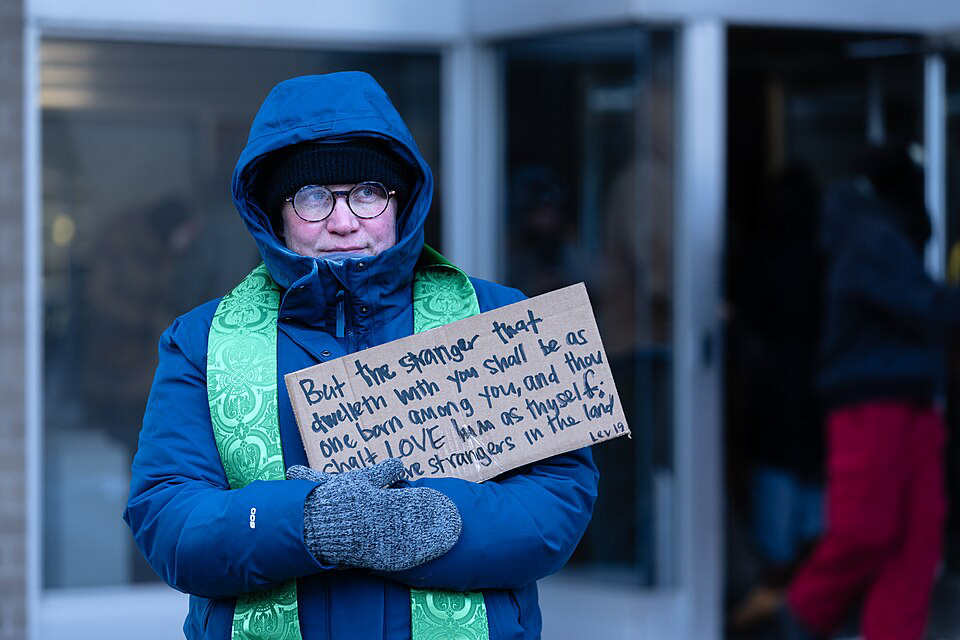
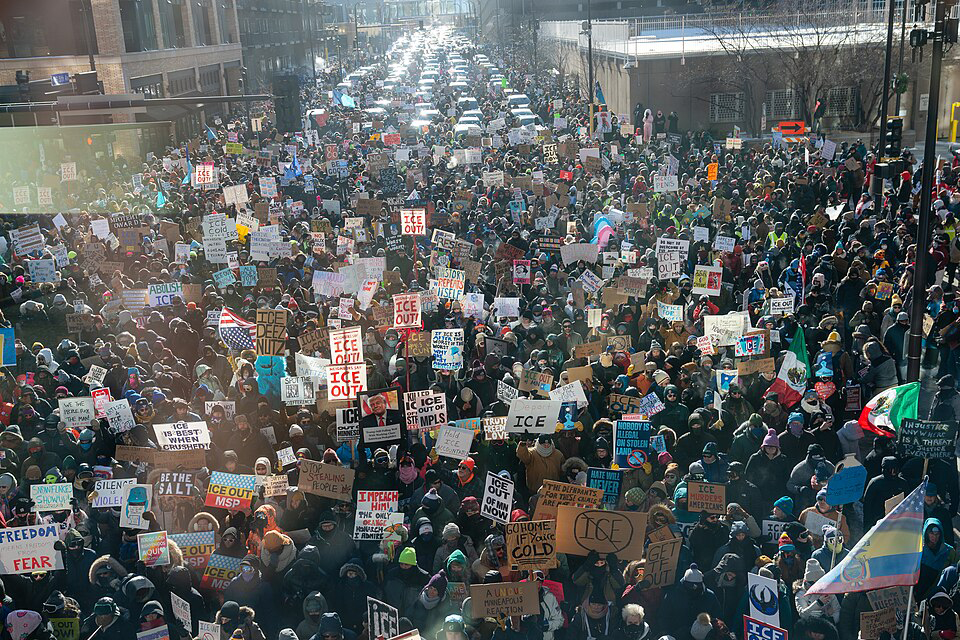
The Minnesota resistance went far beyond Gene Sharp’s catalog of techniques. Minnesotans kept their resistance up through creativity, celebration, fun, and humor in those dark, cold days. On a cold, clear January night, hundreds gathered on Lake Nokomis using hand-held candles and ice candles to spell out the words, “ICE OUT.”
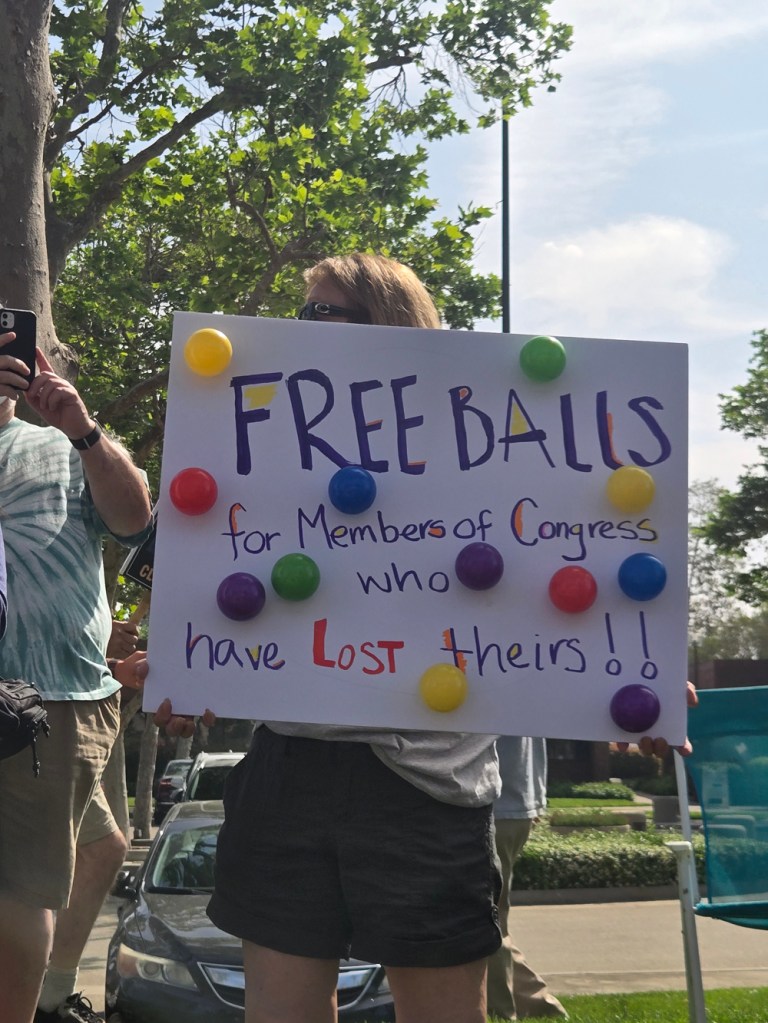
The annual sled art contest was turned into a spoof of ICE – with a giant cardboard bowling bowl rolled down the hill to knock down fascist kingpins – Trump, Putin, Orbán; a young boy on his plastic sled festooned with Monarca’s butterflies saying “We Are Family” and “Justice for Renée Good”; sleds with messages of “Resist” and “Love Melts Ice” on a giant heart; a sled decorated as a bottle of de-icer and one of a chicken wearing a whistle with the message, “ICE OUT MSP.”
The whistle was to represent one of the most noteworthy and effective resistance strategies. Whenever witnesses spotted ICE agents in the area or an arrest in progress, they would blow their whistles to alert those close by – short bursts to indicate ICE is nearby or long blasts to indicate ICE is actively detaining someone, with the added instructions to “Form a Crowd. Stay Loud. Stay nonviolent.” The whistles, most given out free by local businesses and activist groups, became a symbol of resistance and more importantly, solidarity, as whole neighborhoods came together to protect their neighbors.
Mulford would have been proud. Mulford Q. Sibley was Professor of Political Science at the University of Minnesota. He was also my PhD advisor and dear friend. A nationally known scholar of political thought, his particular interest and focus was on nonviolent resistance. Some of those in my PhD cohort had come from places of violence with the specific intent to study methods of nonviolent resistance with Mulford. As the creative and impressive acts of nonviolent resistance unfolded in the Twin Cities this past winter, I often wondered how much those in the resistance had been influenced by Mulford, either directly or indirectly in ways they may not even have known.
Mulford introduced me to several classics of nonviolence, including the work of Gene Sharp, author of the 3-volume series, The Politics of Nonviolent Action. Looking through his second volume on the methods of nonviolent action, I saw among the nearly two hundred practices so many that those in the resistance in the Twin Cities used. The resistance was varied, creative, persistent, and grounded. It easily could have been following Gene Sharp’s playbook . . .
Formal Statements – public speeches, letters of opposition, declarations by organizations and institutions, group or mass petitions, etc. At rallies, at the State Capitol, from the governor’s and mayor’s offices, in mass emails the people spoke their opposition to the ICE invasion of Minnesota. We were not cowed into silence and submission. The opposition was vocal, dignified, and determined.
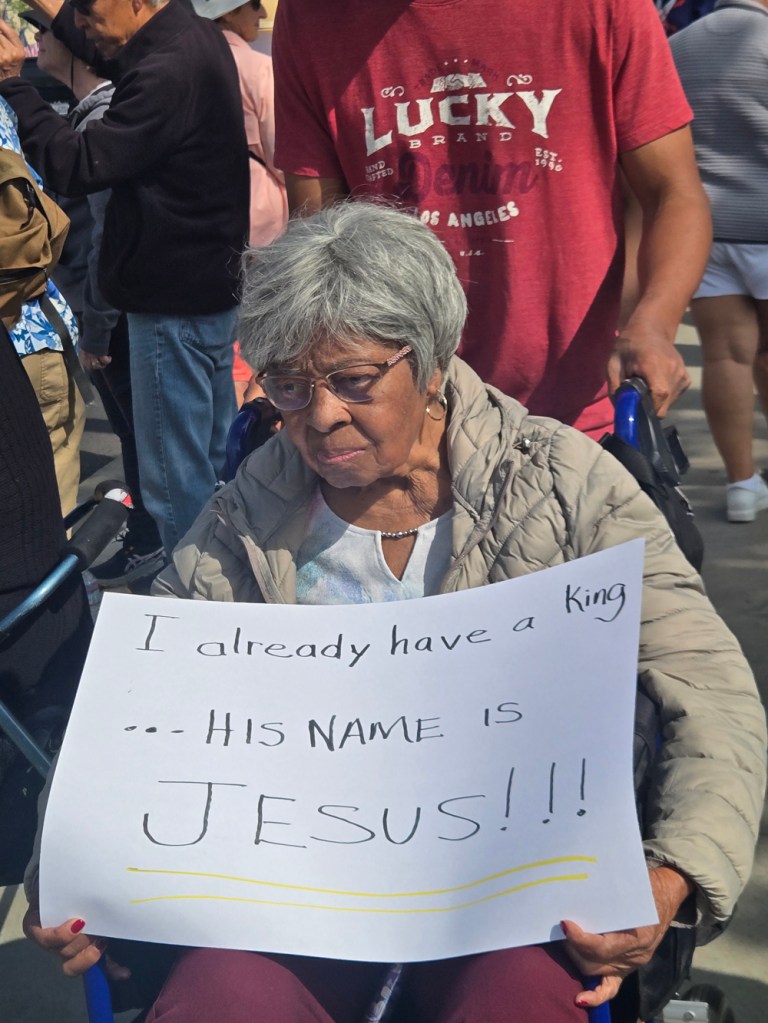
The last No Kings rally was the largest one yet! In fact, the No Kings rally in March 2026 was the largest protest on domestic soil in the history of the United States.
I am an unapologetic newspaper clipper. Now when my husband and I are involved in a process of cleaning out our long-time home, I am finding numerous clippings going back to the 1990s. Some of them are gems. They are generally painful to read, though because they illuminate the many threads of recent history that have brought us to the point we are at now.
M. Gessen (once writing under Masha Gessen they/them) is a fairly new columnist at the NY Times. When they write, though, I sit up and take notice. I have saved several of their editorials because Gessen has a unique perspective not only from an intellectual point of view but also personal. They were born in Russia, moved to the US when they were a teen-ager through the U.S. Refugee Resettlement Program. Gessen is trans and in a gay marriage. They had returned to Russia pursuing work in journalism but had to leave when the government began talking about removing children from gay parents. With their partner, they have 3 children.
I read FAR’s repost of Carol Christ’s 2016 essay,Maiden, Mother, Crone: Ancient Tradition or New Creative Synthesis, with great interest and was struck by this sentence, “It has been suggested that we need a fourth stage, Queen, to celebrate the years between menopause and old age. Since I reject hierarchy of every kind, I don’t want to be a Queen.” Christ rejected the Queen archetype while acknowledging that in her fifties, she felt no connection to Mother or Crone. I believe, the Queen archetype offers middle-aged women who live after the veil of estrogen has lifted, a realm that no longer prioritizes the relational over self – a vital sacred space.
In my work as a somatic psychotherapist, I often encounter women grappling with the time between motherhood (or choosing not to mother) and cronehood. While the Mother archetype symbolizes a universal pattern of nurturing, protection, and sustaining growth and regeneration, the Crone embodies wisdom, intuition, and spiritual power. Many women between the age of 50 – 65 simply do not connect with either of these personifications and I am one of them.
I nearly cancelled my recent trip to the United States. The political climate felt tense, the global atmosphere uncertain, and travelling across the Atlantic seemed questionable for several reasons.
Friends encouraged me to go anyway, suggesting that meeting people in person would offer a different perspective from the one shaped by media narratives. And of course, it wasn’t headlines I was meeting, but people, in a human reality that persists beneath larger systems. Thankfully, my trust in relational experience outweighed my hesitation, and I returned from my travels with renewed inspiration.
I’m writing this essay because many people I met spoke with an apologetic tone about being American. They expressed disbelief, embarrassment or anger about their conspicuous yellow haired chief. I just want to acknowledge the warmth, generosity, care and humanity I encountered wherever I went.
The entire experience confirmed what I have long sensed in my work with movement, ritual and community: that embodied presence, especially in uncertain times, is such a remedy for heart and soul. What I encountered was meaningful human contact, even in a politically divided country.
The Dinner Party by Judy Chicago: Donald Woodman, Wikimedia Commons
Knitting and other forms of needlework made a resurgence when Second Wave feminism reclaimed traditional “women’s work” as a form of feminist expression, promoting crafting as a tool of feminist empowerment. The most prominent example of this was Judy Chicago’s 1979 The Dinner Party that celebrated prominent female historical and mythical figures. A massive artwork, it consists of 539 quilted triangle pieces from all over the world, embroidered place banners, and ceramic plates arranged on a large triangular table.
Women form the vast majority of those engaged in knitting resistance,[i] and beyond the reclamation of women’s domestic arts, craftivism provides women a voice that is often usurped and talked over in masculine political spaces. As one of the participants in a resistance knitting circle that was studied by feminist scholars stated, “’Because politics is still very sexist and configured for men . . . I think women don’t get very far . . . I think craftivism is . . . something that’s accessible to women . . . and is an alternative form of expression.”[ii]
“All the women knitted. . . . So much was closing around the women who sat knitting, knitting, that they their very selves were closing in around a structure yet unbuilt, where they were to sit knitting, knitting, counting dropping heads.”[i] – A Tale of Two Cities
So does Charles Dickens tell the tale of perhaps the most infamous resistance knitter, the character of Madame DeFarge in his A Tale of Two Cities. Using a different pattern of knots for each letter of the alphabet, Madame DeFarge uses her knitting to encode the names of spies and traitors to be beheaded by guillotine in the French Revolution’s Reign of Terror.
Tricoteuse
Her character is based on the true story of the tricoteuse – the women who notoriously knitted while sitting next to the guillotine. They undoubtedly took up this public position because just a few months before the Reign of Terror began they were banned from government proceedings and prohibited from forming any political assembly. Initially praised for their role in the resistance after successfully forcing Louis XVI to acquiesce to their demands following their march on the palace at Versailles protesting rising food prices, they had become too much of a threat to the aristocrats. It is said they were knitting liberty hats.
Fast forward to today. Begun with a simple “Melt the Ice” pattern designed by Paul Neary from the yarn shop in Minneapolis, Needle & Skein, women and men all over the world are once again knitting liberty hats. The red pointed hats are modeled after the nisselue — or “Santa hat”– that Norwegian women knit as a symbol of resistance to the Nazis who were occupying Norway during WW II. Needle & Skein made the pattern available for $5, with proceeds going to support rent and food assistance to those unable to leave their homes due to ICE’s ongoing presence in the Twin Cities. As of March 5th, they had already raised $705,000.
That the movement has become worldwide is extremely moving to those of us in Minnesota. It lets us know we are not alone. It has become a sisterhood of sorts, with a continual round of Facebook messages like this one from Elisabet Engström, “I am knitting the Melt the Ice hat right now. . . . It feels so good to be a part this. I live in Sweden. Happy knitting to all of you.” Another writes from Ibaraki, Japan, that has a cultural exchange program with Minneapolis, that she is knitting MTI hats “in solidarity and support.”[ii] I particularly loved this one, “I changed the pattern a bit, but I’m loving the resistance and how much it’s already earned for donation. I’m 82 and can no longer march, but I can do this.”[iii]
These days, at every protest I attend and just walking around town, I see people, mostly women, wearing the red Melt the Ice hats. There’s something particularly fortifying about wearing one’s convictions so visibly in solidarity with others doing the same. On the 84th anniversary of the Naz’s banning the wearing of the nisselue hats, people all around the world wore the red MTI hats they had inspired, proudly displaying their resistance to the occupation forces of ICE that have terrorized cities and immigrant communities throughout the US.
I first engaged in knitting resistance in 2009 when students in my course, “Women, Peace, and War” participated in CodePink’s Mother’s Day action against war, displaying a banner on the White House fence with the words, “We will not raise our children to kill another mother’s child.” CodePink sent out requests for 4X4 knit squares in pink yarn, and so we began to knit. Many of the students already knew how to knit. We taught those who did not. Most class sessions we were all busily knitting while discussing the readings on women’s roles in war and peace, and by the due date sent in a few dozen squares. It was a wonderful exercise in activist engagement that also brought us together as a community in the classroom and with other anti-war feminist activists throughout the country.
Many people first engaged in knitting resistance when Kat Coyle of Ravelry – the social group for knitters and crocheters – created a pattern for the “pussy hat”[iv] – a symbol of resistance to Donald Trump worn in the first Women’s March following his inauguration in 2017. The streets in Washington, DC and other cities across the country were filled with pink pussy hats.
Women’s March on Washington in 2017
These are just a few of the hundreds of ways knitting and other crafts have been used in resistance to oppression, tyranny, violence, and war. In 2003, Betsy Good coined “craftivism” – a combination of “craft” and “activism” – to describe this worldwide movement.[v] As one craftivist described it, craftivism is “a strategy for non-violent activism in the mode of do-it-yourself citizenship or do-it-together citizenship’.”[vi] Craftivist and author Sarah Corbette wrote, “To be a craftivist is not just to be someone who likes craft: it is to be someone who hones their craft to question injustice, encourage peace and show ways to achieve a better world for everybody involved.”[vii]
Craftivism includes all forms of fiber and needle arts – from knitting and crocheting to embroidery and quilting and more – from the use of quilts encoded with messages about the underground railroad and its resurgence as a medium for resistance during the Civil Rights movement to the AIDS memorial quilt,[viii] from suffragists’ embroidered banners for votes for women to the embroidered arpilleras of women in Chile to document human rights abuses during Pinochet’s regime. But the craft that is currently engaging so many is knitting. Knitting has featured prominently in anti-war resistance, such as the aforementioned CodePink banner. During WWI and II, knitting was central to resistance workers who knit secret messages into scarves and mittens and sweaters, using knit and purl stitches to represent dots and dashes in Morse Code, or dropping stitches in strategic places to represent German train activity. Women knit themselves into webs during anti-nuclear protests at Greenham Common in the 1980s and decorated the perimeter fence around the air base with ribbons and knit items. The British “Cast Off Knitting Club” knit grenade purses to protest the Iraq War and in the US Starhawk and fellow protestors created a yarn web around the Pentagon.
The Tempestry Project
Knitting has been used as a form of protest for countless other causes as well. Suffragists in the US knit, sewed, and embroidered banners with declarations of women’s right to vote. The “Tempestry” project was begun in 2016 in response to concerns that the incoming Trump administration would minimize climate data. Participants knit ‘temperature scarves’ with specific color-coding to record climate change data in various places in the US.[ix] The “Liberty Crochet Mural” – consisting of 40 individual crocheted squares assembled into a 17ft x 11ft yarn mural — celebrates women’s reproductive autonomy and freedom to choose. In the “Welcome Blanket” project — a response to the first Trump administration’s proposed 2,000-mile wall along the United States–Mexico border, Los Angeles artist Jayne Zweiman and dozens of other fiber artists knit, sewed, crocheted, and wove 3,500,640 yards of blankets to welcome immigrants.[x] And the Minnesota MTI hat is not the only anti-ICE knitting project. In Portland, Tracy Wright formed “Knitters Against Fascism,” which designed and promoted the Portland frog hat and conducts “knit-ins” outside the Portland ICE facility.[xi]
MTI hat in production
In Part II, more on knitting resistance and feminism, gentle protest, and community building – tomorrow
Laware, Margaret L. “Circling the Missiles and Staining Them Red: Feminist Rhetorical Invention and Strategies of Resistance at the Women’s Peace Camp at Greenham Common.” NWSAJournal, Vol. 16, No. 3 (Autumn, 2004), pp. 18-41.
[iv] The “pussy hat” was inspired as a protest against Trump’s infamous statement in a 2005 tape, “When you’re a star, they let you do it. Grab them by the pussy. You can do anything.”
[v] The term “craftivism” is usually attributed to Betsy Greer, but she actually coined the term when after she mentioned a connection between craft and activism, “Buzz,” one of the women in her knitting circle, said, “You could call it craftivism.” Greer then posted it on her online journal in 2000, and in 2003 bought domain named craftivism.com, which has become a worldwide network of craftivists.
[viii] Evidence suggests that quilt patterns such as the “Log Cabin” or “Flying Geese” may have been used in the Underground Railroad to provide coded messages to guide enslaved people to freedom. Women in the Civil Rights movement organized quilting circles as a form of resistance. The quilts made during the Civil Rights movement were often sold to raise funds for the movement. The AIDS memorial quilt originated in San Francisco in 1985 to memorialize those lost to AIDS. Gert McMullin, the ‘mother’ of the quilt, sewed the first stitch and since then 50,000 panels have been added, honoring more than 110,000 individuals. Weighing 54, it is thought to be the largest community art project ever created. It has raised more than $3 million dollars for AIDS services. Other famous resistance quilts include The Border Wall Quilt Project, a collection of 8” x 16” quilt pieces expressing concern about the border wall and the Broken Treaty quilts, created by Gina Adams, with texts taken from treaties to demonstrate the broken promises and injustices to indigenous peoples.
[x] The project quickly exceeded its goal and aims to encircle the globe in 36,521 handmade pieces. 8,000 have been collected so far. To learn more or participate, see Welcome Blanket.
[xi] The proceeds from the sale of the pattern have raised $500 for local food shelves.