

Moderator’s note: This marvelous FAR site has been running for 10 years and has had more than 3,600 posts in that time. There are so many treasures that have been posted in this decade that they tend to get lost in the archives. We have created this column so that we can all revisit some of these gems. Today’s blogpost was originally posted August 5, 2018. You can visit the original post here to see the comments.

Candide, ou l’Optimisme (in English, Candide, or Optimism) is a satirical, picaresque novel published in 1759 by François-Marie Arouet, better known as Voltaire, who was possibly the smartest author of the Age of Enlightenment…but he annoyed so many courtiers and public officials that he was forever traveling around Europe to get away from their threats of arrest and bodily harm. A picaresque novel is an adventure novel with a clever, tricky hero who somehow survives and makes us like him. Voltaire wrote his novel primarily to criticize the optimism of the German writer Gottfried Wilhelm Leibniz, who said that because God is always benevolent, everything that happens is always for the best. This presumably includes the bloody Seven Years War (Protestant vs. Catholic, fought mostly in Germany and France) and the Lisbon earthquake of 1755, which occurs both in Lisbon and in the novel. Even though Voltaire was accused of blasphemy and heresy, among his other sins and crimes, Candide was enormously popular throughout Europe, a popularity that continues to this day.
Continue reading “From the Archives: Lessons from Candide by Barbara Ardinger” Candide, ou l’Optimisme (in English, Candide, or Optimism) is a satirical, picaresque novel published in 1759 by François-Marie Arouet, better known as Voltaire, who was possibly the smartest author of the Age of Enlightenment…but he annoyed so many courtiers and public officials that he was forever traveling around Europe to get away from their threats of arrest and bodily harm. A picaresque novel is an adventure novel with a clever,
 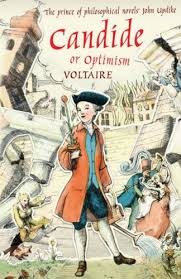 tricky hero who somehow survives and makes us like him. Voltaire wrote his novel primarily to criticize the optimism of the German writer Gottfried Wilhelm Leibniz, who said that because God is always benevolent, everything that happens is always for the best. This presumably includes the bloody Seven Years War (Protestant vs. Catholic, fought mostly in Germany and France) and the Lisbon earthquake of 1755, which occurs both in Lisbon and in the novel. Even though Voltaire was accused of blasphemy and heresy, among his other sins and crimes, Candide was enormously popular throughout Europe, a popularity that continues to this day.
 Feminism and Religion