

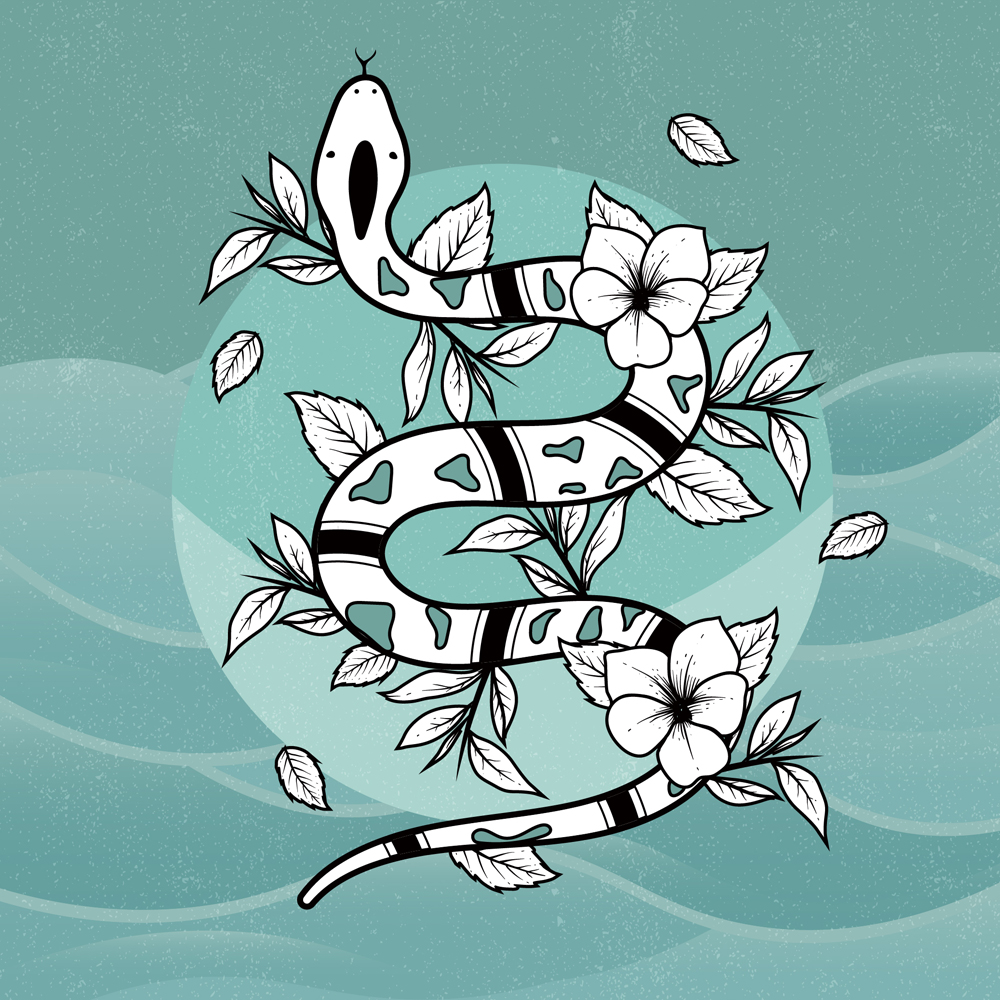
As I write this, water has slowly leaked in my front yard for a day. It has already turned what was dry and brown to moist and green. It seems fitting on the day of Nāga Pañcamī (worship on this particular 5th day of the half moon). It’s fitting that water—apaḥ—has gently made its way to the surface. It has wound around pipes, rocks and roots like a cobra—nāga—to come up to show itself. Though, there are financial challenges in fixing the leak, I can’t help celebrate it as a blessed omen of goodness to come.
After all, it’s arrived for this extra auspicious day in the most favourable month of the vedic calendar. I admit some of my frivolity may be from feeling better on my 5th day of covid. (The significance of the number 5 is not going unnoticed: linked to Patañjali and the great Yoga Sutras.) My mind too feels like it’s been making its way back to the surface. The seepage also keeps bringing me back to thoughts about the watery world of emotions, and new depths of emotions seem to be rising up in me. They feel deeply personal and universal at the same time. The celebration is devotional, the auspiciousness of having this extra time off of work to bring roses to the Mother.
Continue reading “Apaḥ and the Nāga: Water and the Snake by Lenore Lowe” When I was growing up, I was fascinated to see my father each day recite the morning blessings mandated for Jewish men. While the rest of the household bustled sleepily—my mother in the kitchen, my brother and I taking turns in the bathroom, my grandmother slowly getting dressed—my father, still in his pajamas, would stand in the center of our small living room,
  Feminism and Religion