

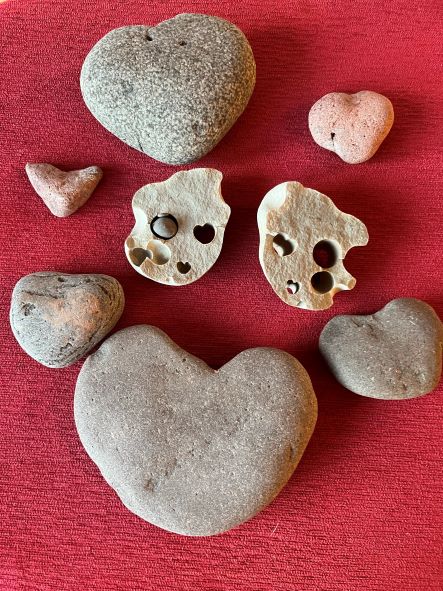
February is “Heart Month.” Presumably the American Heart Association chose February as the month to raise awareness about cardiovascular health because in February we celebrate Valentine’s Day which we observe by the giving and receiving of hearts of all kinds — heart-shaped Valentines, candy, jewelry – symbolic declarations of love, of giving our hearts to one another. Hearts have long been associated with love. When bringing our emotions to the surface, we “wear our hearts on our sleeve.” When speaking our deepest feelings, we “pour our hearts out.” Feelings of tenderness “warm our heart,” and compassion “pulls at our heartstrings.” When grieving, we feel “heartache,” and loss of love renders us “heartbroken.” The French word for heart, coeur, associates hearts with courage. We “take heart;” we “lose heart;” we “hearten.” We can engage in a task “wholeheartedly,” “halfheartedly,” or our “heart’s not in it” at all. We can be “bravehearted,” “lighthearted,” “tenderhearted,” “hardhearted,” or totally “heartless.” That’s a lot for the heart to carry.
Continue reading ““A new heart I will give you . . .” : Part One by Beth Bartlett” I’ve been married for most of my life. Marriage, along with all our institutions, is influenced by and therefore takes shape from the culture/society in which it exists. When I got married, I had certain expectations that I’d absorbed from my environment. Attaining “marital bliss” by achieving an indistinguishable oneness with my spouse was part and parcel of it all. Popular thought tells us that marriage (especially heterosexual marriage) brings about the completion of two individuals. How often do we hear about people searching for, and sometimes finding, a person they label as their soulmate? People seem to long for that one human being they think will make them happy.
 Feminism and Religion