
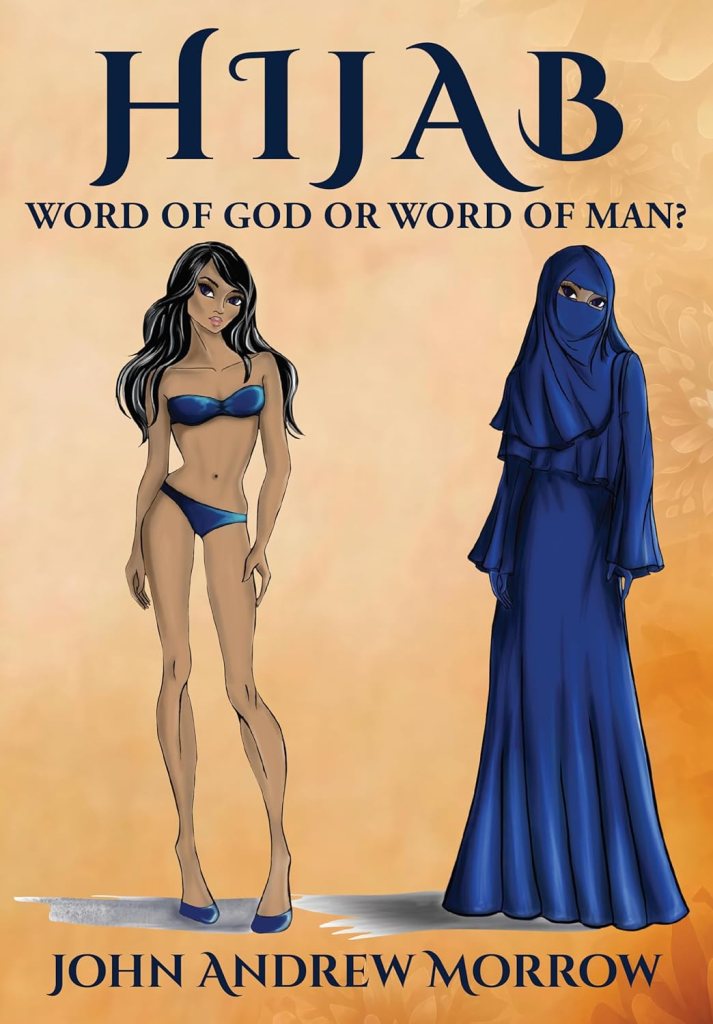
Hijab: Word of God or Word of Man? By John Andrew Morrow: BOOK REVIEW by Esther Nelson

Dr. Morrow’s book is a treasure chest of facts that also includes a wide variety of scholarly opinions regarding hijab.  His meticulous scholarship, laser-like vision, and accessible writing style clearly differentiate between what the Qur’an requires of women’s dress and what the jurists (overwhelmingly male) have enforced.  Morrow’s book would be an invaluable addition to Islamic Studies curricula in the academy, yet it’s comprehensible enough to a lay person interested in learning about hijab.

I thoroughly enjoyed reading this substantial volume.  I got a fuller picture of the meaning of hijab over time.  Dr. Morrow is clear—women ought not to be forced (legally or socially) to wear hijab.  Muslims are fond of saying: There is no priesthood in Islam.  There is no mediator between an individual and Allah.  Yet, many Muslim clergy enforce a patriarchal bent (that social system absorbed from their culture and society) to their juristic rulings that constrict women from making a free choice.

Continue reading “Hijab: Word of God or Word of Man? By John Andrew Morrow: BOOK REVIEW by Esther Nelson”

Beyond Human Rights by Esther Nelson

For way too long, the only meaning I found in my life happened when peering through one specific, religious prism. Then I discovered what’s called the academic study of religion.  Observing the many ways people find meaning through their own experiences with God (or their “ultimate concern”) shattered the tightly-sealed insulation around my worldview.  Those things that comprise religion (stories, concepts of the holy, ritual, symbols, social structures), coupled with our individual experiences create a powerful reality affecting us individually and communally.

Some of my students identify as agnostic or atheist. They’re happy to have shed (or never put on) garments they perceive as obstacles.  Rarely do they realize that religious “truths,” because they are taken to heart by people and implemented into the social fabric, shape the world they inhabit. When we discuss the ways religion affects women within society, they are far more likely to think about women’s lived realities in terms of human rights, not religious identity.  Religion is seen as something superfluous (at best) or an impediment towards progress (at worst).

Continue reading “Beyond Human Rights by Esther Nelson”