

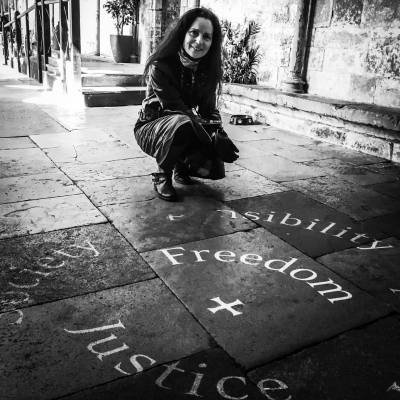
From the day my Father, Theodore, was brutally and callously murdered in Toronto, on Easter Monday, March 27, 1978, I wanted to meet his killer. I wanted to know how it was possible to do such a horrific thing. I wanted to know how he felt about destroying the lives of so many; my family’s, and his own.
We did meet. The meeting occurred in July of 2007. Because of reading about an award I received for my Therapeutic Writing Workshops and the publication of my books about healing, voice, and agency, he emailed me. Our meeting, our reconciliation, even those many years after that dark, dark day, was a rich blessing in my life, and proved helpful for him too.
The word forgiveness, is one that can lead to great suffering for victims and offenders alike. Victims are told that if they do not forgive, they cannot heal. Offenders are told that if they are not forgiven, they cannot move on from the crime they have committed. Forgiveness is a loaded word, with as many understandings, expectations, and definitions as there are experiences of savage loss, savage grief, savage pain.
Continue reading “Sawbonna: Godde and Another Route to Forgiveness by Margot Van Sluytman”
 Justice as a lived and living experience is a poem. Is a song. And as a song it is filled with all manner of rhythm, of texture, and of sound via melody and lyric which affects us in an infinity of ways. The voice of poetry is the voice of The Song of Songs. It is a voice of invitation. Chapter Two of The Song of Songs is an invitation to strangers to Scripture. Strangers who want to feel a rhythm of joy, of loving embrace of tender and generous welcome. The gravity of the language is its graceful invitation to be seen, to be gazed at, to be heard.
 Feminism and Religion