

In honor of November being the month dedicated to the remembrance of veterans, our Herstory Profile will be focused on an unsung hero/veteran of WWII, Noor Inayat Khan. Born into an Indian Muslim Royal Family but removed from their ancestral home, Noor spent the majority of her life in Europe. She would answer the call as thousands of others did during the onset of World War II. She would become one of the most successful Spies in Occupied France. Noor would eventually lose her life in the Dachau Concentration Camp. It is only in the last 17 years that Noor’s incredible story and contributions have resurfaced.
Continue reading “Herstory Profiles: The Unknown Female Spy of WWII, Noor Inayat Khan By Anjeanette LeBoeuf”Tag: Sufi
From the Archives: Where Did the Gods Come From? by Barbara Ardinger
This was originally posted on June 10, 2012

A man in the group leaned forward and asked, “But how did the Goddess get overcome?” So I told him. Young “warrior heroes” came galloping out of the Russian steppes and the Caucasus Mountains, including Afghanistan, which no one (not even Alexander the so-called Great) has ever conquered. The boys were carrying their thunder-solar-sky gods with them.
Continue reading “From the Archives: Where Did the Gods Come From? by Barbara Ardinger”Exploring Dance as Spiritual Practice by Eline Kieft
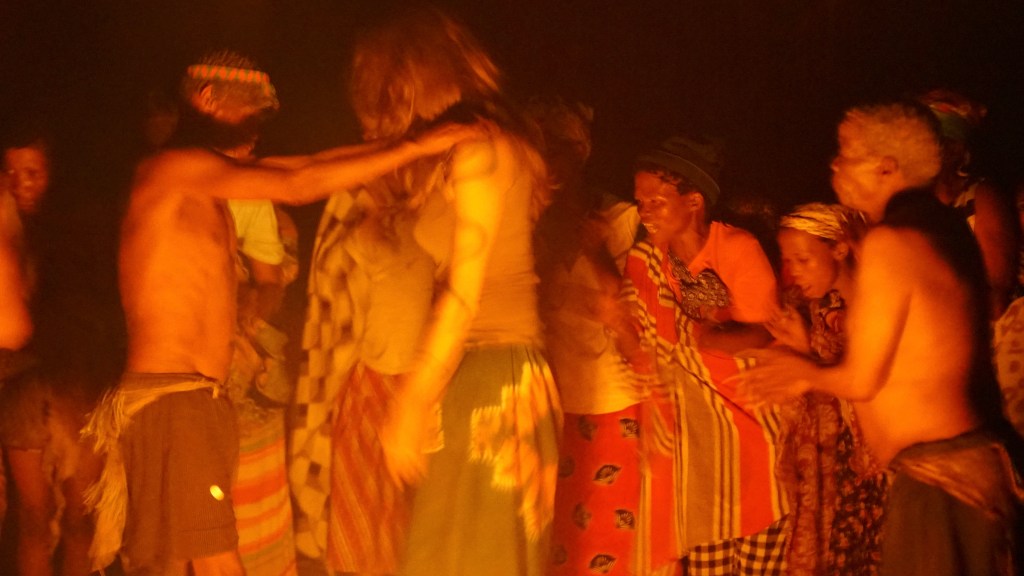
Nature and dance are my gateways to the mystery, where I can bring my worries, exhaustion, prayers, celebrations and gratitude. These gateways open to places deep within and far beyond my perception and imagination. They create an impromptu sacred space that emerges, flexes, stretches, and nurtures, and always ‘meets’ me regardless of my emotional state.
In this post I reflect on the possibilities of danced spirituality in relation to the overarching theme of Feminism and Religion. How does dance relate to our sense of personal expression, freedom and take on life as gender-aware people, and our experience of spiritual intimacy?
Dance is a versatile practice to move through life in an empowered way and to strengthen our connection with the numinous. I truly believe that everyone can dance, and one of my roles as a ceremonial dance facilitator is to help people re-connect with the dancer inside them.
Continue reading “Exploring Dance as Spiritual Practice by Eline Kieft”Reconstructions of the Past: Hafsa bint Sirin (“Introduction”) by Laury Silvers
 This blog and those to follow will be taken from an academic talk I gave on the life of the early pious worshipper, scholar of Qur’an, Hadith, and their legal meanings, Hafsa bint Sirin (d. ca. 100/800). I used some of the material for the talk in my chapter on early pious, mystic, and Sufi women in the Cambridge Companion to Sufism, but most of what I will share with you here and in the future has never been published. Whenever I sat down to write this material up for a journal, I realized I would not be able to expand the piece in the way I wanted in keeping with a properly skeptical historical attitude. I would need to hem and haw in all those places I just want to be bold and write what I think, without concession.
I want to tell her story as I have imagined it. Granted, what I have imagined is rooted in what can be known about the historical circumstances of her life and the lives of other women in that time and place. But I want to be honest about my agenda. My feminist agenda. In telling Hafsa’s story, I want to address and produce my own counter narrative to those stories told about pious and Sufi women over the years that hold up women’s silence and seclusion as the height of women’s piety. Continue reading “Reconstructions of the Past: Hafsa bint Sirin (“Introduction”) by Laury Silvers”
Where Did the Gods Come From? by Barbara Ardinger
A man in the group leaned forward and asked, “But how did the Goddess get overcome?” So I told him. Young “warrior heroes” came galloping out of the Russian steppes and the Caucasus Mountains, including Afghanistan, which no one (not even Alexander the so-called Great) has ever conquered. The boys were carrying their thunder-solar-sky gods with them.
I attended a book club at a beautiful metaphysical bookstore a few weeks ago where we discussed the conquest of matrilineal civilizations by the patriarchy. A man in the group leaned forward and asked, “But how did the Goddess get overcome?” So I told him. As my friend Miriam Robbins Dexter writes in her essay in The Rule of Mars, young “warrior heroes” came galloping out of the Russian steppes and the Caucasus Mountains, including Afghanistan, which no one (not even Alexander the so-called Great) has ever conquered. The boys were carrying their thunder-solar-sky gods with them. Those gods included Jehovah, Zeus, Jupiter, and Ares. (Allah arrived later.) Some of these young “heroes” were outlaws “who live[d] at the edge of society and are connected in legend and myth to wolves, dogs, or other animals.”[1] Dexter does not use the term “biker gangs,” but that’s what they were. Testosterone-crazed invaders out to have a good time. They ran over every goddess and temple in their path, and to make themselves seem more legitimate, they “married” former Great Goddesses (like Hera) to their thunder gods (Zeus). Their gods are famous for hurling lightning bolts, enticing their generals to invade peaceful, Goddess-worshipping lands (like Canaan), and populating their new turf via rape, which is how the innumerable sons of Zeus were conceived. More recently, during the last two or three millennia, one of those gods has inspired his prophets and preachers to roar about sin and hell and idol-worship and punishment. The new gods and their carriers thus planted the seeds of warfare in society and its literature. I describe one such invasion in the prologue of Secret Lives, where after a horrific vision that causes her the blind herself, the shaman sends her people out into the world to escape the coming hooligans on their horses and become the secretive, dark “little people” of Europe. Continue reading “Where Did the Gods Come From? by Barbara Ardinger”
 Feminism and Religion