A Deep Ecology of Horse Manure by Mary Sharratt

My recent move from Northern England to the Silver Coast of Portugal has been a radical change on so many levels. Not only am I coming to grips with a different climate and culture and immersed in learning a very challenging new language, I have embraced a completely different lifestyle.

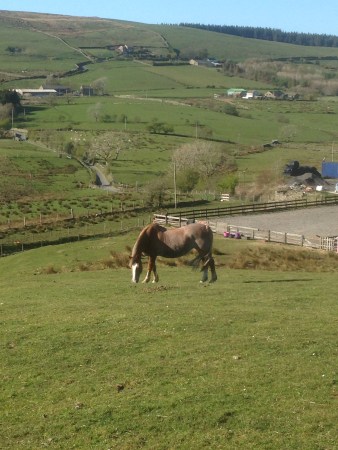
For the first time ever, I can keep my beloved Welsh mare and matriarch, Ms. Boo, at home, along with her companion, the dashing Zinco, a very handsome but sometimes aloof Lusitano gelding. My pet name for him is Mr. Darcy.

I could have taken the easy route and put Boo on a livery yard that did all the care for me, but I wanted to give Boo a lifestyle with daily year round turn out in a big field and none of my local livery yards offered this, though I talked to some very kind and helpful people at these establishments. It’s just a different approach to horse care in Portugal, which prioritizes stabling horses and using their energy for training exercises and riding.

My life now literally revolves around horse care and feeding. As soon as it’s daylight, I’m out bringing them their morning feed before I even have my human breakfast or coffee. I bring them their evening feed some time before sunset. So my writing, intensive Portuguese classes, or whatever else I’m doing is necessarily book-ended by horse care. My “productivity” can suffer as a result. If you have animals or children or other care-taking duties, the care-taking always has to come first. My change in lifestyle prompted me to question precisely why our culture privileges such a narrow view of productivity in terms of working for and selling ourselves to the corporate world rather than caring for the land and beings all around us.

I addition, I poo-pick the field twice daily, a very time-consuming task. I was in a bit of a quandary whether all this meticulous poo-picking was actually necessary. Many UK-based sites insists it is an obligatory part of horse welfare to control both flies and the spreading of parasites. However, my Portuguese farmer neighbor and my farrier both hinted that I could just leave the stuff on the ground and it might actually be better for the soil if I did.

I actually don’t mind poo-picking. It’s good exercise and very meditative, especially in early morning when the sun is rising above the mist and the dew is sparkling on each blade of grass. The other morning I saw a magnificent full moon setting majestically over the Atlantic Ocean on the far Western horizon. It’s so serene and peaceful, just listening to the birds and the horses munching their hay. I feel like I’m entering a slower, more authentic world where time is measured not by smart phones bleeping at you but by the deep cycles of nature, the sun and the moon, and the distant chiming of village church bells.

Breakfast at dawn

I think if certain world leaders got up early to poo pick, they would spend far less time spreading verbal horse sh*t on Twitter.

In many ways this feels like a homecoming, a return to my roots. On both sides of my family, my grandparents were farmers and many of my first cousins and their children are still farmers. Although I’m not an actual farmer, keeping horses at home has made me an accidental small holder.

Alas, the consequence of my poo-picking habit is an ever-growing mountain of a muck heap. What to do with all this manure is a perplexing problem if you don’t have a manure spreader and other fields to spread it on. I offered it to the farmer next door, only to receive a lecture on his view that chicken poo, sheep poo, goat poo, and cow poo are all superior to horse manure! A hierarchy of poo! (It was this gentleman who hinted that I was better off just leaving the stuff where the horses dumped it.)

Nonetheless I have a most imposing muck heap that will only get bigger unless some action is taken. I posted that I had free horse manure to collect on some local gardening sites. So far two people have taken me up on it. Both people took as much manure as they could possibly squeeze into their cars–it hardly made a dent on my manure pile! But from them I learned some valuable tips on composting and have been inspired to dig out the mature stuff at the bottom of the pile to put on my roses and hydrangeas. Hint: if you ever have insomnia, spending a day carting wheelbarrows full of horse manure all around your garden will insure you sleep like a rock.

It’s something sad if horse manure is just viewed as an unwanted waste product instead of being recognized as part of the deep ecology of animal-keeping and gardening. Manure is compost in the making.

In the meantime, my “manure friends” who have collected the stuff for their gardens have gifted me with organic produce and homemade fig jam. I still have a lot to learn but this new life is teaching me so much. Living in harmony with nature isn’t just posting pictures of pretty flowers on Instagram. It’s getting actual dirt under your fingernails.


Mary Sharratt
is on a mission to write women back into history. Her acclaimed novel
Illuminations, drawn from the dramatic life of Hildegard von Bingen, is published by Mariner. Her new novel Revelations, about the globe-trotting mystic and rabble-rouser, Margery Kempe, will be published in April 2021. Visit her website.
Mysticism as a Female Path by Mary Sharratt


Women have been sidelined and marginalized in every established institutional religion in the world. Even in alternative spiritual movements, male teachers and leaders abuse their authority toward their female students and followers. This is why women’s circles and spiritual groups are as relevant and necessary in 2020 as they ever were. Those women who can’t find spiritual community often chose to go it alone on a solitary path. But they are not entirely alone–they follow in the footsteps of a long ancestral line of female seekers and mystics, who rejected a life of slavish obedience to male authority figures in order to contemplate the deep mysteries of the soul on a path of inner revelation.

The Cambridge Dictionary defines mysticism as the belief that there is hidden meaning in our existence, that every human being can unite with the divine. The American Dictionary states that mysticism is the belief that it is possible to directly receive truth or achieve communication with the divine through prayer and contemplation. Continue reading “Mysticism as a Female Path by Mary Sharratt”

The Grace of Letting Things End by Mary Sharratt

Ms. Boo, aka Queen Boudicca, in the heart of Pendle Witch Country.

Though I was born and raised in Minnesota, I have wandered the world as an expat writer nearly my entire adult life, living in Belgium, Austria, and Germany, before moving to Pendle Witch country in northern England in 2002. I fell in love with the beautiful, rugged moorland, haunted by its history of the Pendle Witches, who cast their everlasting spell on the land. This was the landscape that inspired my 2010 novel, Daughters of the Witching Hill, which casts the Pendle Witches in their historical context as cunning women and healers. Indeed I was inspired enough to write seven out of my eight published novels in Lancashire. The mythic name for that part of Northern England is Brigantia–simultaneously the name of the Celtic Goddess of the land, the tribe of people who made their home there, and the land itself.

As a novelist, evocation of place is my passion. The question I ask myself is what makes this place I’m in now unique, unlike any other place I’ve ever been? What song does the land sing? What stories does it have to tell? What ancestors and elders cry out from the depths of the earth? I am obsessed with local history and regional folklore and myth, and how these stories merge with the landscape itself. History is a fluid thing that, together with folklore and myth, continually shapes the present. As contemporary storyteller Hugh Lupton has said, if you go deep enough into the old tales and can present them in an evocative and meaningful way to a modern audience, you become the living voice in an ancient tradition—every storyteller’s dream. This is what I aspire to do in my life’s work. Continue reading “The Grace of Letting Things End by Mary Sharratt”

This is a Wake Up Call by Mary Sharratt

George Floyd Memorial, Minneapolis
 

This month I had originally intended to blog on the injustice of UK landowners using Covid19 as a ruse to illegally block public footpaths during lockdown when country walks are one of the few pleasures remaining to many people. However, recent events have completely blown that essay out of the water. In my hometown of Minneapolis, police officer Derek Chauvin suffocated beneath his knee George Floyd, an unarmed black man accused of a minor offense, while three other Minneapolis police officers stood by and did nothing. Outrage for this brutal and senseless killing literally ignited protests across the Twin Cities and across the globe. Thus, it would seem a travesty not to devote my monthly blog to George Floyd and the protesters around the world who are calling for an end to systemic police brutality against black communities. Continue reading “This is a Wake Up Call by Mary Sharratt”

Writing Women Back into Jewish History: Interview with Michelle Cameron by Mary Sharratt


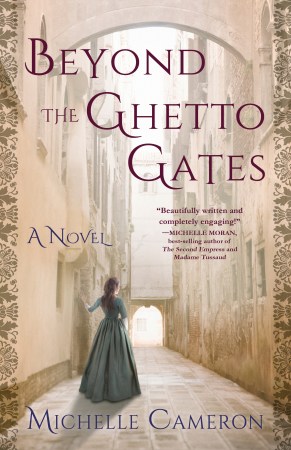
My friend Michelle Cameron’s powerful new novel, Beyond the Ghetto Gates, is a deep dive into women’s history that I thoroughly enjoyed.

This is a passionately compelling saga of an ancient way of life on the threshold of radical change. Young Mirelle longs to dedicate her life to running her aging father’s workshop, but her rabbi forbids her on account of her sex. Chafing against the constraints of both her gender and the suffocating strictures of the Ancona Ghetto, Mirelle sees no way forward but dutiful arranged marriage. Yet Napoleon’s armies, sweeping across Europe, threaten to change her way of life forever.
I learned so much from reading Michelle’s novel and from my conversation with her below. I hope my readers are likewise compelled! Reading is our great solace in this time of lockdown.


Mary Sharratt:  Michelle, tell us about your new novel, Beyond the Ghetto Gates.

Michelle Cameron: Beyond the Ghetto Gates is a historical novel set during Napoleon Bonaparte’s Italian campaign (1796-97). When French troops occupy the port city of Ancona, freeing the city’s Jews from their repressive ghetto, two very different cultures collide. Mirelle, a young Jewish maiden, must choose between her duty – an arranged marriage to a wealthy Jewish merchant – and her love for a dashing French Catholic soldier. In the meantime, Francesca, a devout Catholic, must decide if she will honor her marriage vows to an abusive and murderous husband. Beyond the Ghetto Gates depicts how the Jews and Catholics of Ancona wrestle with ancient traditions, prejudices, and the challenges of a rapidly changing world.


MS.: How does your faith inspire your fiction?

MC: People often ask if I’m religious, because my historical novels focus on Jewish characters, issues of antisemitism, and the deep conflict between religious tradition and assimilation. I believe it’s precisely because I am a non-observant Jew with deep roots in my ancestral traditions and culture that I can wrestle with these issues in ways that a more religious writer could not. I’ve felt the attraction of being part of “the norm,” much as my characters do, that tug-of-war between religious identity versus being accepted in a secularized society, which is a constant theme in my fiction.


MS: What is the most surprising fact you’ve gleaned from your research into women in Jewish history?

MC: That Jewish women could divorce if their husbands fail in their marital duties. These are spelled out in the marriage contracts (ketubot) that Mirelle’s father creates:

Be my wife according to the law of Moses and Israel. I will work, honor, feed, and support you in the custom of Jewish men, who work, honor, feed, and support their wives faithfully. I will give you the settlement of ______ as well as your food, clothing, necessities of life, and conjugal needs, according to the universal custom.

The shocker here is “and conjugal needs.” Once, when speaking about my previous novel, The Fruit of Her Hands, I was questioned on the pleasure that Shira’s rabbi husband gave her in bed. There’s a common misconception that intercourse is a duty whose sole purpose is procreation. Luckily for me, the group included the rabbi’s wife, who explained that men are actually taught in the Talmud how to satisfy their wives sexually.

But since observant women are discouraged from studying Talmud, men who aren’t adequate to the task aren’t always condemned for their failures. But the fact remains that men are supposed to make the act pleasurable for both parties – and that they can be divorced if they don’t do so.

MS: How do you hope your work might inspire your readers to gain new insights about history and faith?

MC: I hope that, by learning about the cultural underpinnings and the historical struggles of my Jewish characters, my novels might promote greater understanding between all faiths.

MS: What is the one question you never get asked in interviews, but wish you did?

MC: Did you always want to write Jewish historical fiction?

In fact, I did not. My first book, In the Shadow of the Globe, a verse novel about William Shakespeare’s life and loves, was actually the type of book I thought I’d be writing. But then I discovered that I could trace my roots back to my 13th Century rabbi ancestor – Meir of Rothenberg – and realized his life story was the stuff of a novel. Writing that book set me on this path. It helps that I had a much more thorough grounding in Jewish history than most, because I lived in Israel during my high school years.


MS: What are you working on now? Will you continue to explore themes of women and Jewish history?

MC: I’m working on the second book in the series – which takes Napoleon and his troops on a bizarre expedition to Egypt and Israel. Many of the same characters from Beyond the Ghetto Gates will be part of this novel. So yes, I’ll be continuing to explore these themes.


MS: How would you like readers to connect with you?

MC: Via my website. This includes my various social media links, as well as a contact page, allowing readers to write me directly.


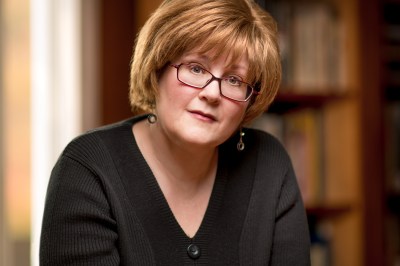
Author, Michelle Cameron


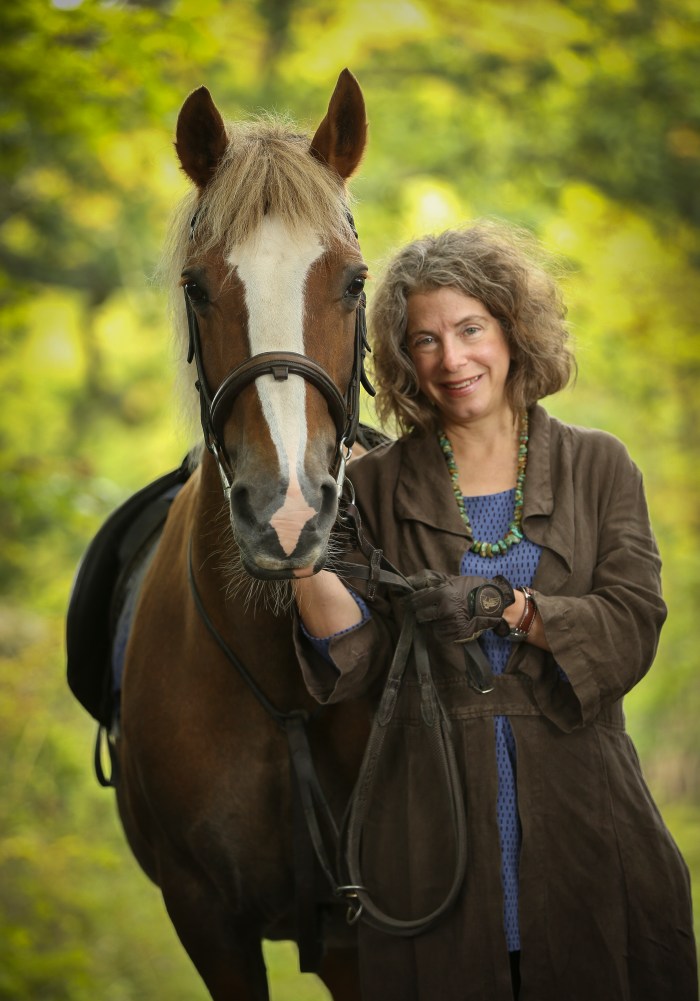
Mary Sharratt is on a mission to write women back into history. Her most recent novel Ecstasy is about the composer Alma Schindler Mahler. If you enjoyed this article, sign up for Mary’s newsletter or visit her website.


Fierce Grace in Frightening Times by Mary Sharratt


The Covid 19 pandemic had turned our lives upside down on a global scale. What we as a collective could not possibly have anticipated ever happening to privileged Western people has become our new normal as we are forced into lockdown and social isolation.

Ironically, apart from travel plans being canceled, my day-to-day life hasn’t changed that much. As a freelance writer, I’ve always worked from home and my workload and deadlines remain unchanged. In fact, many freelancers and remote workers feel pressured into greater productivity now that they are “stuck at home” with few other diversions. To me, this pressure to carry on business as usual amid a news stream of ever increasing infection and deaths feels sickeningly schizoid. Jocelyn K. Glei, in her brilliant podcast series Hurry Slowly, discusses this phenomenon of productivity shame. Continue reading “Fierce Grace in Frightening Times by Mary Sharratt”

Embracing Gray by Mary Sharratt

Five years ago, before peer pressure made me reach for the henna.

When I turned forty, my hair started going seriously gray. Fearing that this would make me look “old,” I drank the Koolaid and hopped straight onto the wheel of hair dyeing samsara, getting my hair professionally colored every six to eight weeks. This, alas, proved to be a very expensive and time-consuming obligation. I am not one of those women who views going to the salon as “pampering.” Quite the contrary. I would much rather be writing novels or pampering my pony.

The salon I frequented in those days, which has since gone out of business, had an alarming tendency to play nonstop Miley Cyrus videos. Sitting under a heat lamp with dye on my hair, I was truly a captive audience and could not run away, and the volume was so loud, it was impossible to read or even think. Subjected to such horrors, I could feel my brain cells slowly and painfully dying off, even as my hair was being dyed. I tried changing salons, but they all seemed to have the same loud, annoying soundtrack.

To compound this, my hair grows so fast, the gray roots would be visible two weeks after each dye job and then I had use root concealer to hide the evidence. Finally my scalp would take no more and I developed a skin intolerance to commercial hair dye. That, and one Miley Cyrus video too many, tipped me over the edge. I decided to jump off the hair dyeing merry-go-round and go naturally gray. By this time, I was approaching fifty. Continue reading “Embracing Gray by Mary Sharratt”

Seeking Moments of Beauty in a Crazy World by Mary Sharratt

Black Swan by Anna Marija Bulka


Our world seems to get crazier by the day. We live increasingly accelerated lives. Our downtime seems to shrink by the second. If I don’t watch myself, I get mired in tunnel-vision, doggedly chasing deadline after deadline without taking any time out for myself or my loved ones. Add Trump, Brexit, the coronavirus, invasive social media, and climate change to the mix, and it gets darker still. Our democracies and even our privacy are up for grabs.

How can we hang on to any sense of inner peace amid all this chaos? Continue reading “Seeking Moments of Beauty in a Crazy World by Mary Sharratt”

The Company We Keep by Mary Sharratt

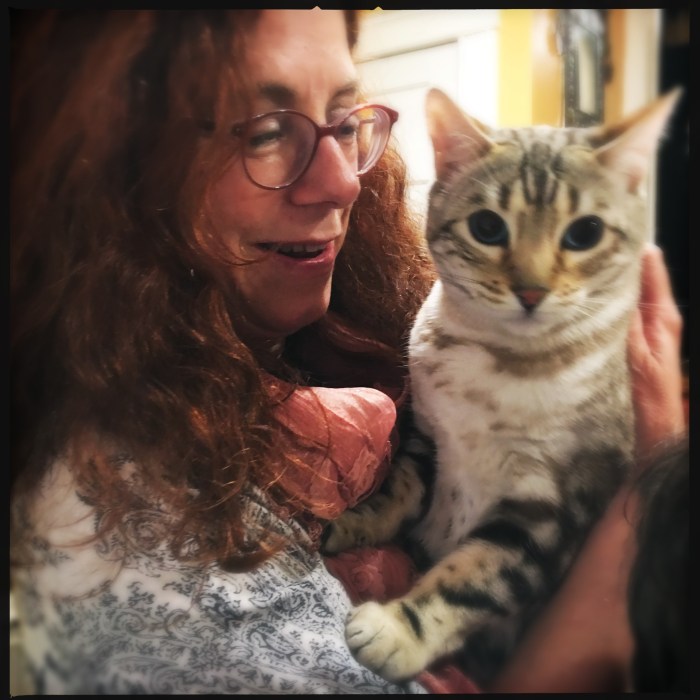
Mary shares an uplifting moment with a dear friend’s gorgeous cat. Photo by Kris Waldherr.


As a New Year rolls in, many of us make New Year’s resolutions, often based on the received perception that we are not good enough as we are. We look for ways to improve ourselves in terms of  fitness, weight loss, and other measurable habits. And while these goals may be very worthy ones, in 2020 I’m turning my attention to something more subtle and fundamental to my basic well being–the company I keep.

Women have been socialized to be far too tolerant of people who diminish and undermine us. Whatever happens or however badly the other person behaves, we want to be seen as “nice” and not make a fuss.

We don’t always get to choose our relationships. If we work at a company, we will inevitably encounter conflict on some level with people whom we can’t so easily avoid. The same is true in co-housing situations and kinship groups.

But in our leisure time, we DO get to choose who we hang out with. And we need to pick our friends and companions with care.

A friend of mine who is a realtor gives the following advice to people who are moving to a new area and wanting to make friends and integrate in the local community: “Don’t hang out in the pub with the losers and the people who are always complaining. Join some group focused around positive activity like hiking or tennis or yoga. These are the positive people looking to do something good.”

I’ve noticed similar effects in groups I’ve belonged to in my local community. My writers group is a powerhouse of inspiration and support and always lifts me higher. The same is true for my yoga and meditation classes with Blair Read. These are completely uplifting and filled with positive people who sincerely want to be in harmony with others. People who have set their course on both physical health and spiritual liberation.

The biggest culprit for mean and negative behavior these days seems to be social media. For this reason, I have given up Facebook and Twitter to a large extent and only use it for book promotion and networking with other writers. However, I can still receive personal messages from Facebook “friends.” An acquaintance from the stable yard where I used to keep my horse sent me–apropos nothing–a nasty text message on New Year’s Day! At this time I was on vacation in Portugal, enjoying the time of my life, not even on the same landmass as this negative person. Talk about a wake up call to be more mindful of the company I keep.

So what’s up with negative people? Is the damage they cause all in our heads?

Author and life coach Lisa Romano says that when we are around negative, backbiting people, we must use the following mantra, “Hold on to your Self. Hold on to your Self.” Meaning our higher Self that can never be dragged down.

Narcissists and other negative people make up stories in their heads, then accuse you of that made up story. Then you feel, “Oh no, I must prove to her that’s not true!” No, you do not, according to Romano. We must not entertain their accusatory invented stories.

To have healthy relationships with people who support us, we must learn to detach from negative people, set boundaries, and love ourselves. If you feel like you’re being manipulated by someone, you probably are. Accept what you feel, feel what you feel, and decide what you want to do about it.

If you need to seek validation from others, then you tend to attract narcissists. Likewise, if you are an empath, you will attract them, because they lack empathy and want yours. They enjoy upsetting us because they need to feel they have power over us.

If someone keeps trying to undermine you until you have to struggle to trust your own perceptions, you are experiencing narcissistic abuse and need to distance yourself from this person. You absolutely need to listen to your perceptions and intuition to keep yourself safe. Your pain and disappointment are valid. Your anger is valid.

Romano believes that when we are around narcissists, they try to drag us down to their level of being and behaving. The core of the suffering we experience in these relationships is that we’ve been dragged down to a negative state of being that is not natural for us. We can’t change their behavior or raise their frequency. Being with a narcissistic person can bring us far away from who we really are. To survive in an environment ruled by negative people, we have to be in a state of perpetual anger, defensiveness, and (self)hatred that is ultimately soul-destroying.

This kind of environment damages our neural pathways. To heal ourselves, we need to break away from these people and see them for who they are. We need to surround ourselves by positive people.

Quarantine yourself from toxic people. Grow your own wings and soar with the true friends who lift you higher.

Cal Newport, author of the life-changing book, Digital Minimalism, offers a strategy for an “Analog January” to boost our real world connections with positive people.


Mary Sharratt is on a mission to write women back into history. Her most recent novel Ecstasy is about the composer Alma Schindler Mahler. If you enjoyed this article, sign up for Mary’s newsletter or visit her website.


Through a Dark Forest: Fairy Tales as Women’s Stories


My first brush with raw and authentic fairy tales took place nearly thirty years when I was teaching English to Japanese children in Munich, Germany, where I lived from 1989 – 2000.

Intending to stock up on children’s literature, I discovered the a whole section of the Munich City Library was devoted to fairy tales from different cultures. It contained literally thousands of volumes, some of them ornate and leather-bound, as beautiful to hold as they were to read. I loved the Russian fairy tales the best, for they were the most haunting and evocative for me.

The fairy tales held me in thrall and would not let me go. They got under my skin and rooted themselves in my writing and my life. I was hooked.

Fairy tales are the domain of women. In past centuries, the traditional European storytellers were women sitting at their hearths and spinning at their spinning wheels–spinning a yarn, if you will. Telling old wives’ tales.

The original fairy tales were not romantic children’s stories. Only very recently with Walt Disney have these raw and very ominous stories been reduced to little more than cute cartoons. Until the 17th century, fairy tales were adult entertainment, the way of passing a dark winter’s evening. Many older fairy tales are quite bawdy. Allocation of fairy tales to the nursery took place in the 18th century when the educated upper classes rejected the irrational and supernatural aspects of the tales in favor of a more rational and scientific world view, thus dismissing these tales as nonsense and only good for amusing young children.

Yet, as the enduring popularity of Clarissa Pinkola Estes’ Women Who Run with the Wolves attests, fairy tales are meaningful and relevant for contemporary women seeking deep guiding archetypes and images of female strength.

These centuries-old stories bristle with wild and sometimes terrifying women who possess amazing powers. The witches and sorceresses who inhabit the dark forests of fairy tales offer a stark and startling contrast to the innocent maiden protagonists.

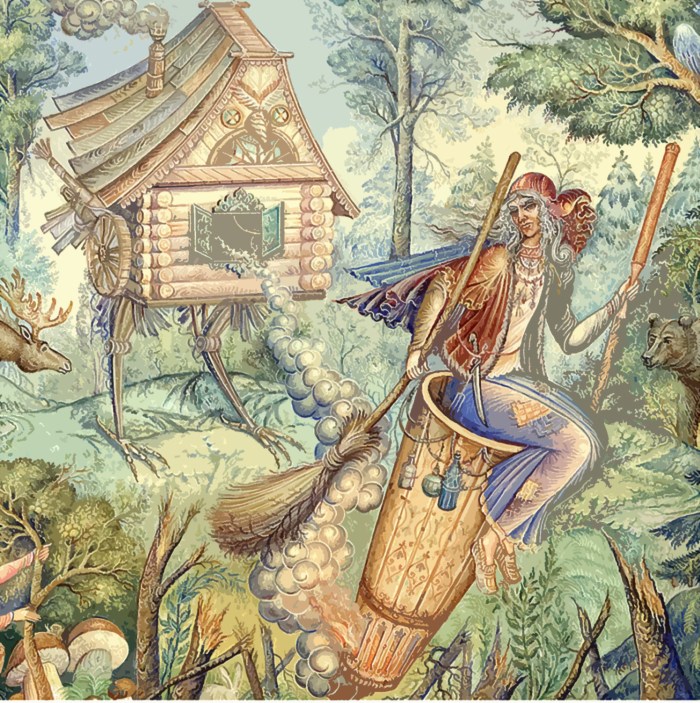
What I find most fascinating about fairy tales is not the young girl’s encounter with the prince, but with the witch. Baba Yaga in the Russian tradition and Frau Holle in the German tradition are both sorceresses of intimidating dimensions.

Baba Yaga eats human flesh and flies around in a cauldron. Her house dances on hen’s feet. Frau Holle lives in a house in a beautiful underground meadow and she showers young girls with either pure gold or filth, depending on how they have served her.

Both these figures are ancient archetypes of female sovereignty that had their origins as pagan goddesses. Baba Yaga was once a great mother goddess of the Slavonic peoples. According to ethnographer Sonja Ruettner-Cova, Frau Holle was originally a solar goddess and a weather goddess. When she shook out her featherbed, it snowed.

Ironically Baba Yaga and Frau Holle have lived on in fairy tales even after the old myths and religions that honored them were banished, precisely because fairy tales have been dismissed as children’s stories. The tales’ deep magic lies hidden in their deceptive simplicity.

The naive young girl must go into the woods on the darkest night to face Baba Yaga. She must leap down a well to find her way to Frau Holle’s house and serve her for a year and a day. Once the young heroine encounters the sorceress, she will be completely and utterly transformed–a girl no longer but a woman with secret powers of her own.

Fairy tales are full of images of women who both challenge and empower other women.

The culmination of the heroine’s journey a deep inner rootedness. It is finding and claiming that house in the forest deep in your soul.


Mary Sharratt is on a mission to write women back into history. Her most recent novel Ecstasy is about the composer Alma Schindler Mahler. If you enjoyed this article, sign up for Mary’s newsletter or visit her website.