Does My Faith Have Gender? By Brooke Nelson

The following is a guest post by Brooke Nelson, a  Ph.D student in Religion at Claremont Graduate University. She is interested in themes of feminine agency, authority, and textual representation in early Church texts, and how these themes intersect with the contemporary need to create a canon of legitimate examples. Her current research project is focusing on the ways that women were represented as taking control of their lives, their deaths, and their salvation through feminine martyr narratives.

For many people, the academic study of religion may provide an opportunity to pursue (or find) a theology in which women play a major role. I, however, hit the books for a very different reason. I grew up in a “Christmas and Easter” Catholic family that subscribed to the larger sense of the faith without worrying too much about the details. I went to Catholic schools, learned my catechism, memorized the ways to spot a heretic, and associated predominantly with my Roman Catholic schoolmates. I never, however, boldly flew the Papist flag. I often failed to identify with the larger Catholic community because I took a rather free, grab bag approach to the Latin Church, taking what I wanted and leaving behind the strictures that I thought were too backwards to apply to modern life. Continue reading “Does My Faith Have Gender? By Brooke Nelson”

KARAI KASANG: Rebirthing the Non-Patriarchal Image of God in Kachin Culture by Zau Sam

This  post is written in conjunction with the Feminist Ethics Course Dialogue project sponsored by Claremont School of Theology in the Claremont Lincoln University Consortium,  Claremont Graduate University, and directed by Grace Yia-Hei Kao.

Zau Sam is a first year MA student in Feminist Studies with interests in process theology, ecotheology, feminist and ecofeminist theologies.  He is ethnically Kachin (Jinghpaw) and from Myanmar (Burma). Zau is a minister at Yangon Kachin Baptist Church (in Myanmar) and Academic Dean of the Church-based Bible School there.  

Throughout our Feminist Ethics class, I have been thinking about Mary Daly’s concept of “Goddess” in her Gyn/Ecology: The Metaethics of Radical Feminism.  I don’t believe that there is any sound theological argument that the term “God” itself represents patriarchy. Theologically speaking, if we study the Bible systematically, particularly Genesis 1:27, it is unquestionable that God is associated with both feminine and masculine imagery.  God is imaged as both mother and father. In contrast to this nature, Mary Daly does not merely seek to erase masculine imagery from the term “God,” but the word “God” itself.  However, “Goddess” without the masculine imagery can no longer be the Perfect Goddess, just as “God” without the image of the feminine also remains imperfect.

Continue reading “KARAI KASANG: Rebirthing the Non-Patriarchal Image of God in Kachin Culture by Zau Sam”

Part I: Advent as the Active Wait By Cynthie Garrity-Bond

In the Advent reading of the Annunciation we are silent witnesses to the conversation between the Angel Gabriel and Mary  (Luke 1: 26- 40).

I would like to bring to the surface two ways of looking at the season of Advent though the scriptural story of the Annunciation.  Both require waiting, one in the stillness of surrender and the other in what I call the active wait. While we know that Advent is a season of waiting, it is also one of expectation and hope.  It is suggested we pullback from the busyness of our hectic lives, in the anticipation of renewing our connection to God and therefore ourselves in prayerful silence leading to interior excavation.  The 14th century mystic Meister Eckhart wrote, “We are celebrating the feast of the Eternal Birth which God the Father has borne and never ceases to bear in all eternity.  But if it takes place not in me, what avails it?”  And so like Mary, we wait for the Blessed Unknown to take shape within us. Continue reading “Part I: Advent as the Active Wait By Cynthie Garrity-Bond”

Christian Sexual Ethics and Just Love for a Mormon Marriage by Caroline Kline

Several months ago, my husband and I had a fascinating dinnertime discussion on whether or not we have a ‘just love’. I had been reading one of the foremost ethicists on the subject of Christian sexual ethics — a Catholic nun by the name of Margaret Farley who taught at the Yale Divinity School for over 30 years.  Her book is called Just Love.

The framework for sexual ethics that Farley comes up with highlights her commitment to the importance of justice in sexual relationships. For Farley, love is not enough. Love alone can be based on fantasy, it can be manipulative, it can look at the other only as a means to an end. Therefore, in her sexual ethical framework, love must coincide with justice.  Just love must contain these seven norms:

1. Do no unjust harm (don’t be physically, emotionally, spiritually destructive to the other) Continue reading “Christian Sexual Ethics and Just Love for a Mormon Marriage by Caroline Kline”

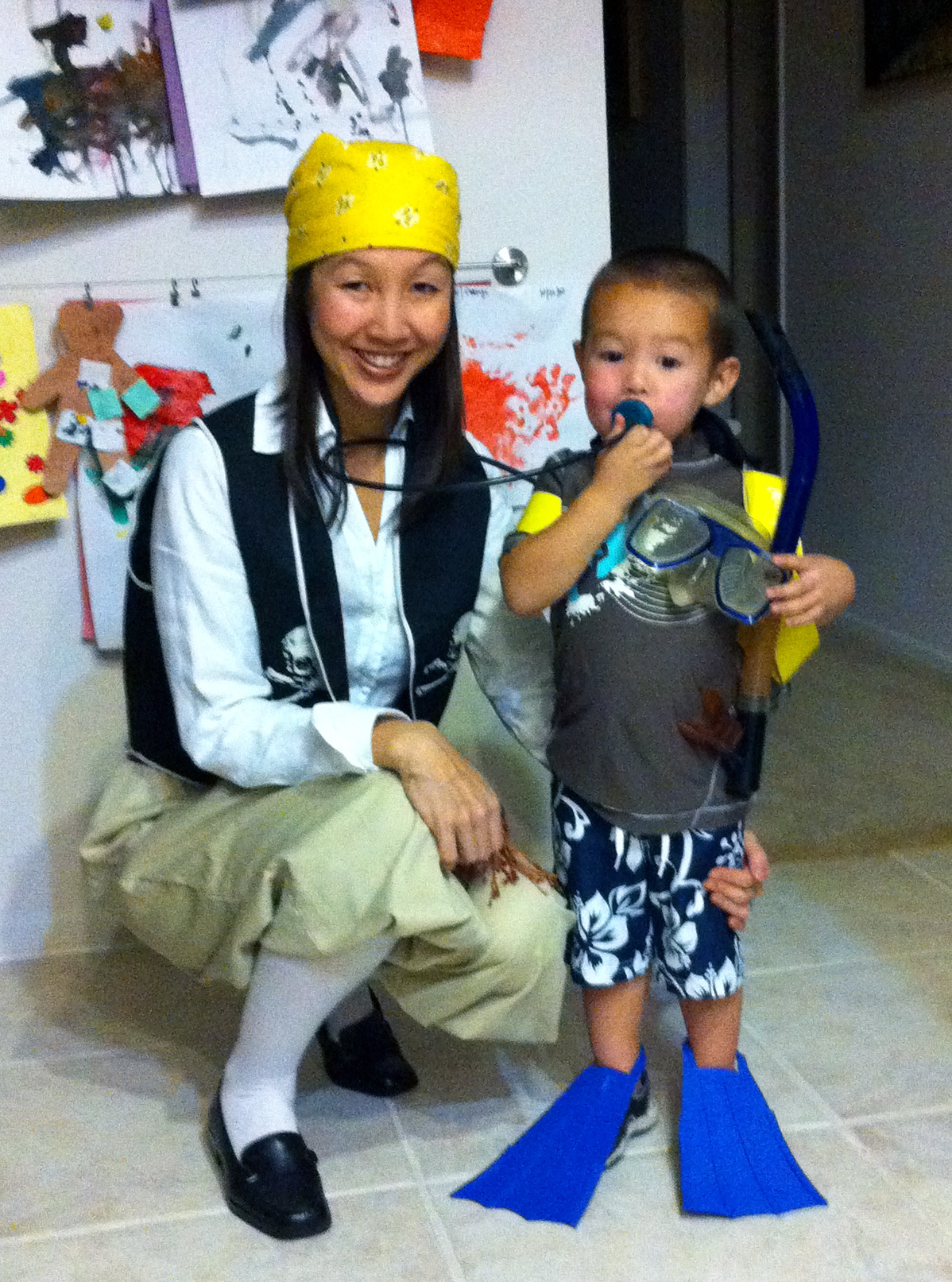
Halloween Matters: An Immigrant Family, Christian, and Feminist Parenting Perspective by Grace Yia-Hei Kao

“I had realized that my parents legitimately had more important things to do than to carve pumpkins or buy costumes. But as a young child, I equated participating in the cultural phenomenon that is Halloween with being an American. I, as a daughter of immigrants, just wanted to fit in and join the fun.”

Continue reading “Halloween Matters: An Immigrant Family, Christian, and Feminist Parenting Perspective by Grace Yia-Hei Kao”

The Postures of Prayer by Caroline Kline

I’m not generally an eye closer during prayers. Nor am I an arm folder. If I’m in a public space like my Mormon church, I tend to slightly bow my head so as to not make any other non-eye closers uncomfortable. I’m not a very consistent personal prayer, but when they do happen, most of them occur as I lie in bed before I sleep. I’m not a kneeler, either.

I’ve not ever thought much about this before, but now that we have a five year old, I’m seeing my child being taught prayer postures by his Sunday School teachers that don’t resonate with me personally. It’s caused me to think a little more deeply about why I don’t conform to typical Mormon prayer posturing.

I found an article* about eye positioning during prayer helpful as I thought about this question. According to the author Thomas Ellis, members of Abrahamic religions tend to view deity as an “intra-tribal rank superior.” In other words, the same way these ancient people approached their social superiors with supplications, they approach their deity with supplication. This usually involves lowering the eyes and head in order to not appear challenging or demanding. Contemporary Mormonism seems to fall into this category.

Prayer Tree by Janet Chui

One exception to this generalization about Abrahamic religions is Marian worship. Catholic or Eastern Orthodox adherents tend to approach Mary with a direct gaze, seeking out visual reciprocity. They often look at icons and pray to her simultaneously. The submissive lowering of head and eyes is not present. Ellis postulates that this is because these adherents are approaching deity not as an “intra-tribal rank superior” but instead as an “attachment figure,” just as babies and young children approach with eyes open the loving mother or father.

Interesting. Does my lack of desire to close my eyes and bow my head mean that I think of deity more like Catholics think of Mary? Do I approach deity as loving parents**, rather than social superiors? Do I want to emphasize our similarities and talk to them as loving friends, rather than focus on the vast difference of our hierarchical positions?

Yes, I think I do.

*Natural Gazes, Non-Natural Agents: The Biology of Religion’s Ocular Behaviors” by Thomas B. Ellis in the book The Biology of Religious Behavior

**Mormons believe in both a Heavenly Father and a Heavenly Mother, though Mormons are instructed to not worship her or pray to her.

Rosemary Radford Ruether’s Women and Redemption: A Theological History By Gina Messina-Dysert


Women and Redemption : A Theological History. 2nd ed. By Rosemary Radford Ruether.Minneapolis: Fortress Press. 2011.

Women and Redemption: A Theological History

Having been critically impacted by the work of Rosemary Radford Ruether, I was anxious for the release of the second edition of her crucial book, Women and Redemption: A Theological HistoryRedesigned with illustrative material, research questions, and suggested reading for further research, as well as the addition of a new chapter exploring recent developments in feminist theology, this text does not disappoint.

With this newest edition, Ruether acknowledges the ongoing journey in the field of feminist theology and emerging issues faced by women in religion and society. Examining the Christian claim of an inclusive and universal redemption in Christ, she traces paradigm shifts in understandings of gender over the last two millennia.  Ruether offers an historical exploration of women and redemption in the first five chapters followed by a global survey of contemporary feminist theologies in the final four chapters, which includes a concluding section that gives attention to “Fourth World” feminisms and post-colonialism in an effort to “bring this volume up to date” (xvii). Continue reading “Rosemary Radford Ruether’s Women and Redemption: A Theological History By Gina Messina-Dysert”

Sexual Ethics and Southern Belles By Amanda Pumphrey

This post is written in conjunction with the Feminist Ethics Course Dialogue project sponsored by Claremont School of Theology in the Claremont Lincoln University Consortium,  Claremont Graduate University, and directed by Grace Yia-Hei Kao.

Amanda Pumphrey is a first year Ph.D. student in women’s studies in religion at Claremont Graduate University. She received her MA in religion from Claremont School of Theology and her BA in religious studies from Valdosta State University in Valdosta, Georgia. Amanda enjoys studying Christian sexual ethics and feminist and queer theologies. 

It’s 8th grade. I’m in the girls’ bathroom during lunch time and I ask my friend in the stall next to me if she has a tampon that I can use. “Amanda Brookins, I didn’t know you wasn’t a virgin nomore!” screams another friend who is waiting on me. I was confused by her comment, but I later learned that her mother had explained to her that girls could not wear tampons unless they had had sex. Which translated into only married women should be utilizing tampons. This is the context in which I grew up: South Georgia where there is virtually no comprehensive sex education in the public school systems. In this small southern town, I learned about sex through my youth group at a country, Pentecostal church. What I learned was that sex was sinful and it was not something that I should even think about until I was married. Christianity and southern culture go hand in hand within my hometown, so as a born again Christian and a girl I was expected to “save myself for marriage” and my future husband, and to uphold my status as a polite and proper southern belle. The norms were already established: sex is for marriage which is a Christian institution between one man and one woman.  Continue reading “Sexual Ethics and Southern Belles By Amanda Pumphrey”

Does Christianity Open a New Space for Cambodian Women? By Katie Schubert

The following is a guest post written by Katie Schubert, a Ph.D. student in the Theology, Ethics, and Culture program at Claremont Graduate University.  Her academic interests include feminist ethics, postcolonial feminism, human rights and religion, and Southeast Asian Studies focusing on Cambodia.  Her work explores Cambodian women’s experience of empowerment through religion. 

Christianity has often been blasted (and understandably so) for its patriarchal character, for justifying violence, and for its instrumental use of power throughout its long history.  In transnational feminist literature the work of missionaries is often referred to as the epitome of problematic transnational work, automatically assumed to be evil, likely because of the history of missionaries’ collusion with violent invasion and attempted erasure of previously existing systems.

But can Christianity also be freeing, a vehicle for change, even a vehicle for feminism? Continue reading “Does Christianity Open a New Space for Cambodian Women? By Katie Schubert”

Georgia and The Virginity Institute By Katrina Myers

This post is written in conjunction with the Feminist Ethics Course Dialogue project sponsored by Claremont School of Theology in the Claremont Lincoln University Consortium,  Claremont Graduate University, and directed by Grace Yia-Hei Kao.

Katrina Myers is a MA student at Claremont School of Theology and is participating in the Feminist Ethics Course Dialogue project.

During the past two years, I had the opportunity to serve as a Peace Corps volunteer in the country of Georgia, which is located in Eastern Europe.  There I worked as a schoolteacher and lived in a tiny, homogenous, Georgian village in the Kakheti region.

I quickly learned the encompassing influence of the Georgian Orthodox Church, which upholds an ideal hierarchy: God, Jesus, Patriarch, Man, Woman.  The church champions traditional gender roles; men are to be strong leaders and heads of the community and their households, while women are expected to be virginal, modest, obedient and subservient.  In Georgian culture, the influence of the Church and the teachings of Patriarch Ilia II and his predecessors are indisputable. Continue reading “Georgia and The Virginity Institute By Katrina Myers”