
A FEMINIST TAOIST VOICE PART 2: MY DIALOGUE WITH ELISA FON, ACUPUNCTURIST, TAOIST, FEMINIST AND FRIEND by Sara Frykenberg

Taoism is a philosophy that, for me, has been around so long because it is meant to move and change with society…

Acupuncturist, healer and friend, Elisa Fon and I began a discussion of Taoism and feminism in Part 1 of this interview.  Elisa defined her vision of feminism and Taoism, explained Taoism’s relational and yet, individual emphasis on what is particular in each of our experiences and considered the basic relationship of yang and yin.  Part 2 picks up where she and I left off, returning to the discussion of yin, yang and supposed dualisms.

Sara: I was wondering if you could talk a little about the complementarity of yin and yang?

Elisa:  In Taoism any type of imbalance should be adjusted.  So any major abundance or deficiency of yin or yang would be considered unhealthy. Yin and yang are interrelated: without one aspect of this relationship the other couldn’t exist. Day comes and it brings certain dynamic energy with it: the light is transformed to energy for plants.  But night is equally valuable, the nurturing yin, where things fall asleep, heal themselves and prepare to go forward again in the morning.  They are considered mutually interchangeable too.  If you had an over excess of yin at some point it would actually become yang.  It’s a fluid cycle.  Like we see in the yin/yang Taiji symbol, there is yin found within yang and yang within yin at all times. Continue reading “A FEMINIST TAOIST VOICE PART 2: MY DIALOGUE WITH ELISA FON, ACUPUNCTURIST, TAOIST, FEMINIST AND FRIEND by Sara Frykenberg”
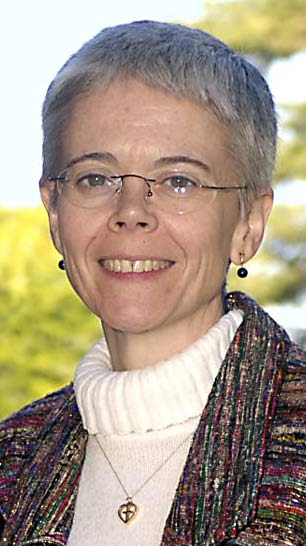
A FEMINIST TAOIST VOICE PART 1: MY DIALOGUE WITH ELISA FON, ACUPUNCTURIST, TAOIST, FEMINIST AND FRIEND by Sara Frykenberg

“So it all kind of depends… even in men compared to men, and women compared to women, you would have to have a counterpart to judge something as yin or yang—you are never statically just yin or just yang…”

Elisa Fon is a student of acupuncture, graduating this semester from Yo San University in Santa Monica, CA.  She also studies reiki, energy healing, meditation and yoga.  Elisa and I have known each other for most of our lives as friends, as one another’s support and as chosen family.  Over the last few years, however, we have more consciously fostered an intentional aspect of our intimacy: a challenge to each other to live more authentically, to walk counter-abusively and to live towards physical, spiritual and emotional empowerment.  One privilege of this relationship has been the opportunity to create a language together in order to speak across our differences and share our respective passions: feminist theo/alogies (mine) and Chinese medicine/ healing arts (Elisa’s).

Searching for a way to better understand and teach feminist Taoism, I reached out to Elisa for dialogue and language, which gave birth to the following interview about the relationship of one feminist to Taoism, or a Taoist to feminism. Continue reading “A FEMINIST TAOIST VOICE PART 1: MY DIALOGUE WITH ELISA FON, ACUPUNCTURIST, TAOIST, FEMINIST AND FRIEND by Sara Frykenberg”

A Church With No Walls By Sheila E. McGinn, Ph.D.

Last year about this time, I spent a month in Malaysia, at the invitation of Alpha Omega International College, a school in Petaling Jaya, a suburb of Kuala Lumpur. I was rather surprised at the initial invitation, since AOIC is sponsored by the Assemblies of God and I myself am a feminist Roman Catholic. To put it mildly, the two denominations tend not to be “on the same page” on various aspects of the Christian tradition, so I wanted to ensure that the college administrators knew what they would be getting if I were to come. Happily, the AOIC president who had proffered the invitation confirmed that indeed they did want me to come for the guest lectureship, so the beginning of October saw me making my way almost exactly to the opposite side of the globe, to run my New Testament ethics seminar at the college and to spend time learning from Malaysian Christian and Muslim leaders about interreligious dialogue and inter-ethnic relationships in their country.

Malaysian hospitality was faultless—generous, thoughtful, inviting—and everyone made time to tell me about their cross-cultural experiences and their concerns for the religious climate in Malaysia. I continually was impressed by the sincere convictions of these religious leaders and their constituencies, and by the political and cultural difficulties they faced in any kind of collaborative endeavor or even attempts at dialogue. Wherever I looked, will or nil, boundary issues continued to arise. Although other ethnic groups had the right to choose their religious affiliation, the Malay ethnic group was legally defined as Muslim. Within the Christian tradition, certain denominations traditionally were connected with one ethnic group or another. Continue reading “A Church With No Walls By Sheila E. McGinn, Ph.D.”