The Black Horse: Our Bodies, Our Selves By Carol P. Christ

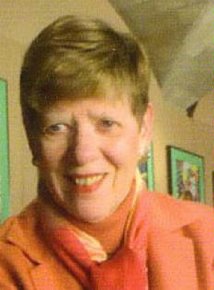
Carol P. Christ is a founding mother in the study of women and religion and women’s spirituality.  Her books include  She Who Changes , Rebirth of the Goddess, and the widely used anthologies she co-edited with Judith Plaskow, Womanspirit Rising and Weaving the Visions.  She has been thinking about the black horse in relation to the online course she is teaching on Ecofeminism in the Women’s Spirituality Program at California Institute of Integral Studies.

“The driver…falls back like a racing charioteer at the barrier, and with a still more violent backward pull jerks the bit from between the teeth of the lustful horse, drenches his abusive tongue and jaws with blood, and forcing his legs and haunches against the ground reduces him to torment.  Finally, after several repetitions of this treatment, the wicked horse abandons his lustful ways; meekly now he executes the wishes of his driver, and when he catches sight of the loved one [i.e. his master] is ready to die of fear.”

I can’t seem to get this image from Plato’s Phaedrus quoted in Val Plumwood’s Feminism and the Mastery of Nature out of my mind or my body these days.  The other day I tried to read the above passage to a friend and my body became so tense that I accidentally cut off the phone connection—twice.  Now while I am writing my muscles are tight, and I am beginning to get a headache.  I cannot get the image of the black horse out of my mind because “she” (I know that Plato’s horse was a “he”) has lived in my body for as long as I remember.  She probably first took root in my body when I began to fear my father’s discipline.  She became bigger and stronger every time someone or something in culture told me that my body and the feelings of my body were bad, that I as a girl or woman was unworthy, that the things I cared about were not important, that my thoughts were wrong.   Continue reading “The Black Horse: Our Bodies, Our Selves By Carol P. Christ”

Love Divine, All Loves Excelling By Carol P. Christ

A founding mother of the study of women and religion and feminist thealogy, Carol has been active in social justice, anti-war, feminist, anti-nuclear, and environmental causes for many years.  Her books include  She Who Changes and Rebirth of the Goddess and the widely used anthologiesWomanspirit Rising and Weaving the Visions.

In my last blog I wrote that the image of God as a dominating other who enforces his will through violence–found in the Bible and in the Christian tradition up to the present day–is one of the reasons I do not choose to work within the Christian tradition.  To be fair, there is another image of God in Christian tradition that I continue to embrace.  “Love divine, all loves excelling” is the opening line of a well-known hymn by Charles WesleyCharles Hartshorne invoked these words and by implication the melody with which they are sung as expressing the feelings at the heart of the understanding of God that he wrote about in The Divine Relativity.

Love divine, all loves excelling also expresses my understanding of Goddess or as I sometimes write Goddess/God.  Though I am no longer a Christian, but rather an earth-based Goddess feminist, I freely admit that I learned about the love of God while singing in Christian churches.  Hartshorne wrote that he knew the love of God best through the love of his own mother, and I can say that this is true for me as well.  My mother was not perfect, and she did not understand why I wanted to go to graduate school, my feminism, or my adult political views, but I never doubted her love or my grandmothers’ love for me.  (I count myself lucky.  I know others did not have this experience.)  Like Hartshorne, I also learned about the love of God through the world that I always understood to be God’s body.  Running in fields and hills, swimming in the sea, standing under redwood trees, and encountering peacocks in my grandmother’s garden, I felt connected to a power greater than myself.   Continue reading “Love Divine, All Loves Excelling By Carol P. Christ”

Women Created in the Image of God By Karen Torjesen

The following is a guest post written by Karen Torjesen, Ph.D., Margo L. Goldsmith Professor of Women’s Studies in Religion at Claremont Graduate University where she has helped establish graduate programs in Women’s Studies in Religion and Applied Women’s Studies. For ten years she served as Dean of the School of Religion, partnering with religious communities to create programs in comparative religion. She has published extensively on women, gender and sexuality within Christianity.

Originally posted at Huffington Post: http://www.huffingtonpost.com/karen-torjesen/torjesen-women-image-of-god_b_893367.html

Last month I preached — in South Africa — in Johannesburg — in a township — in a Pentecostal church. In Pentecostal worship, preaching is giving your testimony. So how do I translate my life into a testimony, find the threads that connect to their experience, speak in a spiritual vocabulary to these human needs, and be honest about the depths of my unknowing? I am an American academic, a historian of the early church, a professor of Women’s Studies. Where would I find the points of connection?

I could speak of my own struggling with what it meant to be a woman — inferior, valued less, silenced, excluded, constrained, exhorted to be submissive–and my discovery of the American women’s movement. However, for the context of African Christianities, where traditional tribal patriarchies merged with colonial European patriarchies, there would be little resonance. I would need an alternate framework to human rights feminism. Western notions of equality, individualism, and rights have little resonance in cultures with a strong sense of kinship and communal identity and of responsibilities based on age and gender rather than rights based on citizenship. Continue reading “Women Created in the Image of God By Karen Torjesen”

Is the Prophetic Vision of Social and Ecojustice the Fruit of the Poisonous Tree? By Carol P. Christ

Carol P. Christ earned her BA from Stanford University and her Ph.D. from Yale University.  She is a founding mother in the study of women and religion, feminist theology, women’s spirituality, and the Goddess movement and work has revolutionized the field of feminism and religion.  She has been active in anti-racist, anti-war, feminist, and anti-nuclear causes for many years.  Since 2001 she has been working with Friends of Green Lesbos to save the wetlands of her home island.  She drafted a massive complaint to the European Commission charging failure to protect Natura wetlands in Lesbos.  In 2010 she ran for office in Lesbos and helped to elect the first Green Party representative to the Regional Council of the North Aegean.  She helped to organize Lesbos Go Green, which is working on recycling in Lesbos.

My hope for the new blog on Feminism and Religion is that it can become a place for real discussion with mutual respect of feminist issues in religion and spirituality.

I agree with Rosemary Radford Ruether who argued in a recent blog “The Biblical Vision of Ecojustice” that the prophets viewed the covenant with Israel and Judah as inclusive of nature. Indeed in my senior thesis at Stanford University on “Nature Imagery in Hosea and Second Isaiah,” in which I worked with the Hebrew texts, I argued that too. I also agree that the dualism Rosemary has so accurately diagnosed as one of the main sources of sexism and other forms of domination comes from the Greeks not the Hebrews. I agree that Carolyn Merchant is right that nature was viewed as a living being in Christian thought up until the modern scientific revolution. I agree with Rosemary that it is a good thing for Christians to use sources within tradition to create an ecojustice ethic. I am happy that there are Christians like Rosemary who are working to transform Christianity.  Finally, I am pleased to admit that I have learned a great deal from her.

Continue reading “Is the Prophetic Vision of Social and Ecojustice the Fruit of the Poisonous Tree? By Carol P. Christ”

The Biblical Vision of Ecojustice By Rosemary Radford Ruether

“The earth mourns and withers, the world languishes and withers, the heavens languish together with the earth. The earth lies polluted under its inhabitants, for   they have transgressed the laws, violated the statutes,  broken the everlasting covenants. Therefore a curse devours the earth and its inhabitants suffer for their guilt.” Isaiah 24: 4-6a.

“They shall not hurt or destroy in all my holy mountain for the earth shall be full of  knowledge of the Lord,” Isaiah 11: 9.

The 1970’s until today has been a time of an increasing recognition that the western industrial style of industrial development is unsustainable, although this has yet to be acknowledged by leaders of corporate growth. This system of development, based on an affluent minority using a disproportionate share of the world’s natural resources, is fast depleting the base upon which it rests. To expand this type of industrialization is accelerating the coming debacle. We need an entirely new way of organizing human production and consumption in relation to natural resources, one that both distributes the means of life more justly among all earth’s people and also uses resources in a way that renews them from generation to generation.  Continue reading “The Biblical Vision of Ecojustice By Rosemary Radford Ruether”

Do White Feminists Have Ancestors? By Carol P. Christ

Carol P. Christ is a founding mother in the study of women and religion, feminist theology, women’s spirituality, and the Goddess movement.  She teaches in the Women’s Spirituality program at CIIS and through Ariadne Institute offers Goddess Pilgrimages to Crete. Her books include She Who Changes and Rebirth of the Goddess and the widely used anthologies Womanspirit Rising and Weaving the Visions.

Some years ago when I was speaking on ecofeminism, womanist theologian Karen Baker-Fletcher posed a question that went something like this:  What I am missing in your presentation is reference to ancestors.  For black women, this issue is critical.

Baker-Fletcher’s question provoked a process of thinking that continues to this day.  For example, I began to notice that when black women spoke at the American Academy of Religion, they often began by thanking their foremothers Delores Williams and Katie Cannon for beginning the womanist dialogue.  It is far rarer to hear a white woman thank Valerie Saiving, Mary Daly, Rosemary Radford Ruether, or Marija Gimbutas before her talk.

To the contrary, many white women take great pains to distance themselves from feminist foresisters.  I once heard a white woman Biblical scholar tell women students to do work on women in the Bible or other areas of religion without using the word feminist or placing their work in a female or feminist train of thought– if they wanted to get it published.  She was very proud that she had used this method and succeeded.  In other words, she was following in the footsteps of Mary Daly, Phyllis Trible, and Elisabeth Schüssler Fiorenza but acting as if she had invented the study of women and the Bible herself.  The reason for this, she freely admitted, was that male scholars who held power in her field would not respect her work if she used the “f” word. Continue reading “Do White Feminists Have Ancestors? By Carol P. Christ”

Exciting New Research on Matriarchal Societies By Carol P. Christ

The following is a guest post written by Carol Christ, Ph.D., a pioneer and founding mother of the Goddess, women’s spirituality, and feminist theology movements, and director of the Ariadne Institute.  She is also the author of multiple books including Rebirth of the Goddess.

Although there are some of us who disagree, the “party line” in the fields of Religious Studies and Archaeology—even among feminists– is that there never were any matriarchies and that claims about peaceful, matrifocal, sedentary, agricultural, Goddess-worshipping societies in Old Europe or elsewhere have been manufactured out of utopian longing.

I myself and most other English-speaking scholars defending Marija Gimbutas’s theories about Old Europe have studiously avoided the word “matriarchy” (speaking rather of “matrifocal, matrilineal, and matrilocal” societies) because the very word “matriarchy” conjures up the image of female-dominated societies where women ruled, waged wars, held men as slaves, and raped and abused men and boys. In fact, this fantasy tells us far more about patriarchy than about it does about matriarchy. Continue reading “Exciting New Research on Matriarchal Societies By Carol P. Christ”

Matriarchy By Peggy Reeves Sanday

The following is a guest post written by Peggy Reeves Sanday, Professor of Anthropology at the University of Pennsylvania. She is one of the founders of the anthropology of sex and gender and author of several foundational books including Women at the Center: Life in a Modern Matriarchy.

2008. Oxford Encyclopedia of Women in World History. See below for full citation at end of article.

Matriarchy

The role of matriarchy in women’s history has been obscured by the stereotypes used within male-centered Western social theory regarding the nature of power. In the late nineteenth century the concept of matriarchy played a role in discussions of presumed stages in the cultural evolution of society from “primitive” female rule to more advanced male rule. In the late twentieth century this definition of matriarchy was rejected in favor of a comparative and ethnographically based approach that yielded a more nuanced understanding of the logic of gendered responsibilities in particular societies. By the beginning of the twenty-first century, this new approach was the basis of the burgeoning field of matriarchal studies.

Matriarchy has changed from being thought of as merely a prepatriarchal evolutionary stage to being applied to women-centered societies founded on principles of gender balance and a gift-giving economy. This new definition reflects a maternal social philosophy for a global culture that seeks peace and stresses the importance of nurturing the young, the old, the sick, and the poor. Continue reading “Matriarchy By Peggy Reeves Sanday”

Catherina Halkes – In Memory and Appreciation By Mary Grey

The following is a guest post written by Mary Grey, Ph.D., Professor of Feminist Theology at St. Mary’s University College, in Twickenham, London, and author of thirteen books including A Cry for Dignity: Religion, Violence, and the Struggle of the Dalit Women in India.

On April 21, 2011  Catherina Halkes, the founding mother of Feminist Theology in Europe, inspiration to me and countless others,  prophet, mentor – and much else – died in her home city of Nijmegen, the Netherlands. She certainly changed my life: I arrived in Nijmegen desperately searching for books in Feminist Theology when writing my Ph.D. thesis. I had read everything that England had to offer, (not a lot in 1986!) I could not afford to go to America, so the Netherlands was my only option. Catherine Halkes, (or Tine, as we all called her), welcomed and encouraged me: later she would come to the public defence of my thesis in Louvain – after which I became her successor to the chair of Feminism and Christendom in Nijmegen, 1988. Life was never the same again!

Catherina Halkes

Tine blazed a trail  for women’s role in theology in the Roman Catholic Church, as well as for all women in Feminist Theology in Europe in its key developing stages. She embodied the hopes and dreams of countless women – and men- beyond the boundaries of her small country. She influenced the development of Women Studies as an academic subject in the Universities of the Netherlands and wider. Her influence cannot be restricted to a single category. Rooted in the progressive theology of the Second Vatican Council, she developed a wide-ranging pastoral theological influence on theology. It could be said  – although an evaluation is still too early-  that her legacy will be seen as opening up different areas of theology and related disciplines to the feminist lens, and being at the forefront of developments in many fields, always with a critical eyes of a Christian faith that has never wavered, despite continuing disappointment and personal suffering at the unflinchingly repressive attitudes of the Roman Catholic Church, to which she remained consistently loyal. Continue reading “Catherina Halkes – In Memory and Appreciation By Mary Grey”

The Vatican’s Spiritual Violence Against Women’s Ordination By Rosemary Radford Ruether

The Vatican has adopted what amounts to a “zero tolerance” policy against those Catholics who actively advocate for women’s ordination, particularly against anyone involved in the movement of Roman Catholic Womenpriests which, for the past three years, has ordained thirty-five women in the United States. This movement began in June, 2002, when seven women were ordained by some Catholic bishops in Austria. Later several of these women were ordained bishops by these same bishops. They, in turn, have ordained more women priests. From this has sprung an increasingly organized movement, which is developing the theological vision of church which they hope to generate and are laying down the formal rubrics for education and preparation for ministry of those aspiring to be ordained in their community.

The Vatican summarily excommunicated the initial seven women ordained in 2002. As more women were ordained it was at first silent and then decreed that anyone being ordained in this movement, as well as those supporting it, were automatically excommunicated. This saved them the trouble of addressing each of these women individually. However, they have escalated their campaign against women’s ordination in the last month in response to Maryknoll priest, Father Roy Bourgeois, who on August 9, 2008 in Lexington, Kentucky, concelebrated the mass where long-time friend, Sevre-Duszynska, was ordained. Father Bourgeois also preached the homily at this ordination mass, where he denounced the Church’s refusal to ordain women as a sin comparable to the sin of racism. “Sexism is a sin” he declared. Continue reading “The Vatican’s Spiritual Violence Against Women’s Ordination By Rosemary Radford Ruether”