I’ve mentioned before that I’m quite the fan of Jim Rigby, one of the current ministers at St. Andrew’s Presbyterian Church in Austin, Texas. Jim writes a short column four or five times a week and posts them on Facebook. I, along with many others, follow him there; however, I’ve also begun to join the Sunday morning service at St. Andrew’s via Zoom.
As a preface to the Sunday morning services I’ve attended, Jim gives a short explanation of his use of the word “kin-dom” instead of kingdom, fully acknowledging that the word kin-dom was coined by Ada Maria Isasi-Diaz (1943- 2012), a Cuban-American, Mujerista theologian. (Mujer is the Spanish word for woman.)
When Ada María Isasi-Díaz lived in Chile, she had a neighbor who lived in extreme poverty who she remembered as someone “who never lost her sense of dignity and purpose of life,” even while she struggled day after day for her survival. She explained, “I remember the steadiness of her struggle: day after day she dealt with the reality of the present and survived that day in order to be able to face the next.”
From that experience Ada María Isasi-Díaz began to develop la lucha as a category of social analysis and as a theo-ethical category. La Lucha is a way of recognizing the reality of the grand injustices very much in place impacting people in their every day lives and how embedded these are into our intersecting systems and structures. The need for fuerzas para la lucha (strength for the struggle) is therefore great. Continue reading “Fuerzas Para La Lucha: Sources of Strength for the Struggle”
At some point, I finally asked the mentor what her name was and with a smile and joy that I do remember, she said, “I’m Ada Maria Isasi-Diaz.” OH MY GOD/DESS. I was completely taken aback. I really couldn’t believe that I was sitting at a table and casually talking with this woman whose work I had read and loved: a woman I considered famous. More than this, however, I couldn’t believe that she was talking to me.
I attended a memorial panel for Mujerista theologian, teacher and activist Ada Maria Isasi-Diaz at the American Academy of Religion National Conference this year. After panelists shared their memories of their friend and mentor, audience members were also invited to speak. Sitting in the audience, listening to story after beautiful story of this woman’s life, I was amazed not only by how many people Isasi-Diaz affected in that one room, but also by the similarities of the stories I heard. Ada Maria Isasi-Diaz was a woman who shared her gift with many people: empowerment and access to their own power. She generated confidence, both by creating opportunities directly and indirectly for others, and by rewarding the faith of those who believe in her work by living her ideals in an obvious, open and caring way.
I was lucky enough to meet Prof. Isasi-Diaz once in my life. I was attending a women’s mentor luncheon as a graduate student, hoping to meet a more senior scholar who could tell me something I needed to know in order to get a job some day. I sat down at a table with another student and a woman older than both of us who seemed to be our mentor representative. I do not remember the entire conversation. However, I do remember that we, the students at the table, did most of the talking and the mentor asked us questions. Continue reading “A Gift I hope I can give: A Thank you to Ada Maria Isasi-Diaz by Sara Frykenberg”
“Yo soy mujer en busca de igualdad, no aguantar abuso ni maldad. Yo soy mujer y tengo dignidad, y pronto la justicia serd una realidad. Mujer, tù eres mujer, porque supiste ver, la realidad de tu poder. Hoy canto al Dios del Pueblo en mi guitarra, un canto de mujer que se libera” – From “Mujeristas: A Name of Our Own!” – Ada María Isasi-Díaz [i]
Translation: I am woman searching for equality; I will not put up with abuse and wickedness. I am a woman and I have dignity, and justice will soon be a reality. Woman, you are woman, because you have known how to recognize the fact that you are powerful. Today I sing to the God of my people with my guitar, I sing a song of a woman who liberates herself.
Labels, names, and categories can evoke prejudice and oppression. Ada Maria Isasi-Díaz, the founder of Mujerista Theology, wrote:
To be able to name oneself is one of the most powerful abilities a person can have. A name is not just a word by which one is identified. A name provides the conceptual framework and the mental constructs that are used in thinking, understanding and relating to a person.[ii]
These words relate to U. S. Hispanic women, who, according to Isasi-Díaz, struggle against ethnic prejudice, sexism, and in many cases classism [and who] have been at a loss as to what they should be called.[iii]In finding that common name, lyrics from three different songs inspired Isasi-Díaz who developed the term “Mujerista Theology,” replacing Hispanic women’s liberation theology:
“Yo soy mujer en busca de igualdad, no aguantar abuso ni maldad. Yo soy mujer y tengo dignidad, y pronto la justicia serd una realidad. Mujer, tù eres mujer, porque supiste ver, la realidad de tu poder. Hoy canto al Dios del Pueblo en mi guitarra, un canto de mujer que se libera”[iv]
For Isasi-Díaz, mujerista unifies Hispanic women and embodies strength. Mujeristas are those:
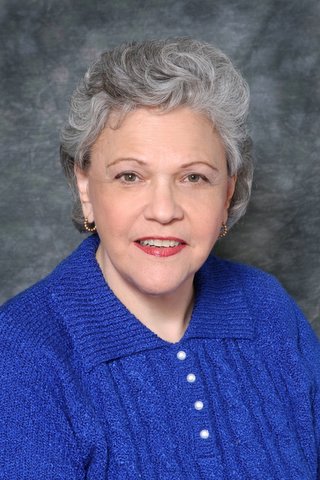
Ada Maria Isasi-Díaz Picture From Drew University’s website
Who desire a society and a world where there is no oppression.
Who struggle for a society in which differences and diversity are valued.
Who know that our world has limits and that we have to live simply so others can simply live.
Who understand that material richness is not a limitless right but it carries a “social mortgage” that we have to pay to the poor of the world.
Who savor the struggle for justice, which, after all, is one of the main reasons for living.
Who try no matter what to know, maintain, and promote our Latina culture.
Who know that a “glorified” self-abnegation is many times the source of our oppression.
Who know women are made in the image of God and, as such, value ourselves.
Who know we are called to birth new women and men, a strong Latino people.
Who recognize that we have to be source of hope and of a reconciling love.
Who love ourselves so we can love God and our neighbor.[v]
For Isasi-Díaz, Mujerista Theology is defined as:
“a process of enablement for Latina Women, insisting on the development of a strong sense of moral agency, and clarifying the importance and value of who they are, what they think, and what they do….mujerista theology [also] seems to impact mainline theologies, the theologies which support what is normative in church, and, to a large degree, in society.”[vi]
Regardless of the context, leadership is too often simply an imitation and implementation of business management strategies that are designed to ‘lead’ people toward a predetermined goal. In business the goal is to maximize profits, minimize cost, and increase production, and as long as it is serves that purpose, employee satisfaction is sought and minimally maintained. I reviewed Ronald A. Heifetz classic text on leadership, Leadership Without Easy Answers, which does take the discussion of leadership into a different direction. And although it does not fall in the direction I want to eventually go, it does offer a solid place to start this conversation on leadership. [1]Continue reading “Leadership As Risk And Open Dialogue By Xochitl Alvizo”





 Feminism and Religion