

 With the eyes of your imagination, see our bright goddess standing tall and fine at her anvil. Her holy and wholly unquenchable fire is burning in the forge. See her holding her hammer and tongs. Perhaps she’s beating a sword, for we sometimes need to defend ourselves, or perhaps she’s beating a sword into a plowshare, for we also need to feed the hungry.
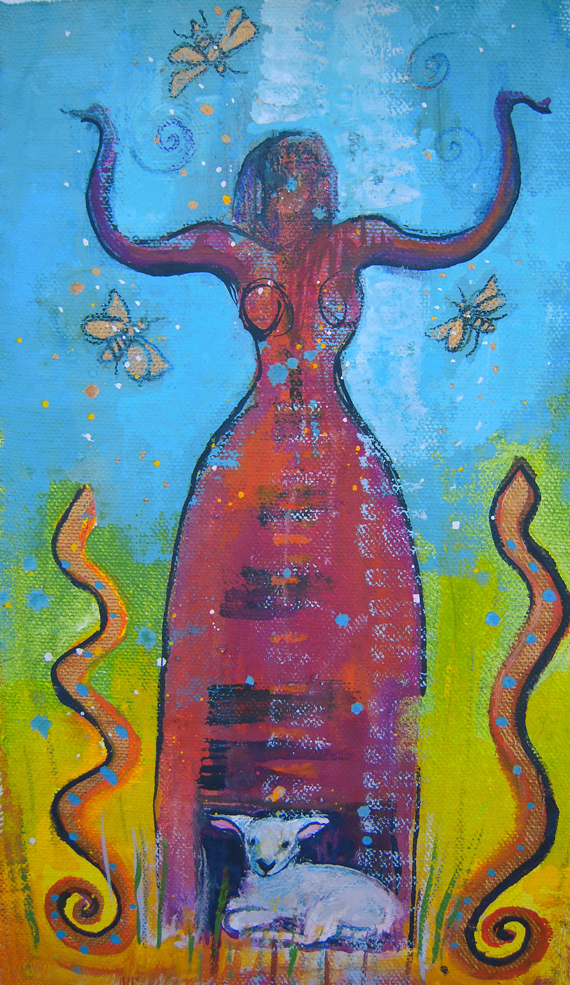
February 2 is the pagan sabbat, or holy day, devoted to the great Celtic triple goddess Brigid (pronounced “Breed”). Brigid is the goddess of poetry, fire, and smithcraft. We’re told that she was converted to Christianity by St. Patrick and later canonized. Her temple was located at Cill Dara (better known as Kildare), where a holy fire was maintained for a thousand years. It was put out during the Dissolution of the Monasteries under Henry VIII when that British king left the Roman church. The fire was relit, but extinguished again in the 18th or 19th century. Today there is an order of Irish nuns that keeps Brigid and her fire alive. As you read the following meditation, imagine that you’re hearing the voice of an elderly priestess. Continue reading “A Meditation on the Shamrock By Barbara Ardinger”

 Feminism and Religion