Mother Sky: I See You, I Hear You by Carolyn Lee Boyd

Deep field galaxy cluster from 4.6 billion years ago.
Deep field galaxy cluster from 4.6 billion years ago with light from galaxies 13.5 billion years old soon after the “Big Bang” 13.8 billion years ago.

The sky is telling us a story of our universe’s first moments while the cosmos sings, and now we can see and hear these wonders through our bodies as well as our imaginations, spiritual journeying, and intuition. These feats are made possible by the successful launch of the James Webb Space Telescope (JWST) and the sonification of sound waves emanating from galaxies that have, for the first time, been converted into a range audible to human ears. Now, experiences that we have only heard about in ancient myths have come to the human realm.

The JWST, according to NASA, allows us to see stars and galaxies as they formed 13.5 billion years ago. Because the light from these stars and galaxies took billions of years to reach us, we see them at the first moments of their birth.

Continue reading “Mother Sky: I See You, I Hear You by Carolyn Lee Boyd”

Coming Home for Samhain by Carolyn Lee Boyd

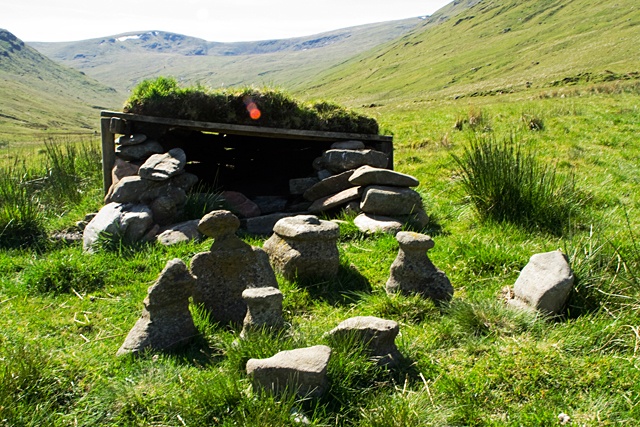
Tigh nan Cailleach, House of the Cailleach, Glen Lyon, Scotland

Samhain is the beginning of winter according to the Celtic calendar. On this day, people brought their livestock in from the pastures and settled by their hearths to survive the coming cold until the magical renewal of spring. Here in New England, leaves are beginning to blaze red-gold, plants to brown as nutrients fill their roots, and animals to nestle underground to hibernate. Across the northern hemisphere, we should once again begin our own retreat below the the busyness of our lives to re-energize and plan for the fruition of spring works.

I’ve usually thought of winter as a time of withdrawal from other beings and the world, but maybe Celtic tradition offers us a more nuanced way of perceiving this season. A wonderful Scottish Samhain story has made me rethink of winter as a time to also reconnect and re-vitalize each other and chart our course to spring’s promise together. I cannot say what the story means to those from whose land it emerged, but I can share the thoughts it evokes in me. Settle in, get comfy, and listen…

Continue reading “Coming Home for Samhain by Carolyn Lee Boyd”

The Gift of Hospitality by Carolyn Lee Boyd

The Earth’s abundant gifts of hospitality

Hospitality is the way of Nature. Every spring, the Earth provides us with warmth, beauty, water, and nourishment. In winter, the Earth offers tools to heat and shelter ourselves. When we are sick, medicine is as close as the forest and meadow. She has welcomed a variety of life forms as the environment changes over our planet’s many geologic ages. Living beings have always been the wanderer in need knocking at Earth’s door and She always gives Her all to us.

This welcoming attitude has been reflected in customs of offering strangers food, water, and shelter in ancient and contemporary cultures and religions around the world, including goddess reverence. We see the influence of hospitality in the many goddess temples that welcomed and, for living traditions, still welcome, anyone in need of healing. These include those of the Egyptian Neith, the Italian Angitia, Idemili of the Nnobi Igbo people, the Yoruba Oshun, and others. We also see it in stories of women caring for one another like that of the Greek Maenads, ecstatic women worshippers who were unable to return home after attending rites and fell asleep in a town along the way. During the night, the town’s women silently encircled them, holding hands, for their protection.

Continue reading “The Gift of Hospitality by Carolyn Lee Boyd”

By Truth the Earth Endures by Carolyn Lee Boyd

Door to Truth, Sri Rangnath Swamy Temple, Pushkar

“By truth the Earth endures.” This Old Irish pronouncement quoted by Peter Berresford Ellis in  The Druids (p. 162) holds such hope. In this moment when the survival of humans and other living beings on our planet is uncertain, when we wonder how we can ensure a future we want our descendants to live in, this centuries-old statement tells us exactly what to do. Revere truth, speak truth, live truth, and the Earth will endure.

The “truth” by which the Earth endures is not simply the state of being factually correct, but, to the ancient Irish, as well as other cultures, also a mighty force that is an element of all that is good.  “…The old Irish word for Truth is also the basis for linguistic concepts of holiness, righteousness, faithfulness, for religion, and for, above all, for justice (p.169)” according to Ellis. What gives truth this immense authority is the power of the Word. Ellis tells us “Truth was the Word and the Word was sacred and divine and not to be profaned…’Truth is the foundation of speech and all words are founded upon Truth’” (p. 162).

Continue reading “By Truth the Earth Endures by Carolyn Lee Boyd”

We Are a Beautiful, Passionate, Inspiring, Never-Ending Story by Carolyn Lee Boyd

Your life is a beautiful, passionate, inspiring, never-ending story. It began with your ancestors long before your birth and will reverberate through untold future generations. It is infinitely complex, unique, and fascinating. Your story is deeply interconnected with other living and non-living beings. It is one among billions of individual stories that make up the wondrous, awe-inspiring story of our planet. 

Do you see yourself, other humans, all living beings, and Earth Herself in these words? Many of us may struggle to do so. As Janet Rudolph so eloquently noted in her recent post about Moses, we need to re-examine and change our foundational stories away from violence and towards spiritual regeneration. So, how can we create new stories about who we believe ourselves to be and how we respond to the world around us? Ursula Le Guin gives important clues in her book Steering the Craft: A 21st-Century Guide to Sailing the Sea of Story. In it she defines story as “a narrative of events (external or psychological) that moves through time or implies the passage of time and that involves change. I define plot as a form of story that uses action as its mode, usually in the form of conflict…(p. 122). “ Le Guin continues to say that this kind of plot “reflects a culture that inflates aggression and competition while cultivating ignorance of other behavioral options… (p. 123).”

Continue reading “We Are a Beautiful, Passionate, Inspiring, Never-Ending Story by Carolyn Lee Boyd”

Women Who Dig by Trina Moyles – Book Review by Carolyn Lee Boyd

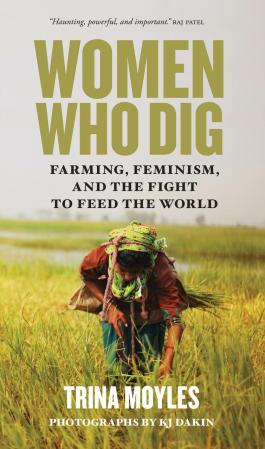
Here in the north, it is harvest time when the deep and ancient relationship between women and farming once again brings forth the food on which life depends. Women have been co-creating with the Earth to feed themselves and their families and communities for many  thousands of years. In fact, the world’s oldest agricultural tool may be a 300,000 year old stick possibly used by women to “harvest wild tubers for food and medicine” (p. xx) according to Women Who Dig: Farming, Feminism, and the Fight to Feed the World by Trina Moyles with photos by KJ Dakin. 

In her beautiful and enlightening book, Trina weaves together stories and stunning color photographs about the lives and work of women small farmers in Uganda, Guatemala, Nicaragua, the United States, Canada, India, the New Congo refugee settlement in Uganda, and Cuba. Together the profiles demonstrate that, despite sometimes overwhelming odds, women are feeding themselves, their families, and their communities through sustainable small farming practices that are good for both our nutrition and well being as well as the planet.

Continue reading “Women Who Dig by Trina Moyles – Book Review by Carolyn Lee Boyd”

Transforming the Streets of Past into the Cities of the Future, Part II by Carolyn Lee Boyd

You can read yesterday’s part 1 here.

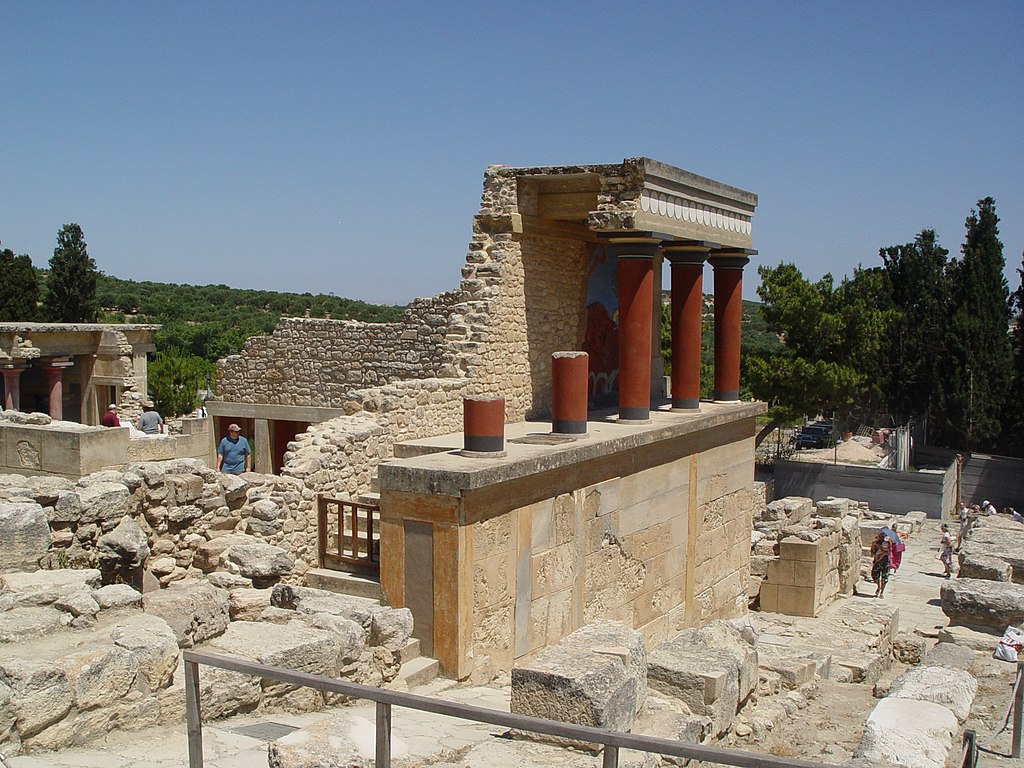
Knossos in Crete

Modern architects and urban planners have recently been designing buildings and urban spaces promoting values reminiscent of Old Europe and other societies with similar values. These societies are often referred to as “matriarchal.” However, there is ongoing discussion among scholars about what to call them. For this post, we will use Heide Goettner-Abendroth’s lovely term “societies of peace.” To read more about these societies, modern desires to live in communities similar to these societies, and modern efforts to promote social interaction and beauty, please click here to read Part 1. 

Connecting to Nature

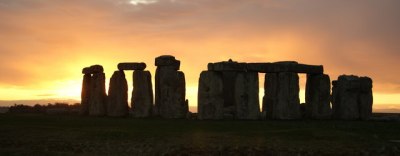
Stonehenge, Great Britain

Old Europe and other similar societies of peace frequently included well-used outdoor spaces, connecting residents to nature as they went about their daily life. Residents did weaving, baking, and other tasks in open courtyards. Public rituals were held in plazas and courtyards. Celts and those who lived in Britain before them held their religious ceremonies in groves of trees or in open spaces with standing stones or other monuments. Public art, such as frescoes in Crete, featuring plants and animals also indicates the value these societies gave to nature.

Continue reading “Transforming the Streets of Past into the Cities of the Future, Part II by Carolyn Lee Boyd”

Transforming the Streets of Past into the Cities of the Future, Part I by Carolyn Lee Boyd

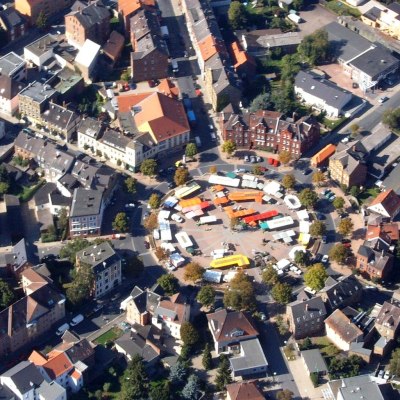
Modern Mixed Use Development with Buildings Facing Each Other in a Circle

Is a peaceful, just, creative, sustainable world a far-off, unattainable dream or might there be ways to begin to build such communities right in our own neighborhoods?

Archeologists and scholars like Marija Gimbutas, Heide Goettner-Abendroth, and Carol Christ have studied societies from Old Europe and elsewhere that share some common characteristics. (These societies are often referred to as “matriarchal.” However, there is ongoing discussion among scholars about how to name these societies. For these posts, I’ll use Heide Goettner-Abendroth’s beautiful term societies of peace). These qualities include prioritizing caring social relationships, art and beauty, ecological responsibility, equality, commitment to consensus decision-making, and more. Researchers often cite how buildings, city and town layout, and outdoor spaces of these societies of peace reflect these values by featuring similarly-sized residences, beautiful frescoes depicting women and men in peaceful pursuits, a lack of warlike structures, and plazas and courtyards for social, civic, and religious events, among other attributes.

Continue reading “Transforming the Streets of Past into the Cities of the Future, Part I by Carolyn Lee Boyd”

GOD IS A BLACK WOMAN by Christena Cleveland, PhD – Book Review by Carolyn Lee Boyd

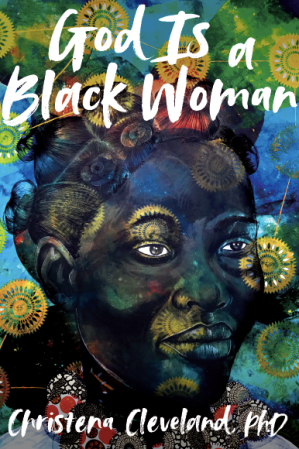
God Is a Black Woman by Christena Cleveland PhD

FAR recently published an excerpt and lively discussion of Christena Cleveland, PhD’s new book God Is a Black Woman. We thought the FAR community might enjoy learning more about this memoir of her moving journey from the terror and control of “whitemalegod” to the unconditional love and healing of the Sacred Black Feminine. Her recounting of her 400-mile walking pilgrimage to see eighteen French Black Madonnas is especially fascinating and poignant.

Christena is a social psychologist, former professor at Duke University’s Divinity School, public theologian, researcher, author, and speaker. She is “the founder and director of the Center for Justice + Renewal as well as its sister organization, Sacred Folk, which creates resources to stimulate people’s spiritual imaginations and support their journeys toward liberation.” She blends all these areas of expertise to offer theological, sociological, psychological, and historical insights into her stories of her spiritual quest. The book offered me many “aha!” moments about my own beliefs and assumptions regarding spirituality, feminism, and the ubiquitous effects of racism.

Continue reading “GOD IS A BLACK WOMAN by Christena Cleveland, PhD – Book Review by Carolyn Lee Boyd”

From the Archives: Through the Eyes of the 21st Century Bird Goddess by Carolyn Lee Boyd

Moderator’s note:Today’s blogpost was originally posted March 14, 2018. You can visit it here to see the original comments.

When I raise my eyes to a bird soaring over me in flight, I am no longer bound to the Earth by gravity. I stop my round of daily tasks and widen my vision to view myself and our world from above through birds’ eyes. For just a moment, as I observe beyond my usual narrow horizon, I perceive truths about myself and others that have been hidden and grasp wisdom that has previously eluded me.

From Neolithic times onwards in cultures stretching across the globe, as described by Judith Shaw, bird-shaped goddesses have embodied life, death, rebirth, and more. More recently, as noted by Miriam Robbins Dexter, these beautiful winged beings were perceived of as monsters and flying through the air was one of the accusations made against the women persecuted as witches in the Burning Times. What greater demonstration could there be of the intense terror this powerful relationship between women and birds creates in those who demand dominion over women’s bodies and souls?

Continue reading “From the Archives: Through the Eyes of the 21st Century Bird Goddess by Carolyn Lee Boyd”