The Legacy of Carol P. Christ: Belonging to the Land

This was originally posted on November 17, 2014

Carol Christ in Lesbos

I believe that we can restore our hope in a world that transcends race by building communities where self-esteem comes from not feeling superior to any group, but from one’s relationship to the land, to the people, to the place, wherever that may be.—bell hooks

In these words from her poignant memoir-reflection-analysis Belonging, bell hooks suggests that rather than creating identity by comparing ourselves to others, whether in the academy, in communities, or in the larger society, we would do better to root our identity in the land.

Hooks “left home” in rural Appalachia in order to pursue “higher” (why do we call it that?) education including a Ph.D. which enabled her to teach at prestigious universities in the urban north. Despite her considerable success as an academic and a black feminist, hooks suffered persistent depression in the cities where she taught. Eventually she diagnosed her dis-ease as a longing for the home she had left behind, specifically as a need to connect with the traditions of her ancestors, the mountains, and the land that had sustained them since the end of slavery.

Hooks asks if one of the reasons that so many black people have failed to thrive in the urban north has to do with the loss of connection to the land and ancestral traditions that occurred with twentieth century migrations to the north. Though black people—and hooks herself—hoped to find greater freedom and dignity in the north, hooks wonders if the price they paid was too high.

Continue reading “The Legacy of Carol P. Christ: Belonging to the Land”

Smoke by Beth Bartlett

Perhaps we all are standing on the borderlands – left standing in the debris of our consumptive and violent past, walking toward a future we cannot see but can feel in every cell of our bodies as this global fever is creating a world on fire that is reaching each one of us. How do we find our way home? What will it take to change us and, in so doing, change society?

-Terry Tempest Williams

Photo by Beth Bartlett

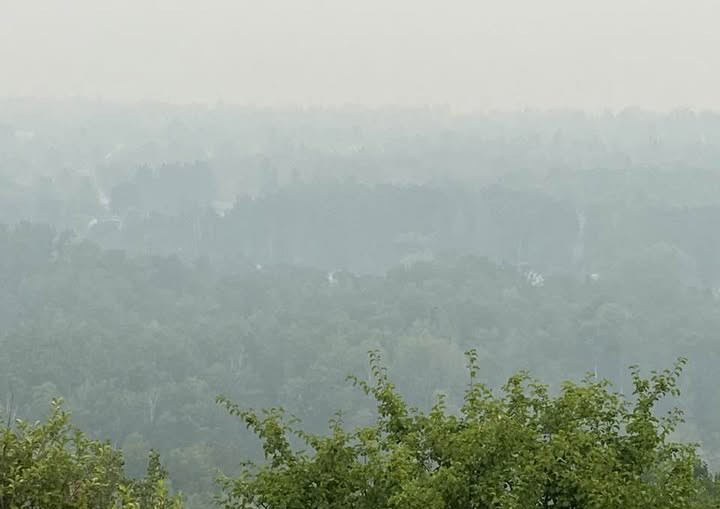
We awoke Wednesday morning to thick, thick smoke.  It looked like the more typical fog that often engulfs us in the early morning, but the faint whiff of smoke even inside with windows closed was unmistakable.  One step outside and the smoke was overwhelming – like sitting next to a large campfire with the wind blowing the smoke in my direction.  As I was starting to cough, I put the baby in his highchair and headed to the basement to get the air purifier.  As soon as I plugged it in the indicator light turned red, meaning very dirty air.  Fortunately, it quickly cleared the air, but any time we opened a door the light immediately turned purple. 

At the moment, in this land of clean water and clear skies, we are experiencing some of the worst air quality anywhere in the world.  In the past few days, the Air Quality Index (AQI) on my EPA app has registered over 1100, far higher than the threshold for “Hazardous” air, which is 301.  The entire east coast and Midwest have been under air quality alerts from the fires in Canada, but where I live — Duluth, Minnesota — has had the worst air from the fires just a hundred miles to our north.  Oddly, the air here is actually worse than in the towns that have been evacuated due to the fires.  It’s the worst air ever experienced here.  Even inside, the air purifiers are struggling to keep up.

Continue reading “Smoke by Beth Bartlett”

She Changes Everything She Touches: A Reflection on Love and Loss, part 1 by Sara Wright

 I reflect upon this year as the sun star rises in a northeastern sky. ‘He’ has reached the end of his northeastern journey.

  Wave after wave – oceans of grief break over me at dawn – tempered by the same cycle during which I have been graced by a most powerful love in the form of a young canine companion.  Love and Loss are such intimate companions.

‘She changes everything she touches, changes…’ during cycles of grief  S/he changes nothing at all.

As the solstice bears down on us under a hard blue dome so does the fire. It is hard to believe that three weeks ago temperatures hovered in the 40’s. I resist the stifling heat of June coupled with days of torrential rain, cold, and wind that are presently drowning a field of lilies, wild lupine and roses. Fire and Ice. On good days there is the increased noise flow of man-made machines. Slow down please, I plead. Let me listen to the wood thrush, experience this space in between without bouncing between extremes.  

 I am feeling resentful, cross over the loss of spring and the relentless rains that destroy every flower just as it begins to bloom. I must honor the child who is heartbroken or I will make things worse. Wildflowers bring her the greatest joy and most have been under perpetual siege by inclement weather. Many plants were not pollinated. Too cold for bees.

Continue reading “She Changes Everything She Touches: A Reflection on Love and Loss, part 1 by Sara Wright”

Missing Trees by Beth Bartlett

“Tree of Life” photo by author

The gap in the trees is a painful reminder of the one that is missing. This past winter an ice and wind storm late in the season brought down the aspen that had sheltered our deck. Its absence is more than a hole in the canopy – it is a hole in the heart. I miss its friendly presence, its shelter, its shade.  I suspect I never fully appreciated it until now.  It is just the latest in a long line of missing trees – trees lost to disease, insects, climate change.

The paper birch were the first to go. When my dad first bought our family cottage in 1964, paper birch trees arched delicately over the cottage, framing it in white branches against the blue sky.  Another large birch stood as a landmark on the top of the hill, and another by the lake was the centerpiece of the circular bench built around it.  Several more lined the path down to the lake and dotted the hillside.

“Mama” birch, photo by author

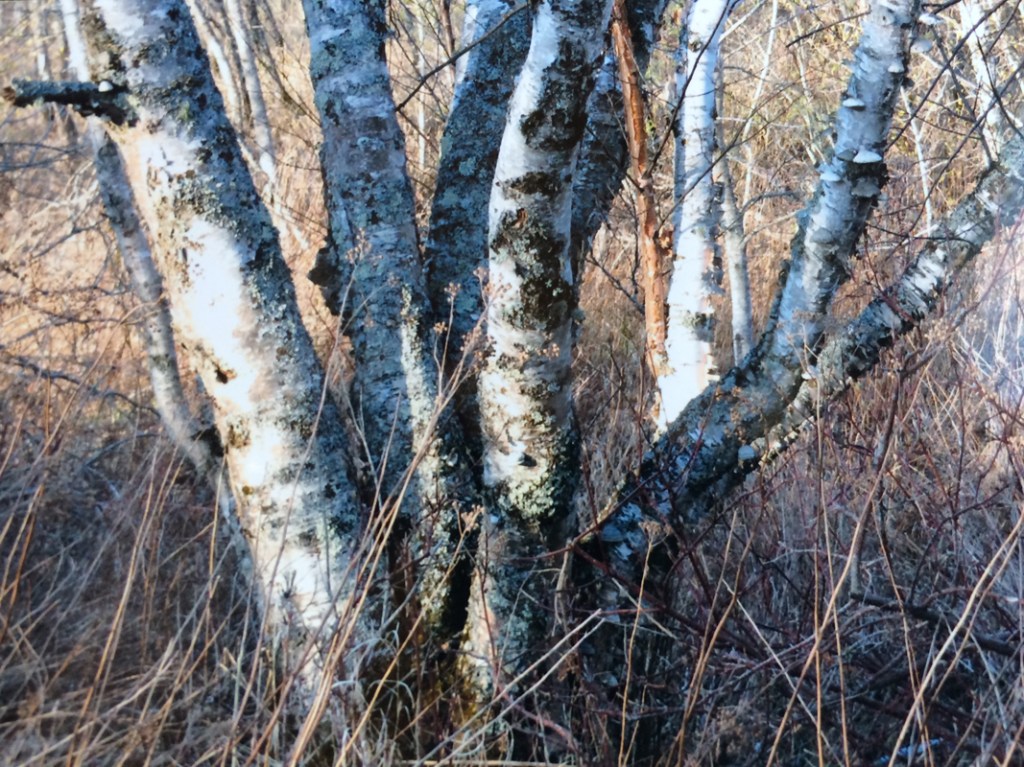
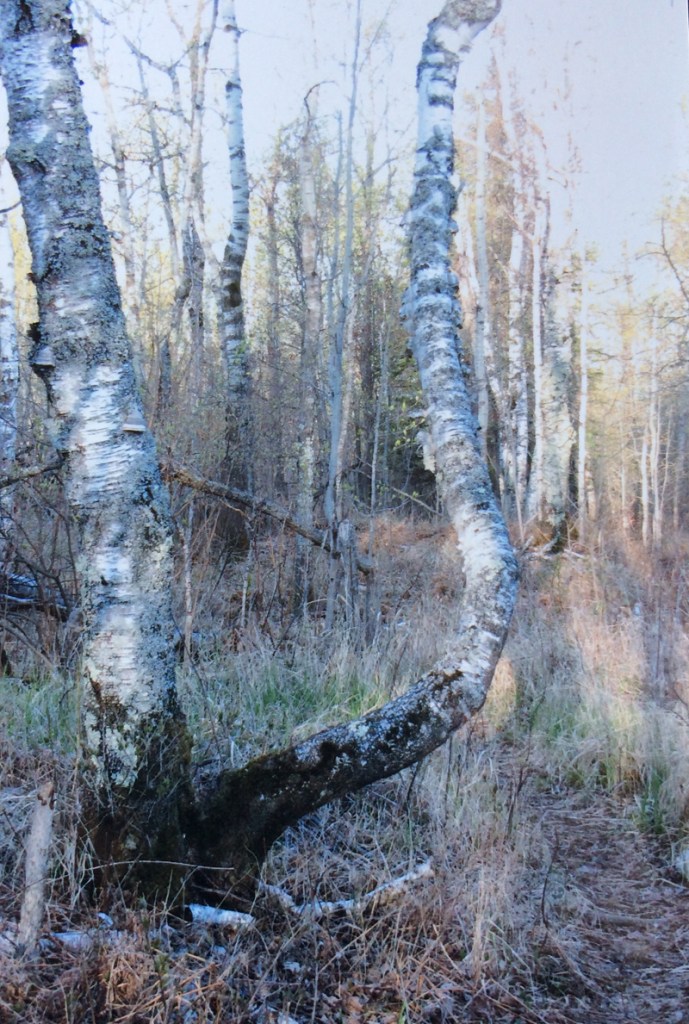
When we bought our home in Duluth, paper birches graced the yard on all sides.  In the woods out back I’d befriended several of the birches, naming them according to their distinctive shapes – there was the “Mama” birch with its bulging pregnant belly, the three then four-clump birches that I’d named after our music group – “Wild By Nature,” and the glorious “Tree of Life” – a magnificent clump birch of at least twenty connected trunks that served as a talisman for me during the most difficult days of my illness and for many years after my transplant. 

Continue reading “Missing Trees by Beth Bartlett”

Miriam MacGillis and Cosmology Revisited, part 1 by Janet Maika’i Rudolph

Author’s Note: When my mother died in 2018, I became the custodian of her voluminous files. I found some gems inside them. My mother lived in NJ not too far from a place called Genesis Farms and its founder and proprietress was/is Sister Miriam MacGillis. There was a whole file on the farms.

Included in these files was a binder of cassette tapes from a workshop Miriam MacGillis gave in 1986 called “Education for a Small Planet.” There are 4 double-sided cassettes.  When I first saw them, I was afraid to even touch them as 40-year-old cassette tapes are not known for their sturdiness. A friend helped me find an agency that agreed to digitize them. Since then, I have had the great honor of transcribing the tapes. It took me several months, but I have now completed the transcription. (They are a little rough as I added punctuation as I went.) I have been in touch with Miriam about them and she agrees that the message from 1986 is still important, in fact, likely more important now and they should have as wide an audience as possible. 

Miriam MacGillis is a modern-day prophet who not only holds a broad understanding of cosmology but brilliantly expresses it. She was an early colleague of Thomas Berry, introducing many people to the Story of the Universe.

I believe these tapes need to be studied and shared and I am happy to make them available to anyone who is interested.  Below is a taste of their wisdom. It is from Tape #1A (first tape, first side), lightly edited. This is really just an introduction and it will be in two parts.

***

Continue reading “Miriam MacGillis and Cosmology Revisited, part 1 by Janet Maika’i Rudolph”

MaVynee Betsch: Preserving History and the Environment by Maria Dintino

Moderator’s Note: This piece is in co-operation with The Nasty Women Writers Project, a site dedicated to highlighting and amplifying the voices and visions of powerful women. The site was founded by sisters Theresa and Maria Dintino. To quote Theresa, “by doing this work we are expanding our own writer’s web for nourishment and support.” This was originally posted on their site on Feb 18, 2025. You can see more of their posts here. 

Its history and nature all wrapped together, baby.” -MaVynee Betsch

Recently I visited the Best Richardson African Diaspora Literature & Culture Museum (BRADLC Museum) in St. Augustine, Florida. On our tour with owner Gigi Best-Richardson, I was captivated by the stunning cover of a children’s book on display, Saving American Beach: The Biography of African American Environmentalist MaVynee Betsch, written by Heidi Tyline King and illustrated by Ekua Holmes.

I had heard of MaVynee’s great-grandfather, Abraham Lincoln Lewis (1864-1947), one of the founders of the Afro-American Life Insurance Company in Jacksonville, Florida during the Jim Crow era. Lewis became Florida’s first Black millionaire.

Continue reading “MaVynee Betsch: Preserving History and the Environment by Maria Dintino”

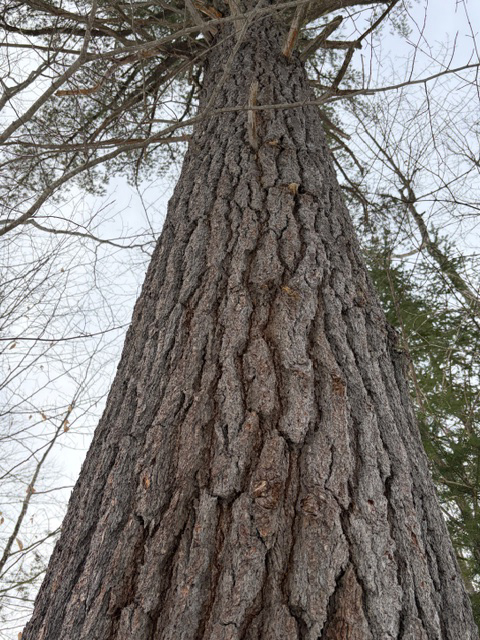
White Pine Wonder by Sara Wright

Yesterday was mild (mid 40’s in January) so Coalie and I went to our favorite forest to walk. The roads were icy, but the seeps were brimming and ringed with footprints. Over one of my favorites (because declining wood frogs still lay eggs there in the spring), an elderberry bush arced over rippling water like some sort of plant protectoress.

Seeps fascinate me because they defy freezing weather bubbling up through deep in the earth. Water seeps in the forest are small wetland areas where groundwater naturally emerges at the surface, often at the bases of slopes. They create moist spots with lush plants in season (like elderberries) and serve as important habitats for wildlife by providing clean water sources all year-round. They form from underground layers of rock that force water to flow horizontally until it surfaces. Seeps care for their animal and bird neighbors by providing clear waters at any time of year. There were so many fox and partridge tracks leading to and from these pools that I was surprised we didn’t startle one of the latter. (At home I have a pair that are feasting on the last of the crabapple berries). A couple of chickadees were chirping from nearby maples probably annoyed because we were taking our time. Coalie was nosing every blade of grass in the area.

Continue reading “White Pine Wonder by Sara Wright”

A Goose Tale by Sara Wright

Coalie and the Goose

It’s the last day of November and small groups Canadian geese are still drifting around on patches of open water. I saw two small groups on North Pond. Although many skeins have flown south along the Atlantic flyway – they can migrate south as far as Mexico and South America -some geese spend the winter along coastal areas in Maine if food resources are available. It’s hard to know whether these groups are migrators from Canada who have stopped over to rest or a few that winter over nearby on the Kennebec or elsewhere along the southern coast of Maine. With warming temperatures Canadian Geese migratory patterns are changing.

Soon after their arrival the female disappears to lay 8 – 10 eggs in her nest that is securely hidden in the reeds while her mate stands watch. When the goslings are born both parents escort them through the water, one parent in front, the other behind. If threatened the male becomes aggressive, a totally appropriate behavior from my point of view. When the little ones are big enough these birds join other families for the rest of the summer and some will probably migrate together. These are such community oriented birds. They make it a habit to get along. Geese are omnivores that will eat almost anything and they mate for life, returning to their designated ‘home’ places to breed year after year. Even before the chicks arrive geese are drawn to some of the 400 million lawns in this country (especially those that are close to water) much to the dismay of some.

Continue reading “A Goose Tale by Sara Wright”

The Gendered Dimensions of the Water Crisis in Iran: Impacts on Women’s Health, Livelihoods, and Security

Moderator’s Note: This post has been brought to you in cooperation with the NCRI women’s committee. NCRI stands for the National Council of Resistance of Iran. You can learn more information as well as see this original article by clicking this link. A description of their Council can be found at the end of this post.

The water crisis in Iran has moved far beyond a simple environmental issue — it has become a humanitarian, ecological, and economic disaster.

While at first the problem seemed to be the result of drought and declining rainfall, its true causes ran much deeper: entrenched corruption and mismanagement at the heart of the ruling establishment. Until these systemic roots are addressed and removed, Iran’s present — and its future — will only become more precarious.

A significant number of researchers and international observers emphasize that 70 to 80 percent of the current crisis stems from mismanagement, unsustainable policies, lack of transparency, and corruption. As one report notes, “Iran’s water crisis is not a crisis of resources; it is a crisis of decisions—decisions that have made the land thirstier and the future darker. This crisis, alongside the erosion of public trust in governance, is a symptom of structural and managerial failure.” (Newsweek, August 1, 2025; The Times, December 8, 2022; Reuters, April 27, 2021)

Continue reading “The Gendered Dimensions of the Water Crisis in Iran: Impacts on Women’s Health, Livelihoods, and Security”

The Return of Little Deer by Sara Wright

“From out of the mountain he comes
Like the Spirit of Light he comes…”
Cherokee Myth

Having just spent almost three hours on Zoom with an interviewer from NPR during which we spoke about the normalcy of interspecies communication for some like me, Little Deer appeared at my window, lifted his head and stared right through me.

I haven’t had a young buck roaming around the house for a while but this kind of conversation between humans who believe we are all part of one fabric brings in the animals.

I recognized him Immediately.

The Cherokee myth states that a mysterious deer materializes from out of the mountain on behalf of the animals in times of trouble. They call him the Justic Maker.

As Justice Maker,  he protects creatures from harm and redresses grave imbalances between humans and the rest of Nature .

 I guess I shouldn’t have been surprised at his return.

Continue reading “The Return of Little Deer by Sara Wright”